Vietnam needs to properly identify the materials for which it must proactively conduct research, manufacture, stockpile and control the supply chain, while also determining which stages can be pursued through international cooperation on the basis of safeguarding national interests.
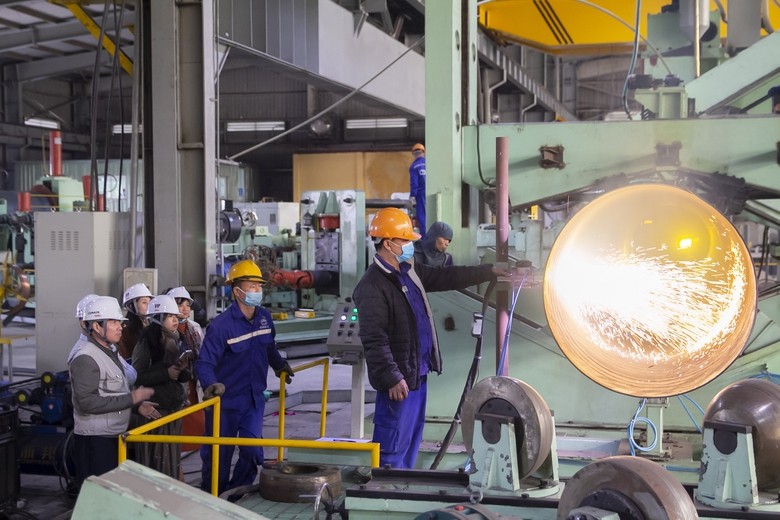
To master materials technology, it is necessary to change the management mindset, shifting from “resource exploitation” to mastering materials technology, deep-processing technologies and high-value-added materials production chains. (Dich Phong)
On June 24, 2026, the Central Propaganda and Mass Mobilization Commission, in coordination with the Vietnam Union of Science and Technology Associations (VUSTA), organized a seminar to communicate, disseminate and thoroughly implement Conclusion No. 83-KL/TW dated August 8, 2026 of the Politburo on the development of Vietnam’s materials industry. Mr. Phan Xuan Thuy, Deputy Head of the Central Propaganda and Mass Mobilization Commission, and Prof. Academician Chau Van Minh, Part-time Vice Chairman of the Central Committee of the Vietnam Fatherland Front, Secretary of the Party Committee and President of VUSTA, co-chaired the seminar.
The Materials Industry Holds a Foundational Position in the Economy
In recent years, Vietnam’s materials industry has gradually developed, basically meeting demand for various types of materials and raw inputs; contributing to economic growth, infrastructure development, employment and exports; and initially conducting research and producing a number of new, green and recycled materials.
However, according to the Deputy Head of the Central Propaganda and Mass Mobilization Commission, these results remain disproportionate to the country’s potential and development requirements. Production still relies heavily on resource extraction, consumes significant amounts of energy and generates low added value, while deep processing and mastery of core technologies remain limited. Many high-quality, high-tech and specialized materials still depend on imports. Linkages between research, training and production remain weak, and there are not yet core enterprises with sufficient capacity to lead value chains.
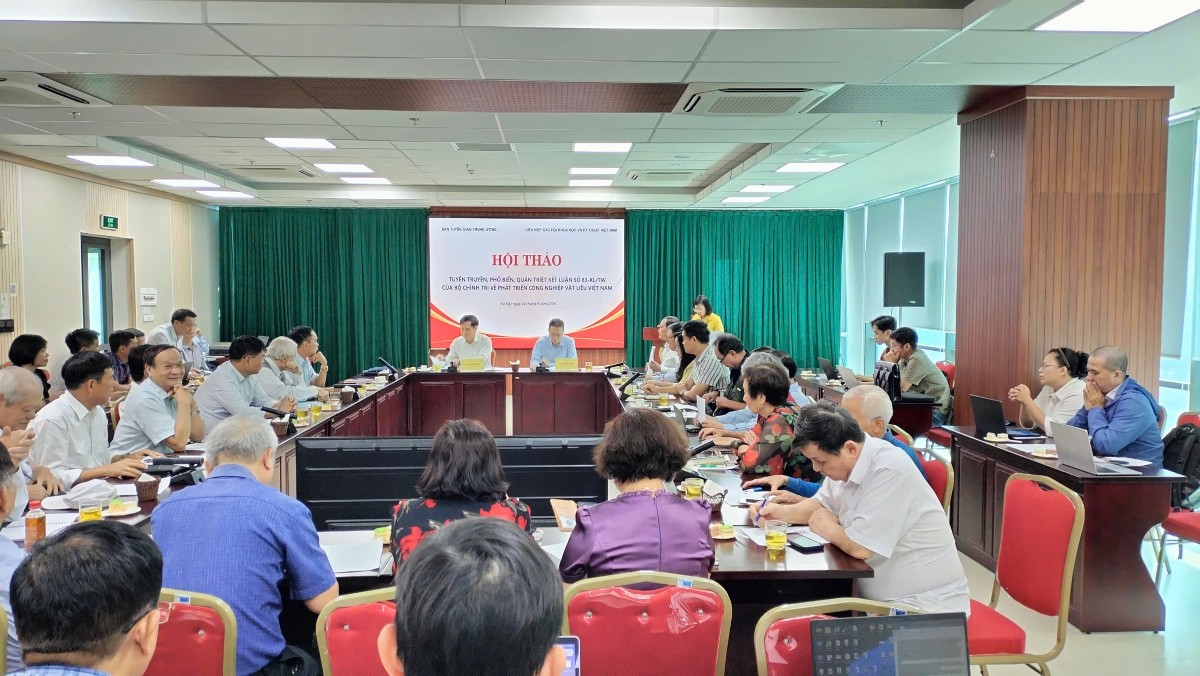
An overview of the seminar on communicating, disseminating and thoroughly implementing Politburo Conclusion No. 83-KL/TW on the development of Vietnam’s materials industry. Photo: Do Phong
Conclusion No. 83-KL/TW identifies the materials industry as a foundational industry that plays a decisive role in strategic autonomy, national competitiveness and the ability to master core technologies. The overarching direction is to shift from exploiting resource advantages to mastering materials technologies; from extensive to intensive development; and from participating in supply chains to gradually mastering stages with high added value.
According to Mr. Thuy, this understanding must be reflected in strategy development, institutional improvement, resource allocation, research organization, human resource training and investment attraction.
On this basis, it is necessary to clarify the position and substance of strategic autonomy in the materials industry. Vietnam needs to properly identify the materials for which it must proactively conduct research, manufacture, stockpile and control supply chains, while also determining which stages can be pursued through international cooperation on the basis of safeguarding national interests. It is also necessary to clarify criteria for selecting priority materials based on resource potential, technological capacity, market demand, national defense and security requirements, and global value-chain shifts.
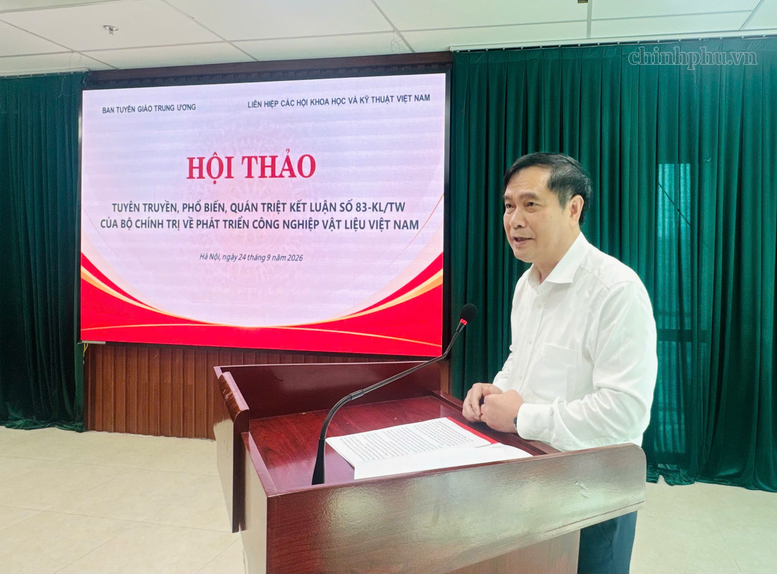
Mr. Phan Xuan Thuy, Deputy Head of the Central Propaganda and Mass Mobilization Commission, speaks at the seminar.
In addition, discussions should focus on the coordinated development of three groups: basic materials, strategic materials and future materials. Basic materials need to be modernized while improving quality and conserving resources and energy. For strategic materials, priority should be given to deep processing and mastering technologies for semiconductor materials, rare earths, battery materials, magnetic materials, specialized alloys, and materials serving national defense and security. For future materials, research, testing and commercialization capabilities need to be prepared at an early stage.
Mr. Thuy also emphasized the need to clearly identify bottlenecks related to institutions, capital, enterprises and value-chain organization.
Conclusion No. 83-KL/TW sets out several key milestones: promulgating the National Strategy for the Development of the Materials Industry in 2026; establishing a national database on the materials industry in 2027; striving to establish 3–5 national materials research centers by 2028; and, by 2030, mastering a number of deep-processing technologies for rare earths, semiconductor materials and battery materials, while striving for a domestic localization rate of 50% for certain strategic materials.
To achieve these milestones, it is necessary to identify immediate tasks, responsible agencies, resources and timelines, with a focus on coordination mechanisms, long-term investment, commissioned research and the development of enterprises capable of leading value chains.
Another important issue discussed was ensuring that the materials industry develops in a green, circular, efficient and sustainable direction. “The development of the materials industry must be associated with strict management of strategic resources and minerals; minimizing exports of raw minerals; improving recycling efficiency; and reducing energy consumption, emissions and environmental pollution,” Mr. Thuy stated.
Therefore, mechanisms are needed to control the entire value chain, from investigation, exploration, extraction, refining and production to recycling and strategic stockpiling, ensuring a balance among industrial development, environmental protection, national defense and security, and the country’s long-term interests.
Development Orientation for Vietnam’s Materials Industry
Presenting a report on the development orientation for Vietnam’s materials industry in the coming period, Mr. Vu Manh Hung, Director General of the Department of Sectoral Economics under the Central Policy and Strategy Commission, highlighted several important issues.
First, the materials industry must be identified as a foundational industry in the country’s industrialization and modernization process, serving as an input and prerequisite for the development of essential sectors and strategic technology products, thereby contributing to the establishment of an independent, self-reliant and resilient economy.
The development of the materials industry needs to focus on key priorities rather than being spread too thinly, following a three-tier materials orientation. For basic materials, solutions are needed to increase value across the chains from extraction and processing to supply. For strategic materials, particularly rare earths and materials for national defense and security industries, breakthrough solutions in science and technology must be prioritized.
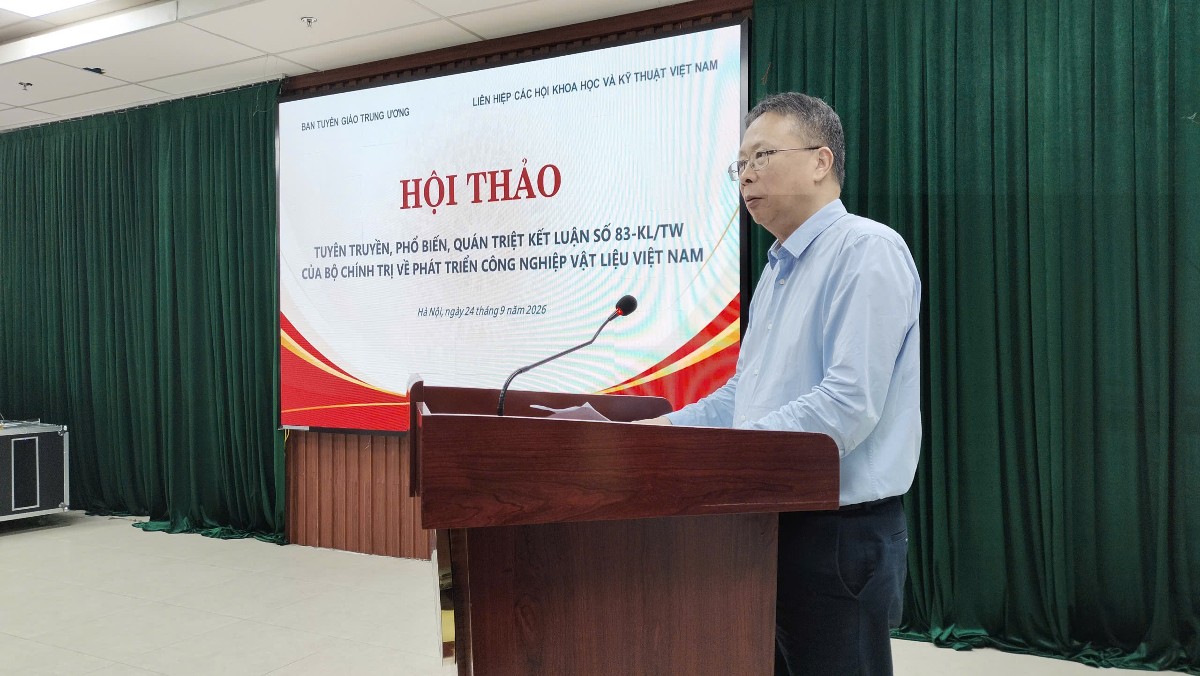
Prof. Academician Chau Van Minh: VUSTA is ready to serve as a bridge connecting scientists – research institutes and universities – enterprises – regulatory agencies, mobilizing multidisciplinary expert networks to address major issues such as strategic materials, new materials, rare earths, semiconductors, energy, green materials, the circular economy, standards and technical regulations, and human resource development. Photo: Do Phong
In particular, the materials industry must make a strong shift from extraction and crude processing toward deep processing based on mastering technologies and increasing added value. Strategic minerals must be managed across the entire chain, from exploration, investigation, planning and extraction to refining and the production of applied materials, recycling and stockpiling.
Mr. Hung also emphasized that the materials industry should be developed in a green and sustainable direction, in line with international commitments and on the basis of protecting the country’s highest interests.
Presenting several policy directions from state management agencies for implementing the Conclusion, Mr. Nguyen Minh Duc, Head of the Metallurgy and Minerals Division under the Industrial Agency of the Ministry of Industry and Trade, said that the development of the materials industry should pursue the broader goal of establishing a modern, green and selectively self-reliant national materials industry with strong competitiveness. Such an industry should effectively support industrialization and modernization, the development of strategic and high-tech industries, while contributing to enhancing the resilience, autonomy and position of Vietnam’s economy in regional and global value chains.
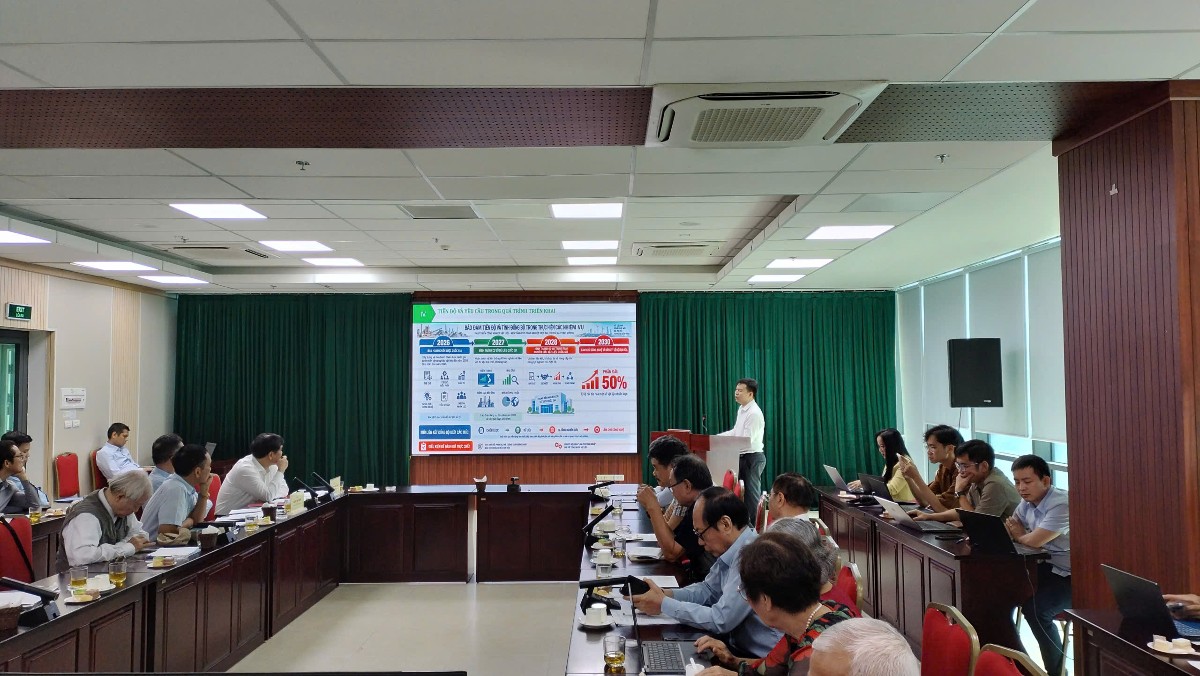
The Industrial Agency of the Ministry of Industry and Trade presents several policy directions from state management agencies for implementing the Conclusion. Photo: Do Phong
Speaking at the seminar, Prof. Academician Chau Van Minh emphasized the view that Conclusion No. 83-KL/TW identifies the materials industry as a foundational industry that plays a decisive role in strategic autonomy, national competitiveness and the ability to master core technologies.
According to him, “what matters is no longer how much resource we can extract or how much raw material we can produce, but what technologies we can master from those resources, what materials we can create, and which stages with high added value we can participate in within the value chain.”
In other words, three major transformations must be made: from resource advantages to technological advantages; from extensive to intensive development; and from participating in supply chains to gradually mastering high-value stages.
An important requirement is to identify the right priorities, avoid fragmented investment and organize the development of the materials industry across the entire value chain.
Conclusion No. 83 identifies the coordinated development of three groups: basic materials, strategic materials and future materials. The report by the Industrial Agency of the Ministry of Industry and Trade clarified the requirement for value-chain management, covering resources, extraction, processing, refining, materials, finished products, recycling and stockpiling. At the same time, autonomy does not mean producing everything domestically. Instead, it requires identifying the essential stages that need to be controlled, the technologies Vietnam is capable of mastering, and the stages where international cooperation can be pursued.
According to Prof. Academician Chau Van Minh, given limited resources, it is necessary to select the right materials, technologies and stages for investment, using socio-economic efficiency, technological capacity, supply-chain security and the ability to create domestic value as the basis.
A report from the Institute of Materials Science shows that Vietnam has established research groups with substantial capabilities in semiconductor materials, rare earths, energy materials, hydrogen, composites, functional coatings and various advanced materials. The major challenge now is how to connect and upgrade these capabilities into sufficiently strong research and technology programs with clear products and clearly identified applications.