On October 9, 2026, Vietnam National Railway Group launched its Railway Asset Development and Transit-Oriented Development (TOD) Department and appointed its leadership team. The establishment of the department was described as “a day that will go down in the history of Vietnam National Railway Group,” in the words of Group Chairman Dang Sy Manh.
Under the appointment decision, Mr. Le Dinh Ha, former Director of Saigon Railway Joint Stock Company, was appointed Head of the Railway Asset Development and TOD Department. The three Deputy Heads are Ms. Pham Thi Hue, Mr. Pham Thanh Tung, and Mr. Nguyen Trong Hieu.
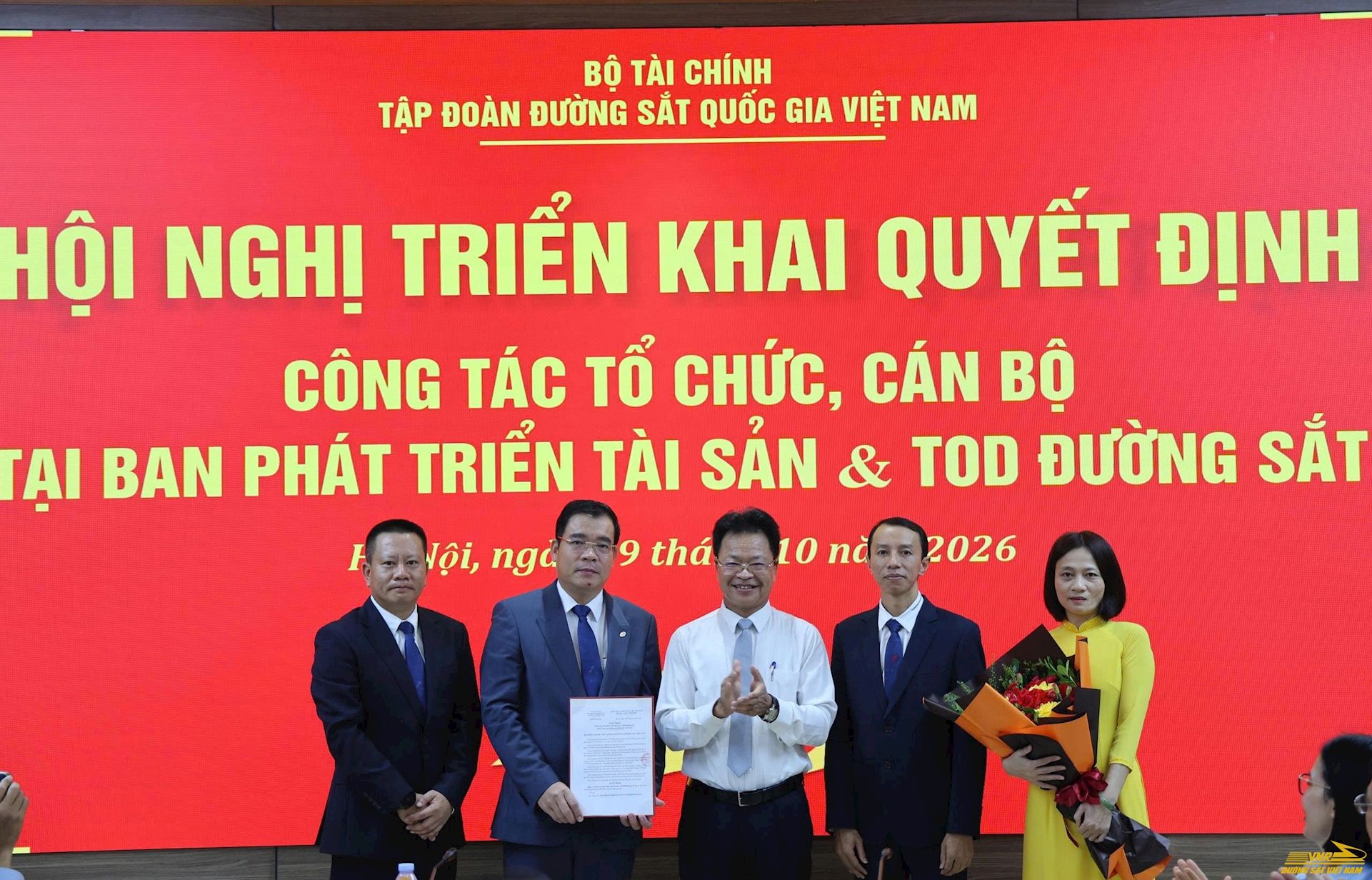
Chairman Dang Sy Manh takes a commemorative photo with the department’s leadership team. From left: Mr. Pham Thanh Tung, Deputy Head; Mr. Le Dinh Ha, Head; Mr. Dang Sy Manh, Chairman of Vietnam National Railway Group; Mr. Nguyen Trong Hieu, Deputy Head; and Ms. Pham Thi Hue, Deputy Head.
According to Decision No. 1583/QD-DS, the Railway Asset Development and TOD Department serves as an advisory and support unit for the Members’ Council, the Chairman of the Members’ Council, and the Group’s Executive Board in managing, investing in, developing, and commercially exploiting the Group’s land and assets. The department takes the lead in developing asset inventories, strategies, and exploitation plans, while guiding and supervising affiliated units to improve asset utilization and increase non-transport revenue.
The department also researches and proposes planning and urban development initiatives based on the transit-oriented development (TOD) model, linking commercial and service development at railway stations and in surrounding areas. Its responsibilities include researching and preparing investment projects, identifying and negotiating with partners and investors, and developing cooperation, joint venture, and partnership models to unlock the potential of railway assets. In addition, the department manages business development for commercial and investment products and services, as well as the investment, operation, and commercial exploitation of telecommunications infrastructure within its assigned scope.
Although the establishment of the Railway Asset Development and TOD Department represents an initial step, it carries significant strategic importance. Asset development and TOD have been positioned as one of the Group’s most important growth pillars, alongside infrastructure, transportation, and industry. This approach also reflects lessons learned from countries with advanced railway systems, guided by the principle of “using railway assets and revenues to sustain railway development.”
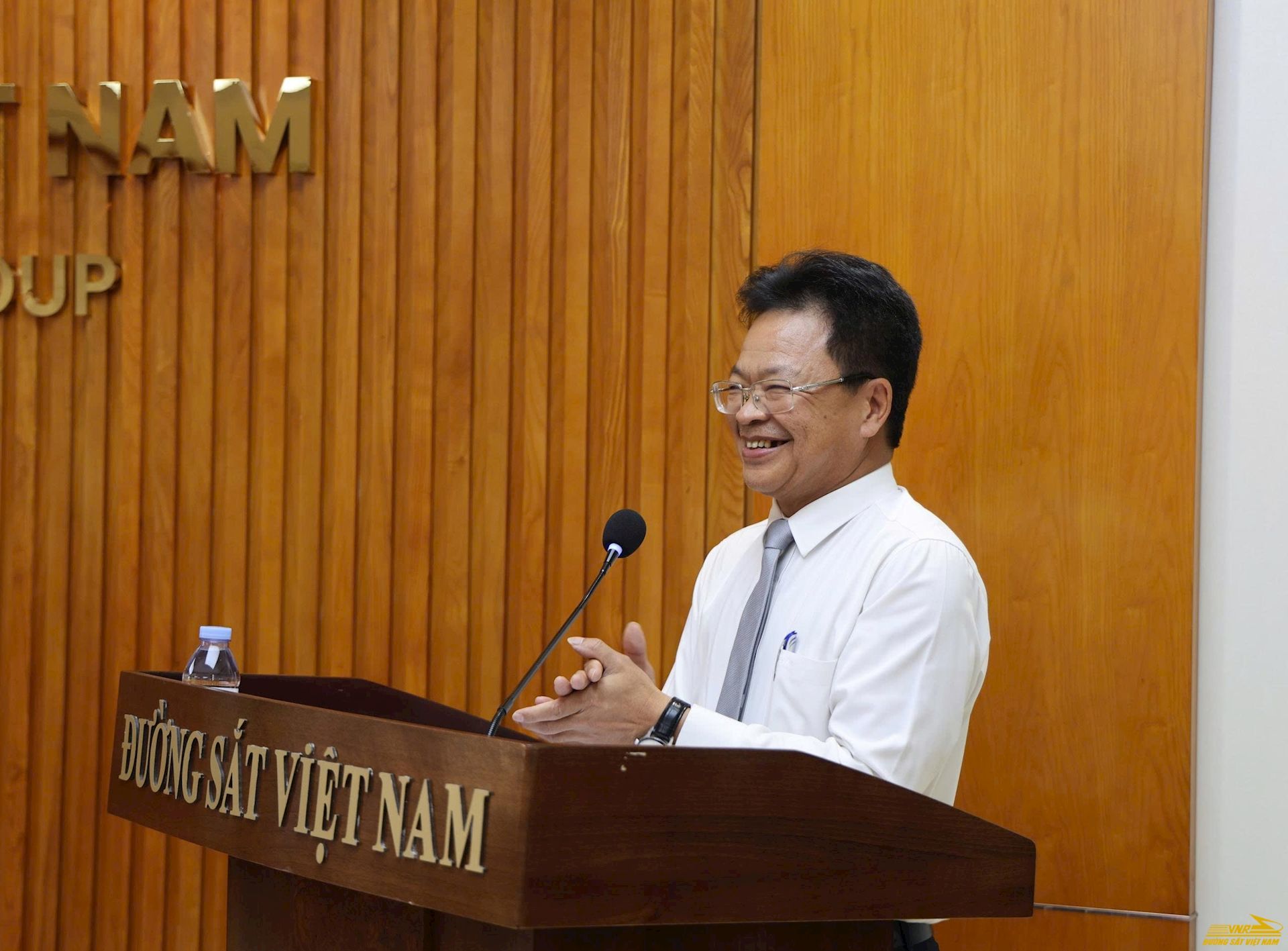
Chairman Dang Sy Manh delivers his guidance at the conference.
In assigning responsibilities to the department’s leadership and staff, Mr. Dang Sy Manh, Secretary of the Party Committee and Chairman of the Group’s Members’ Council, called on the department to unite and immediately begin implementing the approved proposal and fulfilling the functions and responsibilities assigned by the Group.
He emphasized that concrete deliverables must be established across all aspects, from staffing and operating regulations to implementation roadmaps. The department must clearly define what it will achieve by the end of 2026, what it must accomplish in 2027, and what results it aims to deliver by 2030. It must also determine appropriate approaches to asset development and TOD for both existing railway lines and new railway projects.
He stressed that the department must transform its positioning, mindset, and actions; comply with the law; pursue sustainable development and long-term objectives; carefully study international experience; and remain closely aligned with the Group’s two strategic missions. He underscored that the railway sector must always plan ahead strategically, as a reactive approach will leave it at a persistent disadvantage.
Sharing international experiences in TOD development, Mr. Dang Sy Manh noted that in Japan, following assessments of station redevelopment and the adoption of new train technologies, railway infrastructure in some station areas had been consolidated into one section, allowing the remaining area to be developed under the TOD model. In other locations, railway infrastructure had been placed underground to free up the space above for TOD development.
These approaches have generated substantial TOD revenue, which in some countries exceeds revenue from railway transportation. They have also created broader benefits that are difficult to quantify, such as the development of station-centered cities and the transformation of once-quiet station areas into modern, vibrant urban centers.
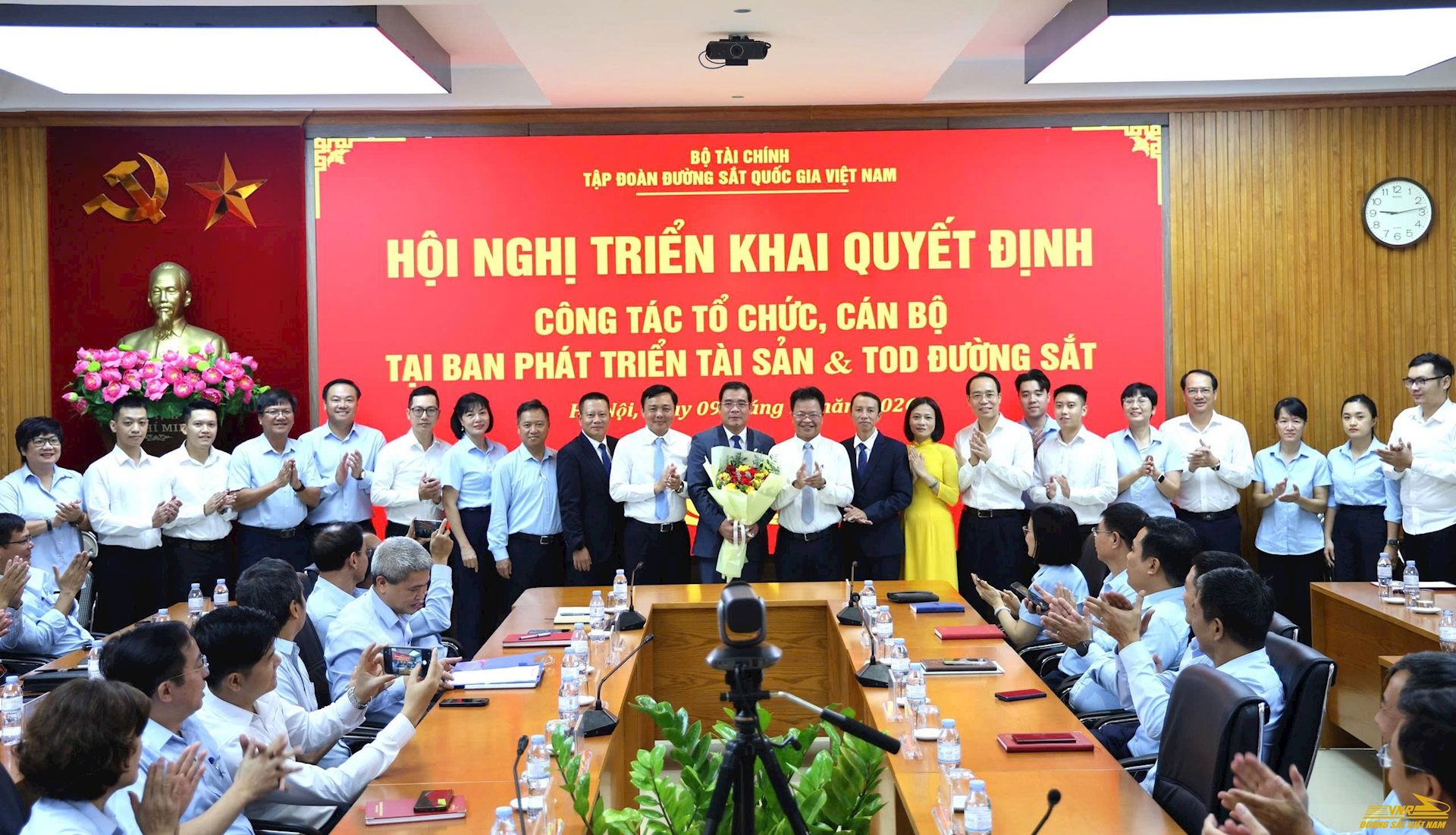
Chairman Dang Sy Manh, General Director Hoang Gia Khanh, members of the Members’ Council, the Group’s leadership, and staff of the Railway Asset Development and TOD Department pose for a commemorative photo.
Taking a candid view of the situation, Chairman Dang Sy Manh pointed out that Vietnam’s railway sector had so far focused primarily on asset management, without giving sufficient attention to asset development and TOD or achieving effective results in these areas. He stressed the need to redefine the sector’s positioning and make every effort to implement these solutions effectively, with the ultimate goal of generating revenue from railway assets to finance further railway development.
Only by doing so, he concluded, can the railway sector strengthen its voice and capacity to protect what it values and develop lasting assets that can be passed on as a legacy to future generations.