Vietnam’s mechanical engineering industry is facing significant opportunities arising from investment in energy, railways, mining, and the processing and manufacturing industries. However, to turn market potential into actual production capacity, the development strategy for 2026–2045 must focus on mastering technologies, strengthening domestic enterprises, and establishing mechanisms that enable Vietnamese companies to participate more deeply in major industrial projects.
On October 23, 2026, the National Research Institute of Mechanical Engineering (NARIME) held a workshop in Hanoi entitled “Developing a Strategy for Vietnam’s Mechanical Engineering Industry through 2035, with a Vision to 2045.” Attendees included Mr. Tran Viet Hoa, Director General of the Industrial Agency under the Ministry of Industry and Trade; Dr. Phan Dang Phong, Director of NARIME; and Assoc. Prof. Dr. Nguyen Chi Sang, Chairman of the Vietnam Association of Mechanical Industry (VAMI), alongside representatives from regulatory agencies, research institutes, associations, educational institutions, businesses and the press.

Dr. Phan Dang Phong, Director of NARIME, delivers the opening remarks at the workshop.
In his opening remarks, Dr. Phan Dang Phong emphasized that mechanical engineering is a foundational industry that supplies machinery and equipment to numerous economic sectors. It also plays a vital role in productivity, competitiveness and the country’s technological self-reliance.
In recent years, Vietnamese mechanical engineering enterprises have made notable progress, gradually mastering the design, manufacturing, installation and technical servicing of equipment systems for hydropower, thermal power, cement production, mineral extraction and processing, oil and gas, chemicals, agriculture and transportation. Some enterprises have also become more deeply involved in the automotive industry, production automation and domestic and international supply chains.
However, the industry’s capabilities remain insufficient to meet development requirements. Many enterprises primarily undertake machining, manufacturing and installation based on existing designs, while their capabilities in overall design, system integration and the supply of complete equipment systems remain limited. Weak links between research and production have also prevented many research outcomes from being commercialized.
Meanwhile, investment demand across industrial sectors is creating a substantial market opportunity for Vietnam’s mechanical engineering industry, which is forecast to reach approximately USD 825 billion by 2045. This presents an opportunity to establish and develop entirely new domestic industrial capabilities.
The key challenge is to capitalize on this market effectively so that domestic enterprises can strengthen their design, technological and supply capabilities through each project. Therefore, the strategy must clearly define the priority products to be mastered, the organizations responsible for implementation, the required investment resources, and mechanisms that connect market demand with domestic capabilities.

Mr. Tran Viet Hoa, Director General of the Industrial Agency, co-chairs the workshop.
Reviewing the Previous Strategy and Defining a New Development Path
Presenting a report evaluating the implementation of Decision No. 319/QD-TTg issued by the Prime Minister approving the Strategy for the Development of Vietnam’s Mechanical Engineering Industry through 2025, with a Vision to 2035, Dr. Vu Van Khoa, Deputy Director of NARIME, stated that after more than seven years of implementation, the industry had expanded its production scale and improved its capacity to manufacture machinery, equipment and spare parts. Some domestic enterprises had gradually joined supply chains and undertaken increasingly demanding technical work.
Nevertheless, these achievements have yet to match the industry’s potential and market demand. Most mechanical engineering enterprises are small or medium-sized, with limited financial resources, outdated or inconsistent equipment and technology, and weak research and development capabilities. Only a small number can independently undertake overall design, master core technologies, integrate systems and act as general contractors.
Another limitation is that the previous strategy’s objectives were not fully translated into a consistent system of indicators, calculation methods and data sources. Tasks and solutions were not closely linked to specific programs, projects, resources and measurable outcomes. Policies on investment, credit, taxation, science and technology, market development and bidding remained fragmented, failing to provide sufficiently strong incentives for enterprises to make long-term investments in products requiring substantial capital and involving significant technological risks.
These challenges demonstrate that the new strategy must go beyond setting general development directions. It must clearly specify implementation arrangements, resource allocation and mechanisms for monitoring and evaluating results.

Dr. Vu Van Khoa, Deputy Director of NARIME, presents a report at the workshop.
According to the report entitled “Developing a Strategy for Vietnam’s Mechanical Engineering Industry through 2035, with a Vision to 2045,” presented by Dr. Phan Dang Phong, the industry’s total production value increased from VND 1,626.3 trillion in 2018 to VND 3,225.5 trillion in 2025, nearly doubling at an average annual growth rate of approximately 10.3%. However, foreign-invested enterprises (FDI) continued to dominate the sector, with their share rising from 55% in 2018 to 61.6% in 2025.
This indicates that rapid production growth does not necessarily mean Vietnamese enterprises have mastered the activities that generate the highest value. The challenge for the next phase is to shift from extensive growth toward higher-quality development, with domestic capabilities in design, manufacturing and system integration, together with the value added generated by local enterprises, becoming key performance indicators.
A Large Market Must Be Matched by Strong Domestic Capabilities
The 2026–2045 period is expected to offer substantial development opportunities for the mechanical engineering industry, driven by numerous investment programs and projects in energy, urban railways, interregional railways, high-speed railways, mineral extraction and processing, defense industry, processing and manufacturing, and technical infrastructure.
NARIME’s report outlines three growth scenarios for the industry’s production value, with annual growth rates of approximately 6.5%, 10% and 12%, respectively. Under the proposed strategic direction, sectors such as energy, oil and gas, electrical equipment, automobiles, railways, mining and automation should receive particular attention because of their large market potential and ability to generate spillover effects across other industries.
However, a large market can become a genuine driver of development only when domestic enterprises have the necessary conditions to participate. If large-scale projects continue to rely primarily on imported equipment, expanded production opportunities may not translate into commensurate improvements in technological capabilities and domestic value added.
Accordingly, the draft strategy sets a target for the mechanical engineering industry to achieve a localization rate of approximately 35%, a design and manufacturing self-reliance rate of around 45%, and value added equivalent to approximately 25% of the industry’s total production value by 2030.
By 2035, these rates are expected to reach approximately 40%, 55% and 30%, respectively. The industry aims to establish around 500 core mechanical engineering enterprises, including three to five companies capable of serving as general contractors or system integrators for domestic industrial projects.
Looking toward 2045, the localization rate is expected to reach approximately 60%, the design and manufacturing self-reliance rate around 75%, and value added approximately 45% of the industry’s total production value. The long-term goal is to establish around 1,200 core mechanical engineering enterprises, including five to seven large-scale corporations and enterprises operating at regional standards.
To achieve these targets, the strategy identifies several groups of tasks, including institutional reform, market development, stronger design and manufacturing capabilities, and the promotion of science, technology, innovation, digital transformation, supporting industries and human resources. Upgrading standards, testing and certification systems, mobilizing financial resources and strengthening international cooperation are also considered essential.
Creating Meaningful Opportunities for Vietnamese Enterprises
Representing LILAMA Corporation – JSC, Mr. Nguyen Van Hung, General Director, stated that Vietnamese mechanical engineering enterprises had made significant progress and were now capable of undertaking complex technical work at major national industrial and energy projects. However, future development objectives should not focus solely on increasing production output or localization rates. Greater emphasis should be placed on mastering technologies, design and manufacturing, as well as the overall execution of major industrial projects.
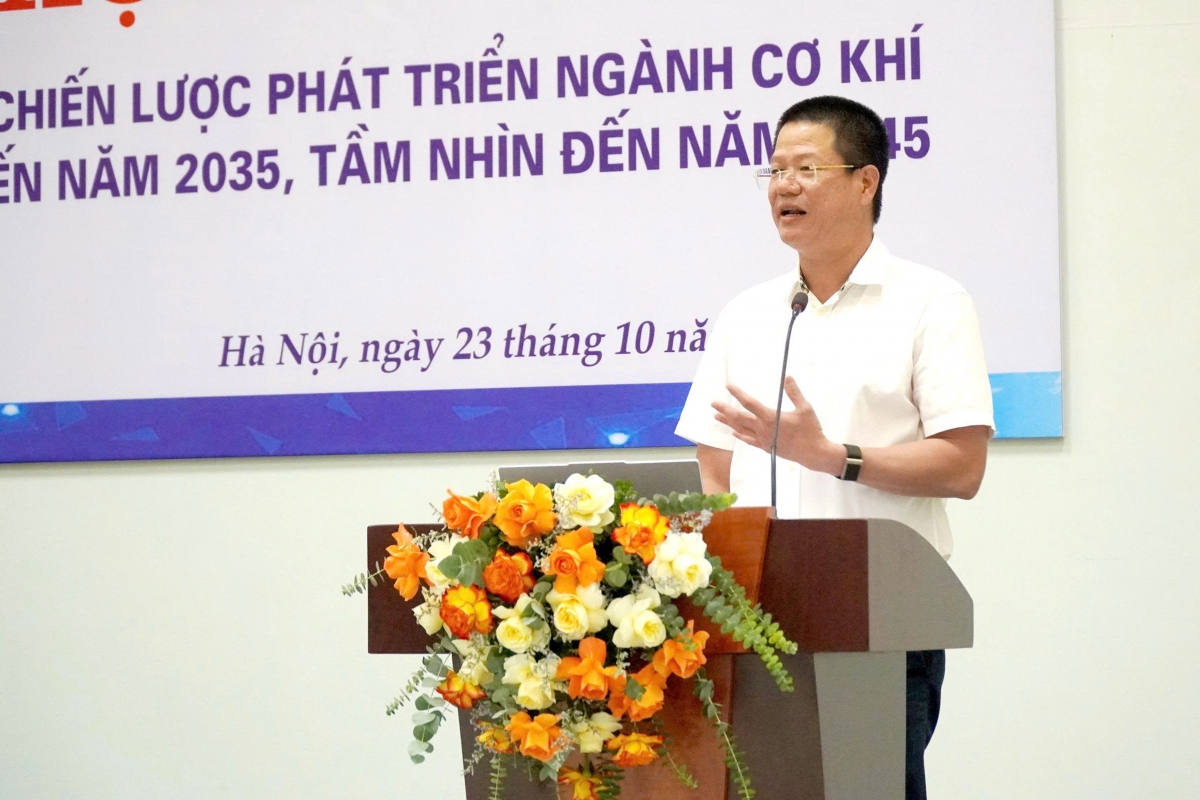
Mr. Nguyen Van Hung, General Director of LILAMA.
Drawing on its operational experience, LILAMA proposed establishing a long-term market development strategy that creates genuine opportunities for domestic mechanical engineering enterprises to participate in key projects. Appropriate support mechanisms should also be developed to strengthen their competitiveness, particularly their financial capacity. Developing a highly skilled technical workforce and promoting technology transfer should likewise be identified as priority tasks.
From the business community’s perspective, Assoc. Prof. Dr. Nguyen Chi Sang, Chairman of VAMI, expressed broad agreement with the draft strategy. He also praised its approach of reviewing the implementation of Decision No. 319/QD-TTg and analyzing the gap between production growth and capabilities in technological mastery, design and value creation.
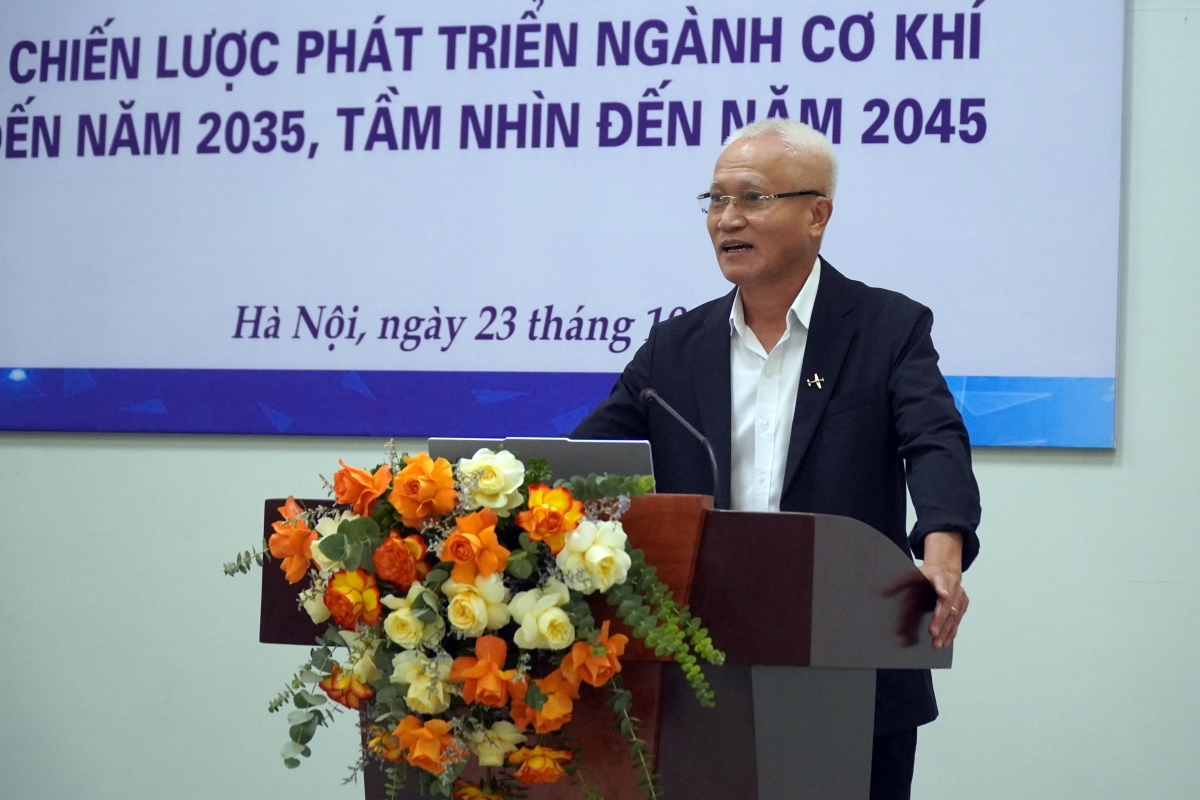
Assoc. Prof. Dr. Nguyen Chi Sang, Chairman of VAMI, expresses his appreciation for the approach adopted in the draft strategy.
According to VAMI, the strategy should establish sufficiently specific mechanisms to enable Vietnamese enterprises to participate meaningfully in large-scale public investment projects, particularly in high-speed railways, urban railways, bauxite–alumina–aluminum projects and wind power.
One notable proposal is to assess domestic supply capabilities from the early stages of investment preparation and technical specification development. Early disclosure of equipment requirements, appropriate division of bidding packages, standardization of equipment modules for joint procurement, and the facilitation of consortia, manufacturing partnerships and technology transfer would give domestic enterprises more time to prepare their capabilities.
The association also proposed developing targeted domestic market development mechanisms, with appropriate conditions and time limits for product groups in which Vietnamese enterprises already possess, or could develop, competitive capabilities. In addition, coordination between regulatory agencies and industry associations should be strengthened, alongside mechanisms for monitoring import fluctuations, selling prices and market shares to identify potential impacts on domestic production in a timely manner.
In the area of training, Assoc. Prof. Dr. Truong Hoanh Son, Rector of the School of Mechanical Engineering at Hanoi University of Science and Technology, proposed four directions for workforce development: restructuring training curricula toward interdisciplinary learning and digitalization; shifting decisively toward project-based training; promoting co-training models between educational institutions and enterprises; and internationalizing workforce capabilities in conjunction with sustainable development principles.
These proposals demonstrate that developing the mechanical engineering industry is not simply a matter of investing in machinery, expanding factories or increasing the number of enterprises. Manufacturing capabilities depend on an entire ecosystem comprising skilled personnel, research, supporting industries, technical standards, financing and a sufficiently stable market to encourage long-term investment.
At the workshop, Mr. Tran Viet Hoa, Director General of the Industrial Agency under the Ministry of Industry and Trade, emphasized that developing the mechanical engineering industry is an important task in strengthening the self-reliance of the industrial sector and meeting the economy’s demand for machinery and equipment. As Vietnam enters a new stage of development, formulating a strategy through 2035, with a vision to 2045, is essential for guiding investment, technological development and resource mobilization.
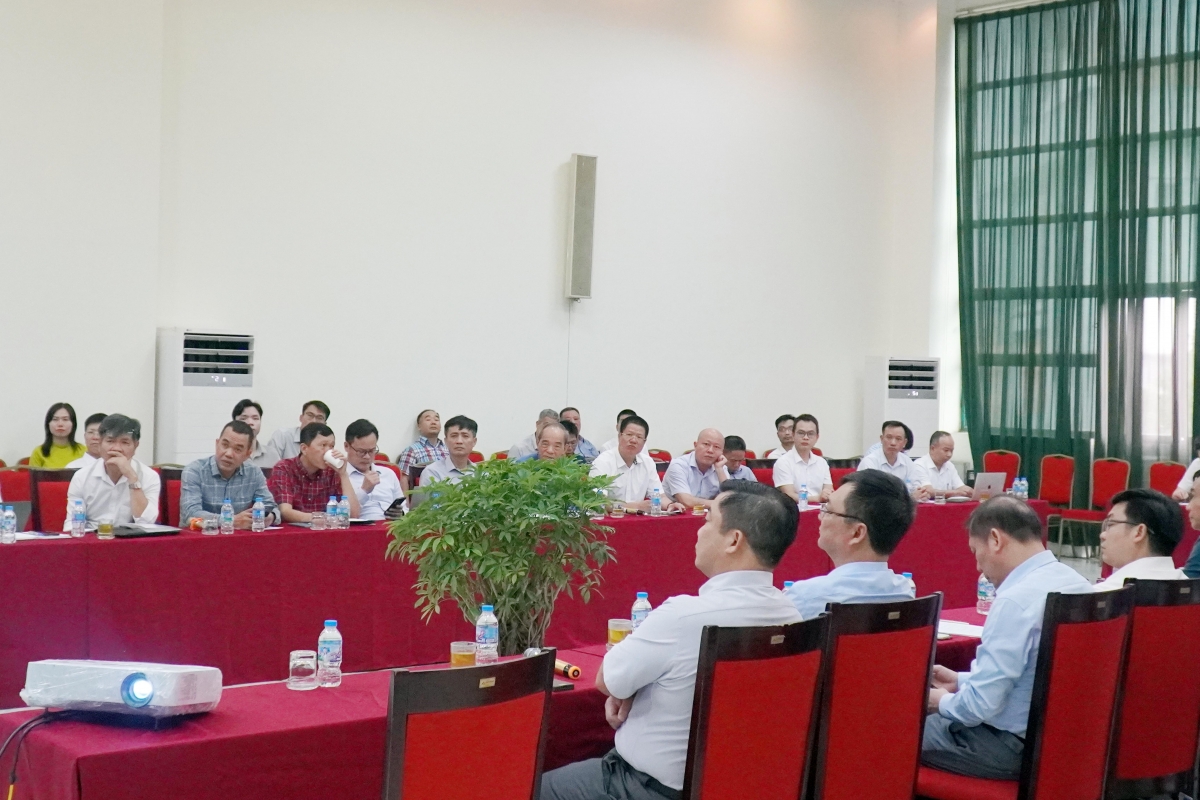
Overview of the workshop.
The key requirement for Vietnam’s mechanical engineering development strategy for 2026–2045 is to connect three elements: market demand, enterprise capabilities and policy mechanisms. Market demand must be translated into orders and production opportunities; investment projects must be linked to improvements in design, manufacturing and system integration; and policies must create conditions for Vietnamese enterprises to participate more deeply, gradually master technologies and increase the value they generate.
If these challenges are addressed, the mechanical engineering industry will not only be better equipped to meet domestic demand for machinery and equipment and reduce import dependence, but will also have opportunities to develop core enterprises capable of participating in regional and international supply chains. This will provide a foundation for mechanical engineering to become a key pillar of Vietnam’s national industry, contributing to rapid and sustainable development and strengthening the economy’s self-reliance.