New loans and grants totaling more than USD 709 million from the World Bank (WB) and the Asian Development Bank (ADB) are being allocated to a range of projects in transport infrastructure, irrigation, fisheries, and climate change adaptation in Vietnam.
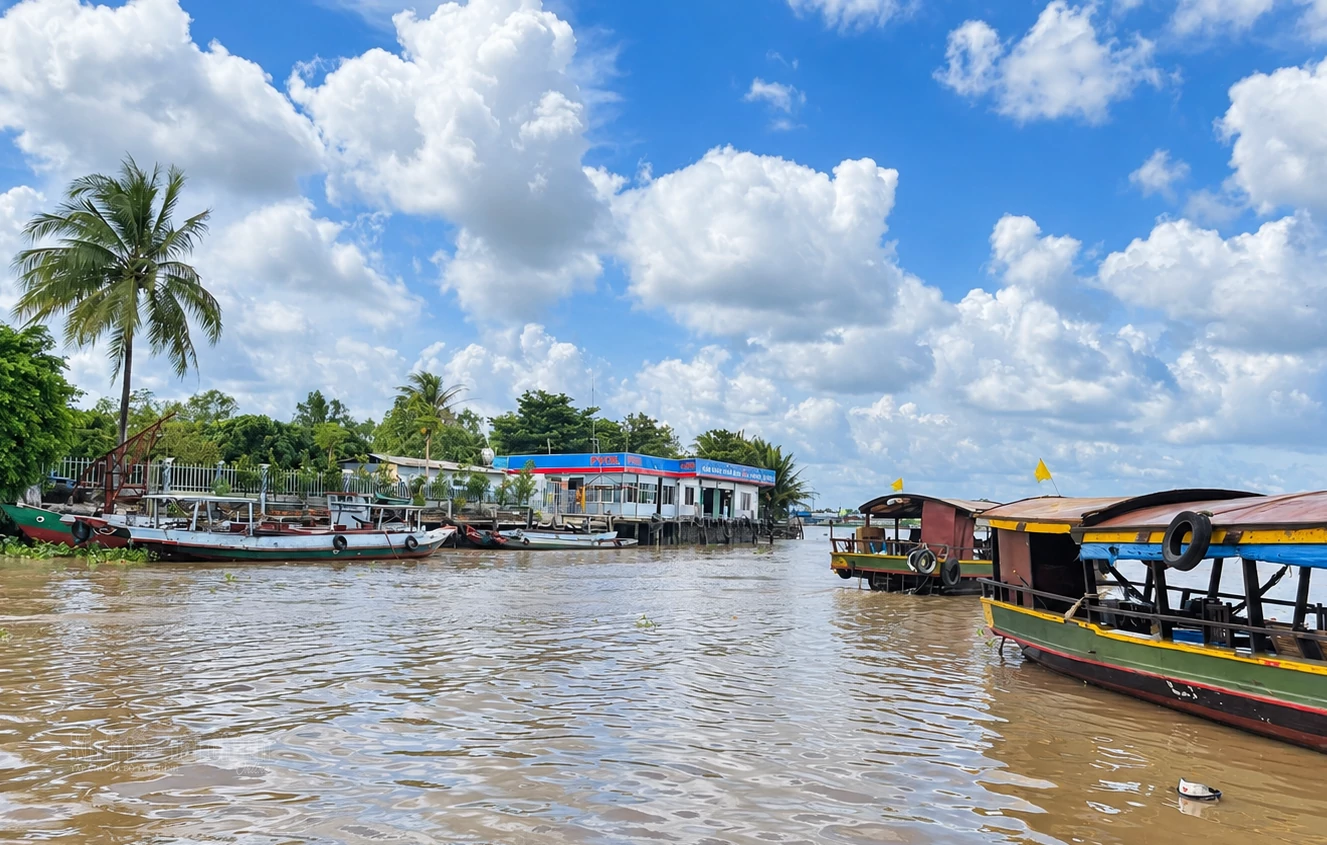
Various sources of funding are being provided to support the Mekong Delta in adapting to climate change. Illustrative photo: H.D.
Recently, the World Bank’s Board of Executive Directors approved three new projects to support Vietnam in strengthening trade corridors connecting agricultural and manufactured and processed goods with markets, while also strengthening the coastal fisheries sector.
The total loan amount for the three projects is USD 666.74 million, provided by the International Bank for Reconstruction and Development (IBRD), a member of the World Bank Group that provides loans to governments of middle-income countries.
Of this amount, the Hai Phong Climate Resilient Development Project is valued at USD 260.1 million and was approved by the World Bank’s Board of Executive Directors on September 4.
According to the World Bank, the project will construct a new section of Ring Road 3 in Hai Phong, thereby reducing travel time for trucks between key hubs. The project will also expand wastewater treatment capacity and protect the city’s historic central area from flooding risks, benefiting more than 311,000 residents.
The construction process is expected to create employment for approximately 10,700 unskilled workers and 2,300 skilled workers.
Another loan of USD 251.12 million is allocated to the Mekong Delta Regional Connectivity for Climate Resilience Project, which was approved on September 9.
The project will upgrade 251 km of key national highways in accordance with international road safety standards. The improvements are expected to ensure year-round connectivity for 856,800 direct users while helping farmers transport their goods to markets during periods of heavy rainfall. Construction activities are expected to generate approximately 10,900 jobs annually.
Alongside transport infrastructure, World Bank funding is also being allocated to the Sustainable Fisheries Development Project, valued at USD 155.52 million and approved on September 14.
The project will be implemented in northern and central regions and the Mekong Delta, with the aim of modernizing nine fishing ports, developing infrastructure networks, and strengthening capacity to promote sustainable and climate-resilient fishing and aquaculture.
More than 525,000 fishers, aquaculture farmers, and coastal residents are expected to benefit through higher incomes, improved seafood quality, and reduced post-harvest losses. Women are expected to account for at least half of the direct beneficiaries.
Ms. Mariam J. Sherman, World Bank Country Director for Vietnam, Cambodia, and Laos, said that better transport corridors and urban services help reduce business costs. These projects will help Vietnam enhance its competitiveness while managing climate risks and using natural resources sustainably.
Alongside the World Bank loans, in early September, ADB and the Government of Vietnam signed a USD 42.76 million financing package for a project to modernize climate-resilient irrigation systems in Dong Nai, Gia Lai, and Quang Ngai.
The financing package comprises USD 40.66 million from ADB’s ordinary capital resources and two grants from the Government of Japan administered by ADB. Of these, USD 1.5 million comes from the Japan Fund for Prosperous and Resilient Asia and the Pacific, while USD 600,000 comes from the High Technology Fund.
According to ADB, the project will modernize seven irrigation systems and improve water management, thereby supporting local communities in responding to drought, changes in rainfall patterns, and growing competition for water resources. Approximately 295,500 people are expected to benefit directly from the project.
Mr. Shantanu Chakraborty, ADB Country Director for Vietnam, said that modern and reliable irrigation systems play an essential role in protecting rural livelihoods and strengthening food security amid increasing pressure from extreme weather events on water resources. The project will provide more reliable irrigation services, support farmers in transitioning and diversifying toward higher-value crops, and help build more resilient livelihoods.