The continued review and updating of the Power Development Plan VIII in 2026 has highlighted the urgent need to ensure a balance between electricity supply and demand during the 2030–2035 period. Amid the new wave of investment in the energy sector, this is also considered an important opportunity for LILAMA to leverage its strengths in EPC contracting, construction and installation, mechanical fabrication, equipment installation and the expansion of employment opportunities for its workforce.
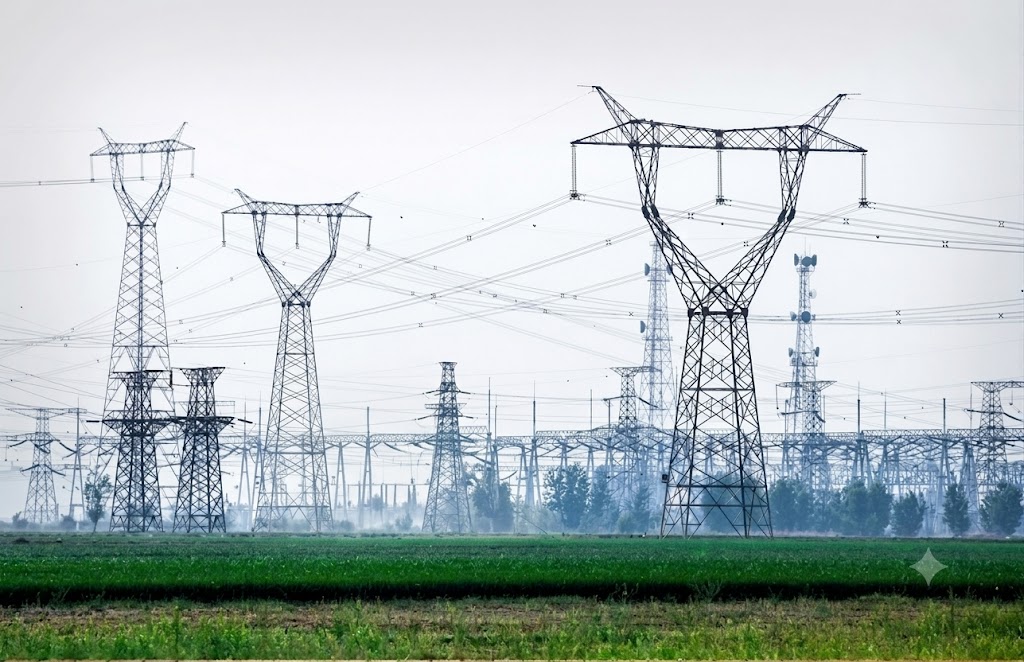
Rapidly Rising Demand and Increasing Requirements for Power Supply
The actual operation of the power system in 2026 has shown increasingly evident pressure from the rapid growth in electricity demand. According to the review documents, in the first six months of 2026, total commercial electricity output across EVN exceeded 152.5 billion kWh, up 10.2% year-on-year, with the northern region alone recording an increase of 13.1%. During the heatwave from June 22 to 25, 2026, the system’s peak capacity reached 57,537 MW, while the highest daily electricity output reached 1,215.4 million kWh.
Notably, electricity demand in the coming years will not only come from traditional industrial and residential consumption. The digital economy, artificial intelligence, data centers, the semiconductor industry, high-tech industrial parks, transport electrification and high-speed railways are creating new forms of electricity demand that are large-scale, concentrated and highly demanding in terms of stability and power quality.
This is fundamentally changing the power planning challenge. It is no longer sufficient to determine how much electricity the economy will need; it is also necessary to determine where and when electricity will be needed, at what capacity, and with what level of reliability.
While demand is growing rapidly, the progress of several major power generation projects also faces certain challenges. The gap between planned capacity and the ability to bring power sources into operation on schedule has become an issue requiring regular assessment. Therefore, the review of Power Development Plan VIII is not merely about adding generation capacity, but must also simultaneously assess the ability of power sources and grids to meet demand in terms of both location and timing.
Under the revised Power Development Plan VIII, by 2030, the total capacity of power sources serving domestic demand is projected to range from 183,291 MW to 236,363 MW. The plan also provides for the development of various types of power generation, including LNG, offshore wind power, solar power, pumped-storage hydropower, energy storage systems and nuclear power.
This outlook indicates that the scale of investment in the energy sector will remain substantial in the coming years.
Employment Opportunities from New Energy Projects
For LILAMA, the development of power generation and transmission systems is not only a market opportunity but also directly generates demand for construction and installation, equipment fabrication and equipment installation services.
Every new power project entails a chain of activities ranging from design and project management to equipment fabrication, steel structures, mechanical works, construction, installation, commissioning and project handover. For large-scale projects, increasingly stringent requirements for schedule, quality and safety demand a workforce of highly qualified and experienced engineers, technical personnel and installation workers with a strong sense of discipline.
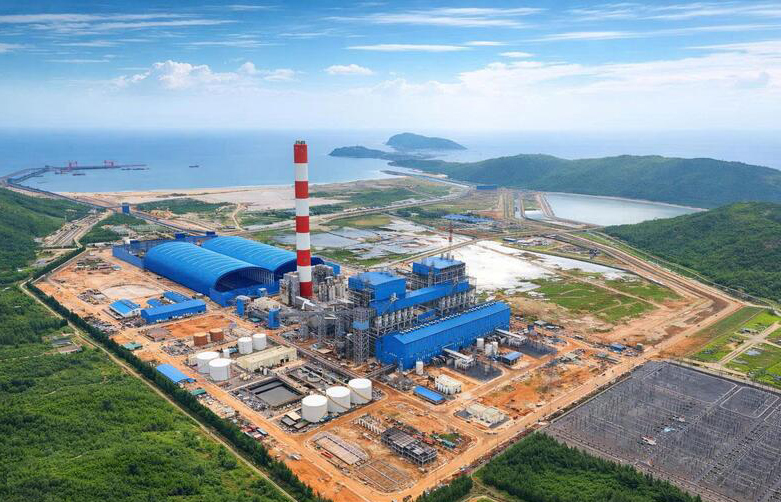
Quang Trach 1 Thermal Power Plant, with a capacity of 1,403 MW, in which LILAMA participated in construction, is preparing for commercial operation by the end of this year.
In particular, the power sources planned for development in the coming period involve a diverse range of technologies. LNG-fired power requires power plant systems, import infrastructure, storage and port facilities, as well as reliable fuel supply. Offshore wind power requires surveys, investment, grid connection and implementation under technically complex conditions. BESS and pumped-storage hydropower systems, meanwhile, play an important role in enhancing the flexibility of the power system.
This represents an opportunity for domestic construction and mechanical engineering enterprises to strengthen their role in the energy sector value chain.
For LILAMA, its experience in participating in numerous major power projects provides an important foundation for capturing new opportunities. From thermal and hydropower projects to gas-fired power and large-scale energy projects, LILAMA’s workforce has accumulated extensive experience in construction organization, equipment installation and schedule control for projects with demanding technical requirements.
During the 2030–2035 period, as balancing supply and demand requires the preparation of reserve power sources and the acceleration of projects that can be implemented, demand for construction and installation capabilities will become increasingly critical. The review documents emphasize the need to develop realistic project schedules, identify power sources at risk of delays and prepare alternative plans.
For installation contractors, this is a signal that the market may generate multiple layers of project opportunities, ranging from new power generation projects to system upgrades and expansions, power grid development and facilities serving emerging load centers.
More importantly, “getting ahead” does not mean waiting until a project is launched before preparing resources. It requires early preparation in terms of human resources, equipment, technology and project management capabilities.
Proactively Preparing Resources for the Next Development Cycle
One of the key requirements arising from the review of Power Development Plan VIII is the need to align power generation and grid planning with demand. Data centers, high-tech industrial parks, semiconductor manufacturing and high-speed railways may create new load centers, requiring power sources and grid infrastructure to be prepared at the right locations and at the right time.
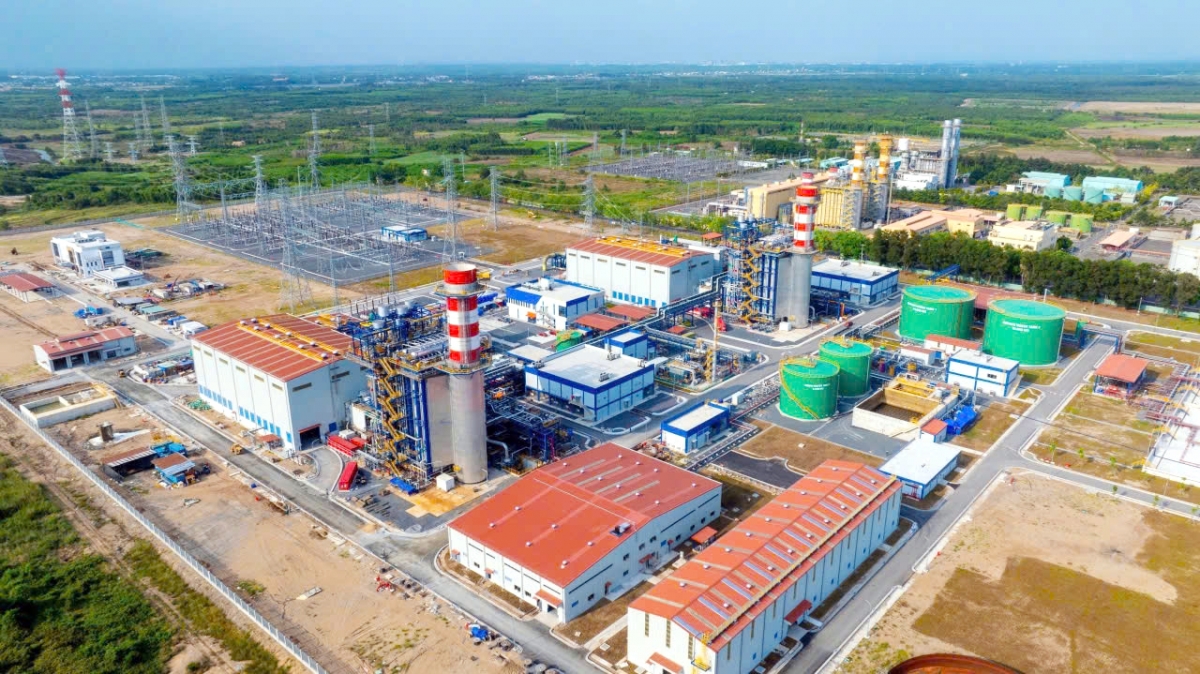
Nhon Trach 3 & 4 Power Plant, Vietnam’s first LNG-fueled power plant, for which LILAMA serves as the EPC contractor, has commenced stable commercial operation on the national grid.
This means that the future energy construction and installation market will not only expand in scale but will also evolve in terms of technical requirements.
For LILAMA, turning planning opportunities into actual projects will depend on competitiveness. This includes the ability to meet schedule, quality and safety requirements; technological capabilities; equipment manufacturing capacity; project management expertise; and the quality of its human resources.
In particular, as energy technologies become increasingly diverse, LILAMA’s engineers and workers will need to continue receiving training and improving their expertise to meet the new requirements of LNG, renewable energy, energy storage and high-tech industrial projects.
The revised Power Development Plan VIII is gradually moving toward a more flexible approach, shifting from a single scenario to multiple scenarios, with each demand scenario accompanied by a corresponding power development schedule and alternative plans in the event of project delays.
In this context, LILAMA also needs to prepare for multiple market scenarios. As demand grows rapidly, opportunities for new projects will expand; as new power projects are accelerated, demand for human resources and construction capabilities will increase; and as requirements for localization and technological self-reliance become increasingly stringent, the advantages of domestic enterprises with strong mechanical engineering and installation capabilities will become more apparent.
It can be said that the challenge of balancing electricity supply and demand during the 2030–2035 period is creating a new investment cycle for Vietnam’s energy sector. Behind the figures for megawatts of capacity and the power generation and grid projects lies demand for thousands of engineers, skilled technical workers and installation specialists.
For LILAMA, this represents both an opportunity and a requirement to proactively innovate. Closely following Power Development Plan VIII, preparing resources at an early stage, strengthening technological capabilities and improving the quality of human resources will be key to enabling LILAMA to translate the energy sector’s development orientations into concrete projects, stable employment opportunities and new avenues for its workforce.
Because every energy project built today represents not only an additional source of electricity for the country, but also another step in affirming the capabilities of Vietnam’s installation workforce.