Vietnam has become a major supplier to global agricultural and forestry markets, but its export strength has yet to match its position in the international marketplace.
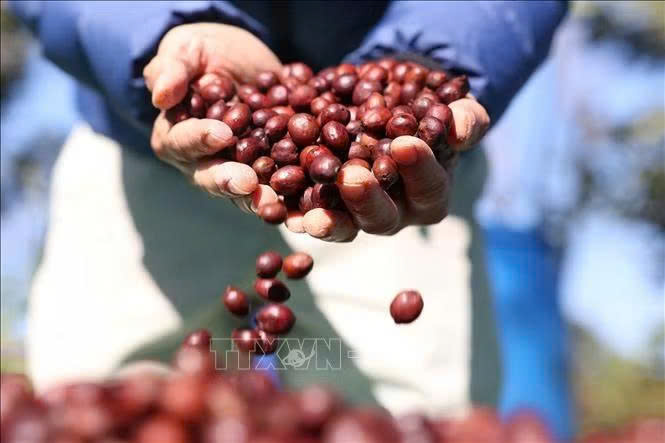
Illustrative photo: VNA
A significant share of high-value activities, technology, branding, standards, data, and decision-making power across many value chains remains outside the country. Vietnam has reached a point where it must move beyond its production advantages and take greater control of its value chains.
Wood, coffee, rubber, pepper, rice, and many other agricultural and forestry products have established a presence in international markets. From primarily exporting raw materials, many businesses have shifted toward processing and developing branded products with higher added value. Vietnam's geographical location, network of free trade agreements, improving production capacity, and diverse product portfolio give the country an advantage in becoming a key supply partner for many markets.
Vietnam also participates in various international and regional institutions related to its key industries, including the International Coffee Organization (ICO), the International Tropical Timber Organization (ITTO), the Association of Natural Rubber Producing Countries (ANRPC), and cooperation mechanisms within ASEAN.
However, a paradox remains: Vietnam can produce on a large scale and supply major markets, yet much of the high-value-added activity, technology, branding, standards, data, financing, and decision-making power remains outside the country.
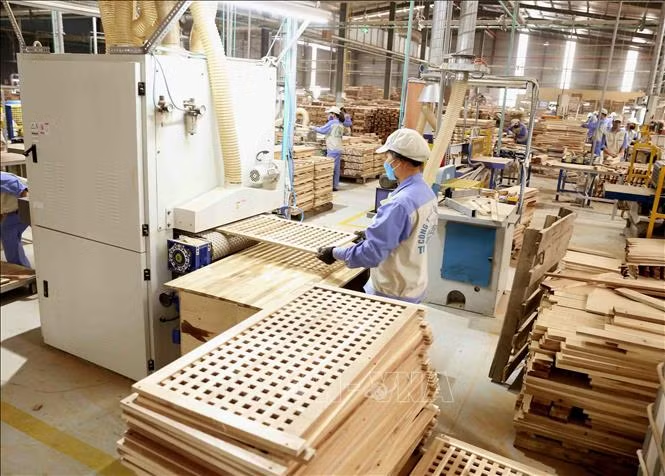
Wood furniture manufacturing at Trieu Phu Loc Company in Binh Duong. File photo: VNA
The wood industry clearly illustrates this gap. In 2025 alone, exports of wood and wood products reached approximately USD 17.2 billion, placing Vietnam among the world's five largest wood-exporting countries, first in Southeast Asia and second in Asia. The industry has established a relatively comprehensive production supply chain, supported by domestic raw materials and a relatively high level of added value in exported products.
However, according to Nguyen Quoc Khanh, Chairman of the Vietnam Timber and Forest Products Association (VIFOREST), the wood industry still operates primarily at the final stage of the supply chain. Vietnam has become a major manufacturing hub, relying largely on original equipment manufacturing (OEM), while its capabilities in original design manufacturing (ODM) and original brand manufacturing (OBM) remain limited.
This demonstrates that Vietnam's manufacturing capacity is strong enough to make it a major player in the global wood industry, but its capabilities in product design, brand development, and market positioning have not advanced at the same pace. When businesses remain heavily dependent on orders and designs provided by partners, their ability to determine the final value of their products is also constrained.
The coffee industry faces a similar situation. Vietnam is a global powerhouse in robusta coffee production and exports. However, according to Thai Nhu Hiep, Vice Chairman of the Vietnam Coffee and Cocoa Association (VICOFA), the world recognizes Vietnam for its scale and output, but quality has not yet become a sufficiently strong factor for the country to shape the rules of the game.
To bring quality to the negotiating table, the coffee industry must establish a consistent standards system covering everything from agricultural inputs and growing areas to traceability, data transparency, and sustainable production. Requirements under the EU–Vietnam Free Trade Agreement (EVFTA) and the European Union Deforestation Regulation (EUDR) should not be viewed merely as barriers to overcome, but as drivers for the industry to develop new capabilities.
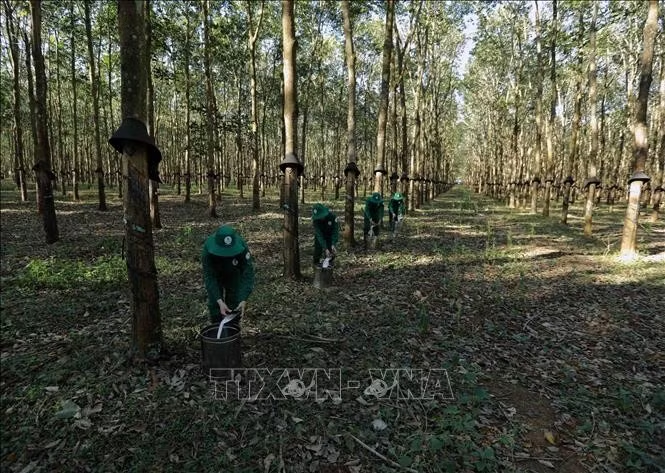
Illustrative photo: Vu Sinh/VNA
For rubber, the need for transformation is even more apparent. Although Vietnam ranks among the world's major producers and exporters of natural rubber, it still primarily sells raw latex. According to Nguyen Viet Tuong, former Vice Chairman of the Vietnam Rubber Association, the industry must shift from “selling raw materials” to “selling value,” with technology, data, and standards serving as its foundation.
Achieving this requires the development of a rubber industry ecosystem that connects processing companies, trading businesses, smallholder farmers, research institutes, educational institutions, and financial organizations. Large enterprises can act as leading forces in research and technology development, while cooperating with foreign-invested enterprises (FDI) to create higher-value products derived from natural rubber. Small-scale producers must also gradually adopt standards for sustainability, emissions reduction, green production, and the circular economy.
What wood, coffee, and rubber have in common is that large-scale output has enabled Vietnam to participate more deeply in global markets. However, production volume does not automatically translate into market power. Such power emerges only when businesses and industries control the links in the value chain that determine product value, from technology, design, branding, and standards to data and market forecasting capabilities.
According to Nguyen Quoc Khanh, the wood industry must think ahead and proactively develop a five-to-ten-year strategy rather than merely react to tariffs or market fluctuations. The industry needs to increase the design content of its products, build brands, apply artificial intelligence (AI) and advanced manufacturing technologies, and expand cooperation with FDI enterprises and regional partners.
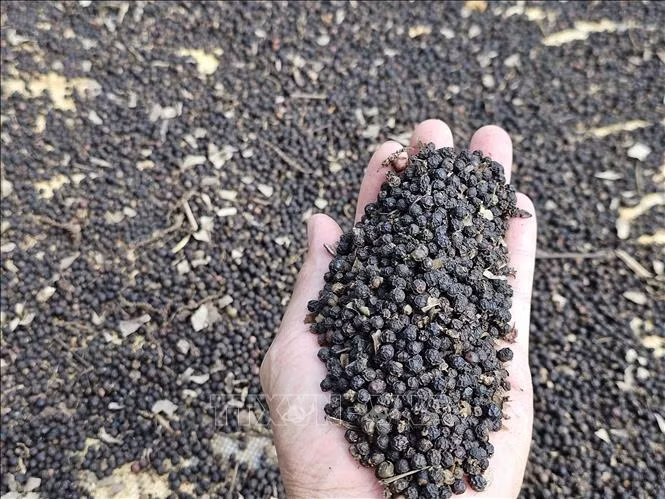
Dried peppercorns. Illustrative photo: Ngoc Minh/VNA
From a broader perspective, the diversity of Vietnam's agricultural products also provides an advantage in reducing dependence on a limited number of products or markets. According to Le Anh Dung, General Director of Vegetexco Vietnam, alongside established industries such as wood, rice, coffee, cashew nuts, and pepper, Vietnam still has considerable room for growth in fruit and vegetables, processed foods, and products that meet increasingly diverse market demands. The greater the variety of products, customers, and markets a business serves, the better it can adapt to fluctuations in international trade.
However, market diversification is only one part of the solution. The broader goal is to ensure that Vietnamese products entering international markets carry not only advantages in production volume and cost, but also Vietnam's own technology, standards, brands, data, and innovation capabilities.
Only when businesses move beyond merely complying with standards to gradually participating in their development, mastering technology, and controlling product design and branding can export strength be translated into a stronger position in global markets.