Vietnam National Railways Group has proposed further studying the option of bringing the national railway system, particularly the high-speed railway, into central Hanoi, instead of limiting passenger boarding and alighting to railway hubs located on the outskirts of the city.
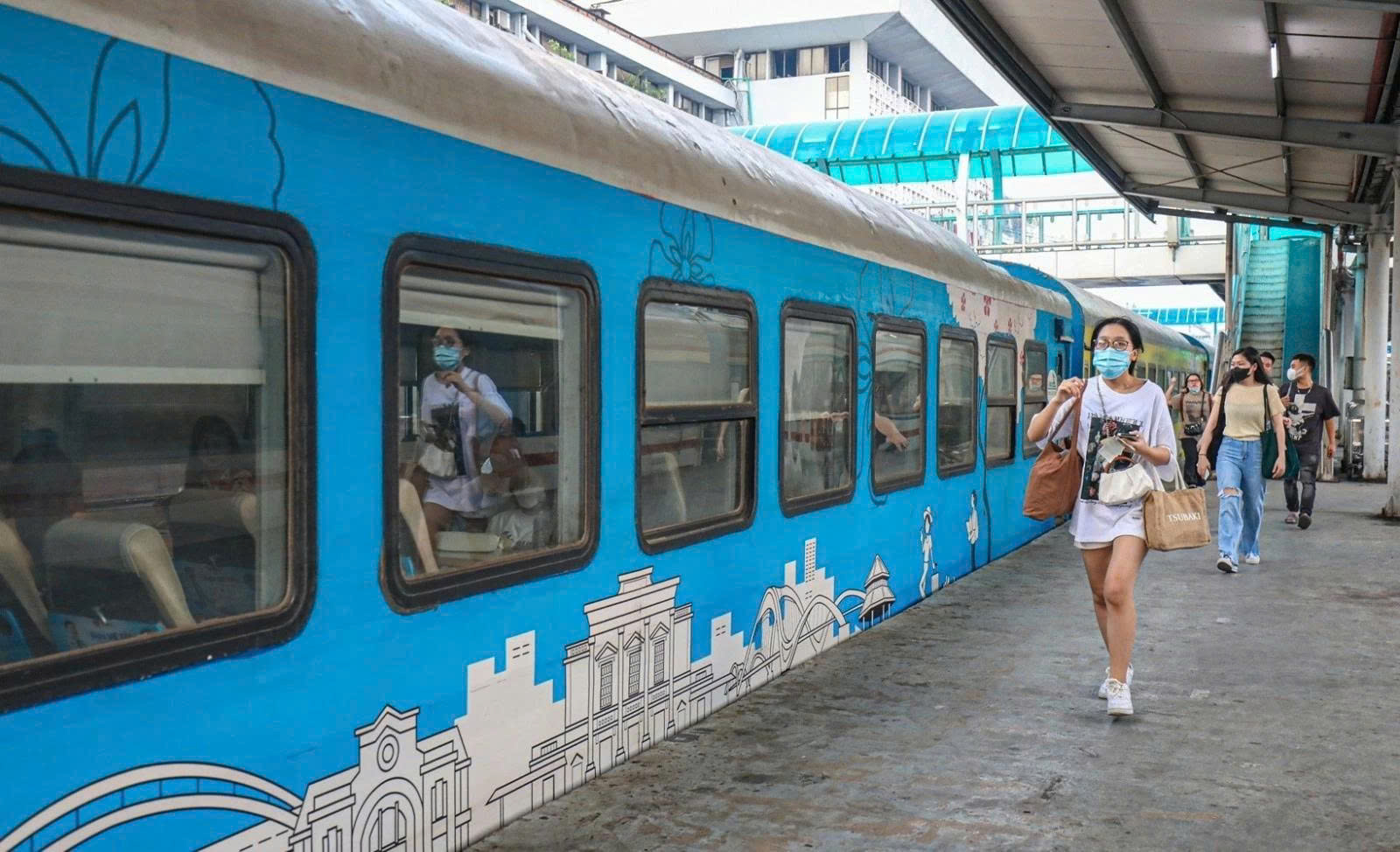
The Reunification Express train waiting to pick up passengers at Hanoi Railway Station
Vietnam National Railways Group (VNR) has recently submitted a document to the Ministry of Construction providing comments on the Planning for Railway Routes and Stations in the Hanoi Railway Hub Area, which is being submitted by the Vietnam Railway Authority for appraisal and approval.
According to VNR, as the enterprise directly responsible for managing and operating the national railway system, the Group has participated in the process of studying and finalizing the planning and has repeatedly provided comments to the agency in charge of planning on options for organizing the national railway network in the capital.
Under the draft Planning, Ngoc Hoi Station is identified as the southern railway passenger hub, while Gia Lam Station is designated as the northern passenger hub of Hanoi. National railway routes, including the high-speed railway, are expected to provide passenger boarding and alighting services at these hub stations, while passengers traveling to and from central Hanoi would continue their journeys via the urban railway system.
VNR believes that this approach requires further careful consideration before the network organization plan is finalized.
The Group said that its consistent position throughout the planning process, at meetings with Government leaders and in previous documents submitted to the Ministry of Construction, has been that the option of bringing the national railway system, including the high-speed railway, into central Hanoi should continue to be considered, following a model in which railway stations are located in the city center and national railway lines operate through the city center.
According to VNR, this approach could make better use of the advantages of rail transport, particularly its ability to provide direct connections between the urban center and areas within and outside the city.
Allowing the national railway system to directly access central areas could also help reduce traffic pressure at the city's gateways and limit the formation of bottlenecks when large numbers of passengers have to transfer at suburban stations.
One of VNR's key arguments is that national railways, particularly high-speed railways, offer advantages in terms of high transport capacity, safety and efficiency over medium- and long-distance routes.
To fully leverage these advantages, the national railway network needs to ensure convenient access to urban centers while also providing direct connections with public transport systems.
VNR cites the experience of Berlin, Tokyo and Seoul, where national railway networks are organized in a radial pattern, with major passenger stations primarily located in central areas and conveniently connected to public transport networks.
In large metropolitan areas such as Beijing and Paris, railway networks are organized according to a polycentric model, with national railway stations within the urban core connected to one another.
This approach enables national railways to become an integral component of the overall urban transport network, helping improve connectivity and reduce pressure on road traffic at the city's gateways.
For Hanoi, maintaining national railway connectivity with the city center has also been studied in the past.
Specifically, during the preparation of the Yen Vien–Ngoc Hoi Urban Railway Line No. 1 Project, Japanese consultant JTC studied an option to retain Hanoi Railway Station at its central location while operating the national railway and urban railway systems in an integrated manner.
According to VNR, these experiences demonstrate that locating national railway stations in central areas, or at locations that allow direct and convenient connections with public transport networks, is an important factor in improving the operational efficiency of the entire railway network.
Considering Hanoi's specific conditions, VNR noted that the capital has a large population, high demand for both interprovincial and intra-city travel, and an especially important role as a hub of the national railway network.
Therefore, the selection of locations for passenger railway hubs is not merely a matter of determining the location of individual stations. It should be considered as part of an overall assessment of journey times, accessibility to the city center, and the level of integration between the national railway system and public transport networks.
According to VNR, if the passenger hub is located in an outlying area such as Ngoc Hoi, while passengers traveling to and from central Hanoi have to make an additional transfer to the urban railway system, journey times and the number of transfers would increase. This could affect accessibility, convenience and service quality, particularly for interprovincial passengers traveling to and from Hanoi.
In its document submitted to the Ministry of Construction, the Group also stated that the impacts of the proposed planning option should continue to be comprehensively assessed, including accessibility, the connectivity capacity between different railway systems, journey times and the operational efficiency of the network as a whole.
On that basis, VNR proposed that the option of organizing the national railway network in a radial pattern continue to be considered, with the national railway system, particularly the high-speed railway, accessing and extending into central Hanoi, while providing direct and convenient connections with the urban railway network and other forms of public transport.
Previously, in late August 2026, the Vietnam Railway Authority proposed that the Ministry of Construction approve the Planning for Railway Routes and Stations in the Hanoi Railway Hub Area.
One notable feature of the new network organization plan is that Hanoi, Giap Bat and Long Bien stations are no longer classified as central or main stations. The national railway passenger hubs would instead be located at Ngoc Hoi and Gia Lam, while the northern and southern freight hubs on the Red River's two banks would respectively be located at Yen Thuong and the new Thuong Tin station.
Under the proposed transport organization plan, passengers traveling to and from Hanoi would board and alight at Gia Lam and Ngoc Hoi stations. Passenger flows between the northern and southern provinces would be transferred via the eastern railway ring route and these two hub stations.
For freight transport, goods arriving in Hanoi would be handled at the new Thuong Tin and Yen Thuong stations, while north-south freight flows would be transferred via the eastern railway ring route and the designated freight hubs.