Against the backdrop of the Government’s goal of achieving a breakthrough in economic development with double-digit growth during the 2026–2030 period, large-scale state-owned enterprises are expected to play a leading role in driving and paving the way for growth.
As one of the leading pillars of Vietnam’s food industry, the Southern Food Corporation (Vinafood II) has proactively translated the spirit of Politburo Resolution No. 79-NQ/TW dated January 6, 2026, on the development of the state economy into strategies for infrastructure, market expansion and modern corporate governance.
With a target of achieving more than VND 85 trillion in revenue during 2026–2030, together with a comprehensive investment plan for a high-quality rice value chain, Vinafood II is demonstrating its strong determination to ensure national food security while enhancing the value and brand of Vietnamese rice in international markets.
VNA reporters spoke with Mr. Nguyen Van Hien, General Director of Vinafood II, about the company’s restructuring roadmap, breakthrough growth drivers from 2026, and its commitment to affirming its core position in the new era.
Reporter: The Government has set a target of double-digit economic growth for the 2026–2030 period. Given the company’s scale, resources and position in the economy, how does Vinafood II define its role and responsibility in realizing this goal?
General Director of Vinafood II: As one of the leading state-owned enterprises in Vietnam’s rice industry, we are fully aware of our pioneering role in contributing to the Government’s goal of achieving double-digit economic growth.
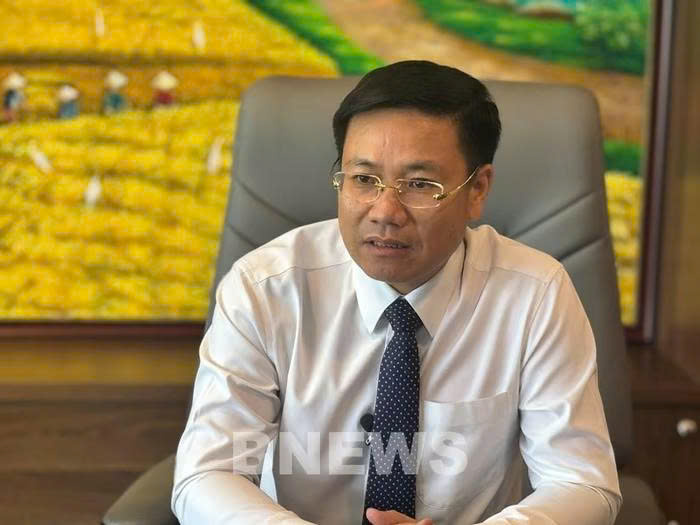
Mr. Nguyen Van Hien, General Director of Vinafood II. Photo: Tran Trung/Bnews/VNA
With its existing position, scale and capabilities, Vinafood II will continue to uphold its brand, implement market stabilization measures, ensure national food security, while enhancing the value and brand of Vietnamese rice and rice-based processed products in both domestic and international markets.
The Corporation will also play a pioneering role in leading the national rice value chain by leveraging its established brand and large-scale processing plant network. Vinafood II will accelerate the development of niche markets, focusing on high-quality products, expanding its market share in countries with stringent standards, and pursuing green and organic products.
With its strong internal capabilities and international reputation, we are confident that Vinafood II can serve as a breakthrough growth driver, contributing to the overall growth of the food industry and thereby supporting the Government’s goal of rapid and sustainable growth during the 2026–2030 period.
Reporter: What growth drivers does Vinafood II expect to leverage to contribute to economic growth? Which drivers could create a clear transformation as early as 2026?
General Director of Vinafood II: In line with Politburo Resolution No. 79-NQ/TW on the development of the state economy, Resolution No. 57-NQ/TW on the development of science and technology, innovation and national digital transformation, as well as the Corporation’s development orientation for 2026–2030 approved by the Ministry of Finance, Vinafood II has identified three key growth drivers.
First, corporate restructuring and the completion of the rice value chain, coupled with the development of high-quality raw material areas.
Second, expanding export markets, diversifying products and increasing value through processed rice-based products.
Third, leveraging science and technology, innovation, digital transformation, and investment in processing and logistics as drivers for improving productivity, efficiency and competitiveness.
From the beginning of 2026, Vinafood II has focused on implementing these solutions in a coordinated manner to improve operational efficiency, strengthen its role as a core state-owned enterprise leading the rice value chain, and enhance the position of Vietnamese rice in the global market.
Reporter: Could Vinafood II share specific targets for revenue, profit, development investment, labor productivity and budget contributions for 2026 and the entire 2026–2030 period?
General Director of Vinafood II: Based on the plan assigned by the Ministry of Finance and the Corporation’s approved development orientation for 2026–2030, Vinafood II strives to fulfill and exceed its targets in 2026.
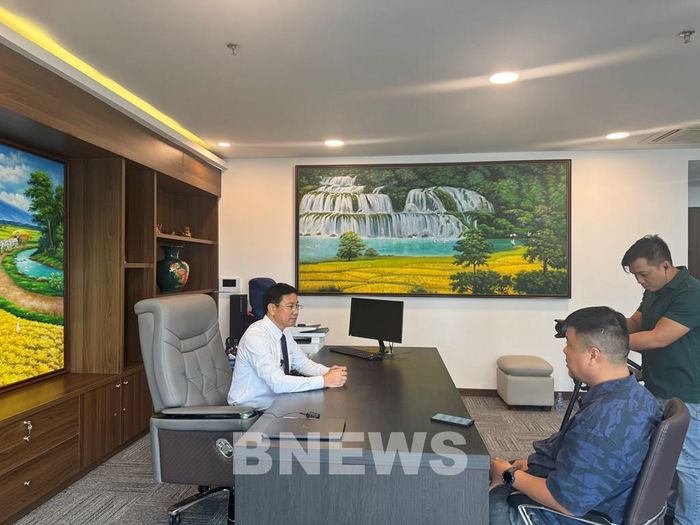
Mr. Nguyen Van Hien, General Director of Vinafood II, speaking with VNA reporters. Photo: Tran Trung/Bnews/VNA
Specifically, total output in 2026 is estimated at 1.535 million tonnes, exceeding 100% of the assigned target. The target assigned by the Ministry of Finance represents a 10% increase compared with the actual result in 2025.
Total revenue in 2026 is estimated at VND 17.3 trillion, equivalent to 108% of the target; export turnover is estimated at USD 385 million; profit is estimated at VND 71.55 billion, equivalent to 100% of the target; contributions to the state budget are expected to reach VND 145 billion; and development investment is estimated at more than VND 98 billion, equivalent to 105% of the annual target.
By 2030, our orientation is to become a modern agricultural economic enterprise and play a core role in the national rice value chain.
To achieve this goal, Vinafood II will focus on three major groups of solutions: improving the efficiency of state capital utilization, considering it a key resource for enhancing deep-processing capacity and completing a modern logistics system; contributing to the rapid and sustainable growth of the food industry and the national economy by strengthening the position of the Vietnamese rice brand in international markets; and developing sustainable raw material areas while establishing close links with farmers to ensure a high-quality supply for major export markets.
During the 2026–2030 period, Vinafood II targets total business volume of nearly 8.95 million tonnes, revenue of more than VND 85 trillion, pre-tax profit of VND 607.7 billion, and development investment of more than VND 970 billion.
Reporter: Amid the requirement for high growth alongside macroeconomic stability, what will Vinafood II do to expand its operations while ensuring the efficiency of state capital utilization, controlling risks and maintaining sustainable growth?
General Director of Vinafood II: Vinafood II’s consistent view is that growth must be associated with efficiency, quality and sustainable development.
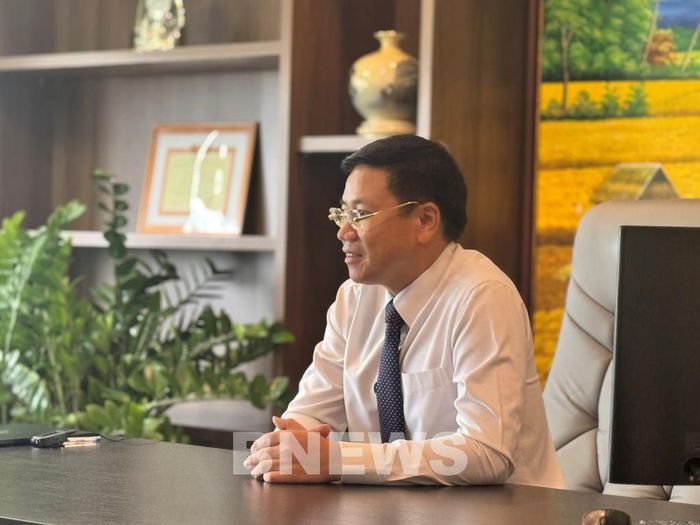
Mr. Nguyen Van Hien, General Director of Vinafood II. Photo: Tran Trung/Bnews/VNA
To expand its scale while controlling risks, the Corporation is focusing its resources on its core business, namely the food value chain, while optimizing the preservation and development of state capital.
Vinafood II is also accelerating the modernization of its corporate governance system, using digital transformation and the application of science and technology as tools to improve investment efficiency, operational control, risk management and labor productivity across the entire system.
By optimizing resources and efficiently utilizing state capital, Vinafood II aims to strengthen its competitiveness and contribute to the country’s rapid and sustainable development.
Reporter: How does Vinafood II assess the new requirements for state-owned enterprises under Resolution No. 79? Which aspects will have the most direct impact on the Corporation’s development strategy and management approach?
General Director of Vinafood II: Resolution No. 79 represents a major shift in thinking about state-owned enterprises, requiring them to play a pioneering, path-opening and leading role, with three pillars: governance reform, digital transformation and enhanced autonomy.
For Vinafood II, these requirements directly affect two aspects.
In terms of governance, the Corporation must transition from a traditional administrative management model to international standards, accelerate the digitalization of management processes and optimize the efficiency of state capital utilization.
In terms of development strategy, as a core enterprise in the food industry, Vinafood II will focus on restructuring around three priorities: proactively establishing linkages to develop high-quality raw material areas; enhancing competitiveness in rice exports in association with building a national brand; and effectively fulfilling its role in market regulation, national food security and national reserves.
Reporter: How has Vinafood II translated the spirit of Resolution No. 79 into action programs, investment plans and performance indicators? What key tasks are being prioritized in 2026?
General Director of Vinafood II: Vinafood II has translated the policies of the Party and State, as well as Resolution No. 79, into an action program and production, business and development investment plans for the 2026–2030 period, linked to specific performance indicators.
Our view is that investment should drive development, but it must be focused, targeted and aligned with production and business needs.
In 2026, the Corporation will prioritize restructuring toward a leaner and more efficient model; investing in processing technology, logistics and digital transformation; expanding and developing export markets; and strengthening linkages with local authorities, businesses and farmers to establish raw material areas and develop a modern and sustainable rice value chain.
With its development orientation for 2026–2030 and decisive action from 2026, Vinafood II will continue to affirm its role as a core state-owned enterprise, aiming to become a pioneering force driving breakthroughs in the agricultural economy, contributing to the country’s socio-economic development goals and enhancing the position of Vietnamese rice in international markets.