With its newly established group structure, Vietnam National Railway Group (VNR) faces the need to modernize governance, optimize asset utilization and master technology to capitalize on the upcoming cycle of railway investment.
From Legal Restructuring to Substantive Reform
At a ceremony marking the 145th anniversary of Vietnam’s railway system, the 80th anniversary of the railway sector’s traditional day and the receipt of the Third-Class Labor Order, Standing Deputy Prime Minister Pham Gia Tuc pointed out a paradox: although railways are strategic infrastructure, they have received only around 3–5% of total transport infrastructure investment over several decades. Maintenance resources remain limited, while railways account for just 0.12% of passenger transport and 0.18% of freight transport.
These figures highlight the gap between the strategic importance of railways and their actual position within the transport system. As Vietnam prepares to implement large-scale infrastructure projects, the challenge is not merely to build new lines, but also to enhance investment, operations, maintenance and railway industrial development capabilities.
On August 11, 2026, Vietnam Railways Corporation officially transformed into a single-member limited liability company named Vietnam National Railway Group (VNR). The parent company is wholly owned by the State and operates under a multi-sector economic group model, with core business areas including railway transport, construction and maintenance, railway industry, and railway services.
The transformation was carried out pursuant to Decree No. 366/2025/ND-CP on the management and investment of state capital in enterprises; Decision No. 498/QD-TTg dated March 27, 2026, approving the restructuring plan for the 2026–2030 period, with a vision to 2035; and Decision No. 1504/QD-TTg dated August 6, 2026, setting out the objective of developing VNR into a multi-sector economic group.
Under the approved development orientation, VNR aims to establish a modern, safe and efficient railway transport system while promoting science and technology, innovation and digital transformation. By 2030, the company targets full application of the corporate governance principles of the Organisation for Economic Co-operation and Development (OECD) on a digital platform. Its vision for 2035 is to become a major domestic railway economic group capable of taking over the operation and maintenance of new railway lines, while serving as a central player in multimodal logistics and international rail transport.
The transformation into a group is not simply a change of name or legal structure. The core question is whether VNR can translate its new model into stronger investment capacity, better asset management and the development of mutually reinforcing business areas.
“The transformation into Vietnam National Railway Group requires a significant shift in mindset, governance and implementation capacity. As General Secretary To Lam emphasized at a working session on August 6, 2026, infrastructure development must become a strategic economic sector, creating a large market to develop domestic production capacity. Land reserves for future development must be set aside and protected with a vision extending at least 50 years.”
Standing Deputy Prime Minister Pham Gia Tuc
Removing Resource Bottlenecks and Developing the Railway Industry
The need for reform is becoming increasingly urgent as Vietnam prepares to implement the 1,541-kilometer North–South high-speed railway and the Lao Cai–Hanoi–Hai Phong railway, alongside plans to develop the Hanoi–Dong Dang and Ho Chi Minh City–Can Tho lines and establish rail connections with Laos and other Southeast Asian countries.
According to Standing Deputy Prime Minister Pham Gia Tuc, the railway sector must move away from a passive mindset dependent on the state budget towards proactively investing, mobilizing resources and leading the development of an ecosystem.
“The Government will review and address institutional obstacles, consider increasing charter capital, and establish mechanisms for commissioned services and infrastructure maintenance funding. However, support mechanisms must go hand in hand with implementation responsibilities and the effective use of resources,” the Deputy Prime Minister emphasized.
He also noted that the State provides enabling mechanisms but does not perform the work on enterprises’ behalf. Mechanisms must be accompanied by responsibility, resources and accountability.
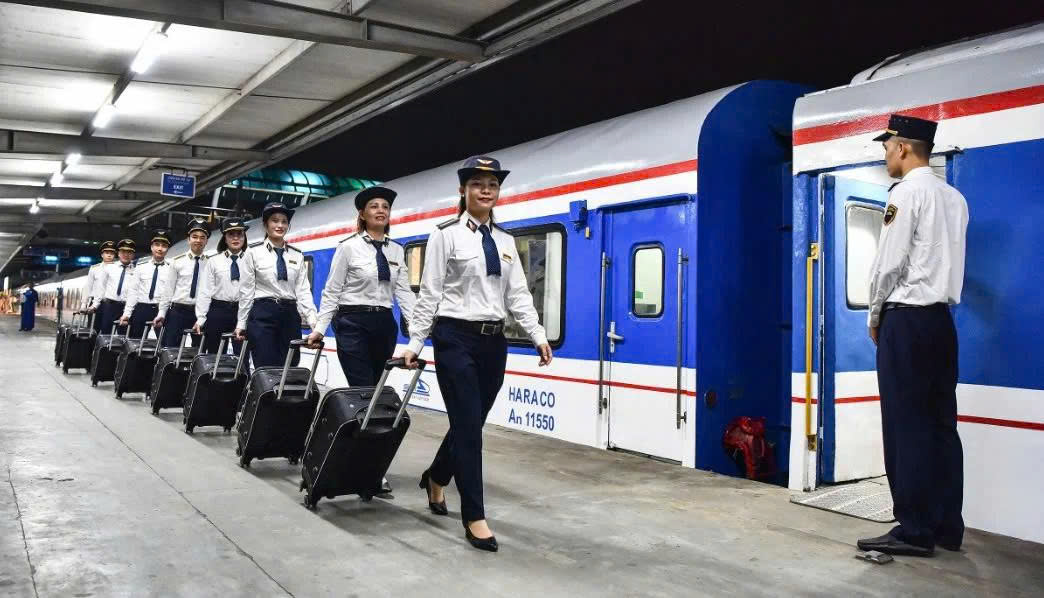
The railway sector aims to ensure safety and quality. Photo: Vietnam Railways
One key task is to maximize the value of existing railway assets. VNR currently manages 312 railway stations. Under the direction of the Standing Deputy Prime Minister, the company needs to explore ways to unlock the value of assets within, above and around station premises, linking them with transit-oriented development (TOD). The station network should also be better connected to seaports, industrial parks and logistics corridors to expand transport services and international intermodal freight operations.
To turn this potential into tangible resources, VNR needs appropriate utilization plans, clear implementation mechanisms and transparent asset management capabilities.
Alongside asset utilization, railway industrial development is another major priority. The current localization rate for locomotives stands at around 10%, indicating considerable room to strengthen domestic manufacturing, repair and maintenance capabilities. The Deputy Prime Minister called for the establishment of a railway industrial complex and the promotion of international cooperation linked to the goals of self-reliance and mastery of core technologies. He also stressed the need to strengthen cooperation among state-owned enterprises, the private sector, universities and research institutes.
For VNR, this presents an opportunity to realize the benefits of its multi-sector group model by integrating transport with construction, maintenance, industry and services rather than allowing these areas to operate in isolation.
Human resources also pose a major challenge. The railway sector currently employs more than 22,000 people, of whom over 71% have only elementary or intermediate-level qualifications. The Deputy Prime Minister called for workforce preparation ahead of the commissioning of new railway lines, setting a target for Vietnamese workers to achieve full mastery of operations and maintenance no later than three years after a new line enters service.
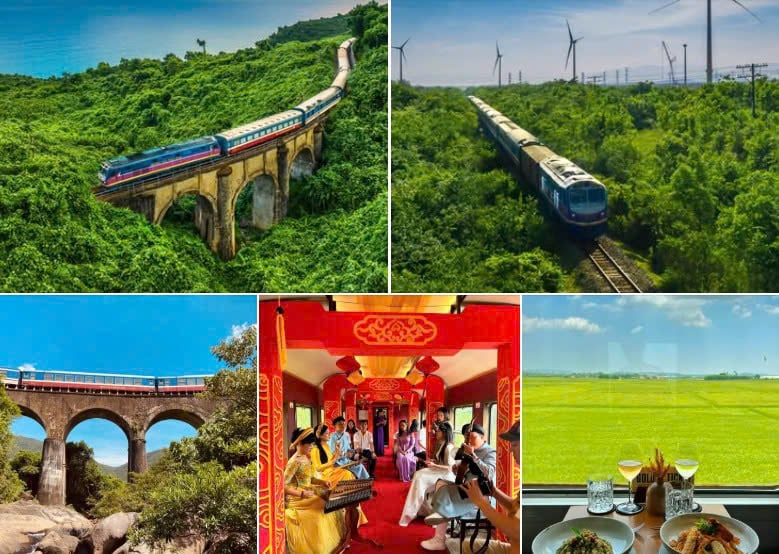
The railway sector has made progress in strategic thinking and product development in recent years. Photo: VNR
For its part, VNR has reported progress in strategic thinking and product development. VNR General Director Hoang Gia Khanh said the railway sector has gradually turned its limitations into advantages.
According to VNR Chairman of the Members' Council Dang Sy Manh, the Group has identified leveraging internal strengths, fostering effective cooperation and achieving breakthroughs as its key development priorities for the coming period.
In addition, VNR needs to adopt modern governance standards, improve accounting transparency, integrate data, develop digital mapping systems and manage assets throughout their life cycles. These measures will provide a foundation for cost control, improved operational efficiency and greater accountability in the use of capital.
The transition to a group model provides VNR with a new organizational framework, but its effectiveness will depend on the ability to mobilize and allocate resources, optimize asset utilization, master technology and prepare the workforce for new railway lines. As the Deputy Prime Minister has directed, results must be measurable, with clearly assigned responsibilities and completion deadlines. This will also serve as a benchmark for determining whether the new operating model genuinely creates additional investment capacity for Vietnam’s railway sector.