The National Assembly Standing Committee agreed not to separately include the draft Law Amending the Law on Corporate Income Tax in the 2027 Legislative Program, but instead to incorporate the necessary amendments into the draft Law Amending and Supplementing Certain Provisions of Three Tax Laws, to be submitted to the National Assembly at its 2nd Session.
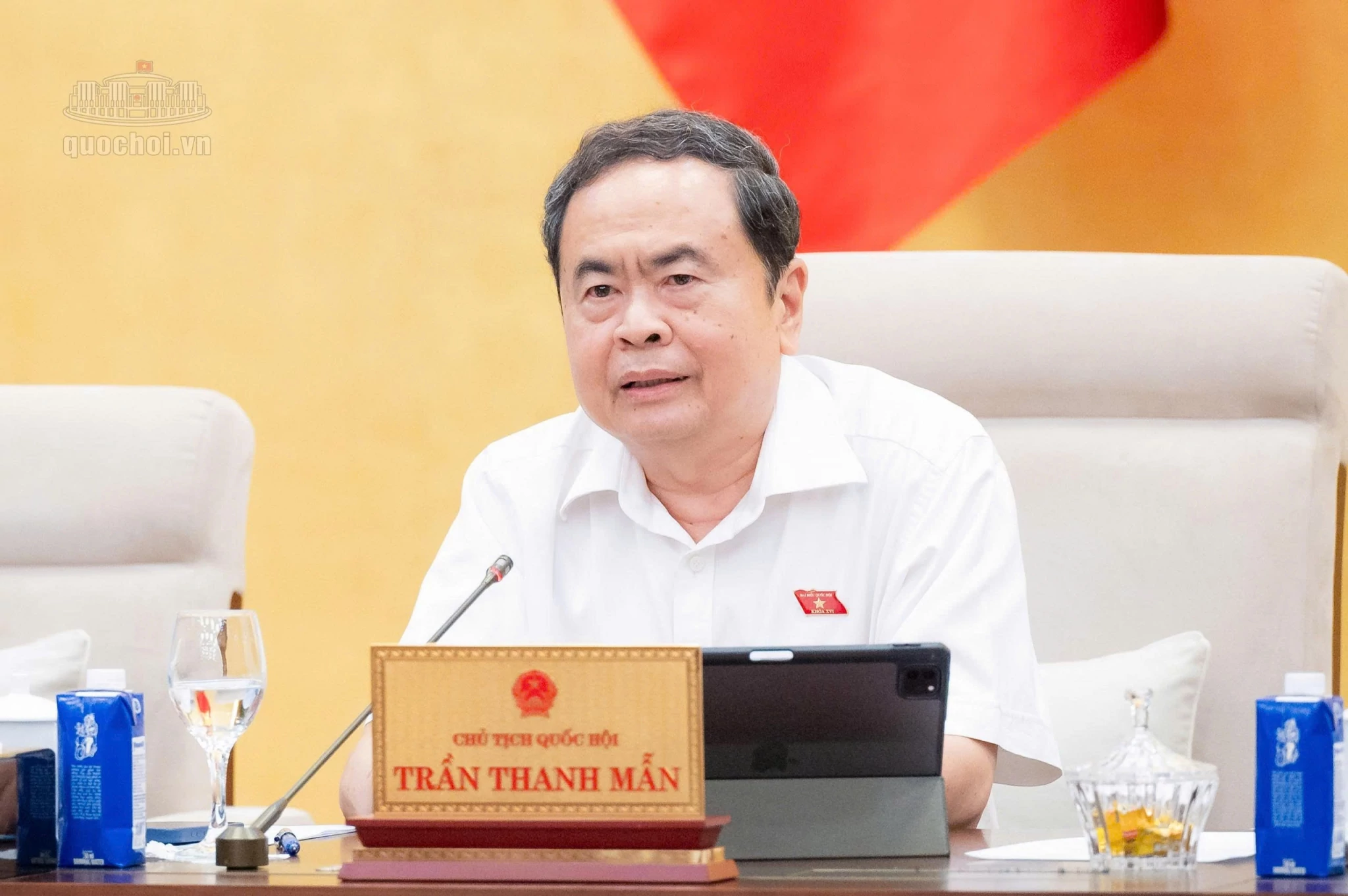
National Assembly Chairman Tran Thanh Man emphasized that in 2027, there should be a “strong shift from making many laws to making laws well, ensuring stability and creating a foundation for development.” Photo: Office of the National Assembly
23 Legislative Projects Selected from 28 Proposals for the 2027 Legislative Program
On the afternoon of September 21, the National Assembly Standing Committee considered, gave opinions on, and agreed in principle to approve the draft Resolution on the 2027 Legislative Program.
Presenting the proposal, Chairman of the National Assembly’s Committee on Legal and Judicial Affairs Phan Chi Hieu said that three agencies—the Government, the Supreme People’s Procuracy, and the Standing Committee of the Committee on Delegate Affairs—had proposed including projects in the 2027 Legislative Program, with a total of 27 projects. In addition, the National Assembly Standing Committee decided to add one draft law when considering adjustments to the 2026 Legislative Program.
Thus, the initial proposals totaled 28 projects, comprising 25 draft laws, one National Assembly resolution, one ordinance, and one resolution of the National Assembly Standing Committee.
Following the appraisal and review of the proposals, the Standing Committee of the National Assembly’s Committee on Legal and Judicial Affairs submitted to the National Assembly Standing Committee a proposed 2027 Legislative Program consisting of 23 draft laws, ordinances and resolutions.
Of these, at the 3rd Session in May 2027, the National Assembly is expected to consider and pass nine draft laws; at the 4th Session in October 2027, it is expected to consider and pass 12 draft laws. At the meetings of the National Assembly Standing Committee in 2027, one draft ordinance and one draft resolution are expected to be considered and passed.
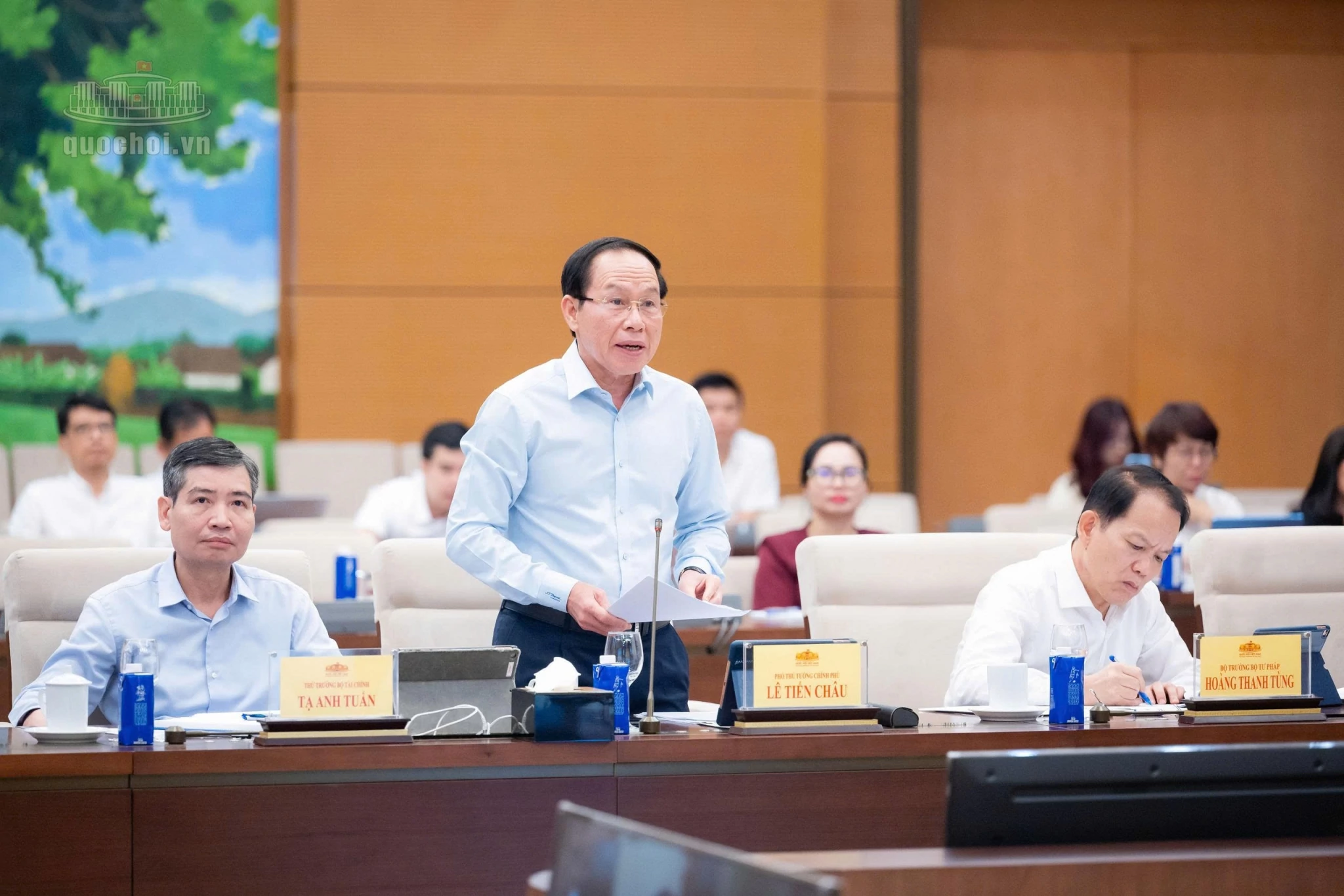
Deputy Prime Minister Le Tien Chau speaks at the session. Photo: Office of the National Assembly
According to the Chairman of the Committee on Legal and Judicial Affairs, the legislative program should prioritize projects aimed at promptly and fully institutionalizing the Party’s policies and orientations; continuing to improve regulations related to the restructuring of the state apparatus; removing bottlenecks, creating breakthroughs, expanding development space, and promoting science and technology, innovation, and national digital transformation.
At the same time, when proposing the development of laws, ordinances and resolutions, a comprehensive review should be conducted by sectoral groups, particularly in emerging and cross-sectoral fields. The scope of regulation and the relationship among legal documents should be clearly defined to avoid duplication and overlapping provisions and ensure the consistency and stability of the legal system.
Strengthening Legislative Discipline, Improving Quality and Maintaining Legal Stability
Based on the appraisal, the National Assembly Standing Committee agreed to temporarily exclude four projects from the 2027 Legislative Program for further study and clarification.
The projects include the Law on Urban Management and Development; the Law on Protection of National Sovereignty in Cyberspace; the Law on Management and Development of Unmanned Aerial Vehicles (UAVs); and a National Assembly resolution replacing Resolution No. 96/2023/QH15 on votes of confidence and votes of no confidence.
The National Assembly Standing Committee also agreed not to include the draft Law Amending and Supplementing Certain Provisions of the Law on Corporate Income Tax in the 2027 Legislative Program. Instead, it proposed incorporating the necessary amendments into the draft Law Amending and Supplementing Certain Provisions of Three Tax Laws—the Law on Corporate Income Tax, the Law on Non-Agricultural Land Use Tax, and the Law on Personal Income Tax—which is already included in the agenda for the 2nd Session.
Regarding the proposal to develop the Law Amending and Supplementing Certain Provisions of the Law on Environmental Protection Tax, the amendments to this Law are limited in scope. The amendments and supplements need to take effect concurrently with the Law Amending and Supplementing Certain Provisions of the Law on Environmental Protection, which is expected to be submitted to the National Assembly for passage at the 2nd Session. Therefore, the Committee agreed to include the project in the Program but move it forward by one session, with submission to the National Assembly for consideration and passage at the 3rd Session in May 2027.
At the session, Deputy Prime Minister Le Tien Chau said that the Government agreed to make maximum efforts to submit the draft Law Amending and Supplementing Certain Provisions of the Law on Corporate Income Tax according to the planned schedule.
Regarding the draft Law Amending and Supplementing Certain Provisions of the Law on Environmental Protection Tax, the Government initially proposed maintaining the submission schedule for the 4th Session. Deputy Prime Minister Le Tien Chau said that if the National Assembly Standing Committee decides to move the project forward to the 3rd Session, the Government will direct the Ministry of Finance to carefully review the workload, the quality of the dossier, and the feasibility of completing the work so as to meet the approved schedule. He emphasized that shortening the timeline must not reduce policy quality requirements.
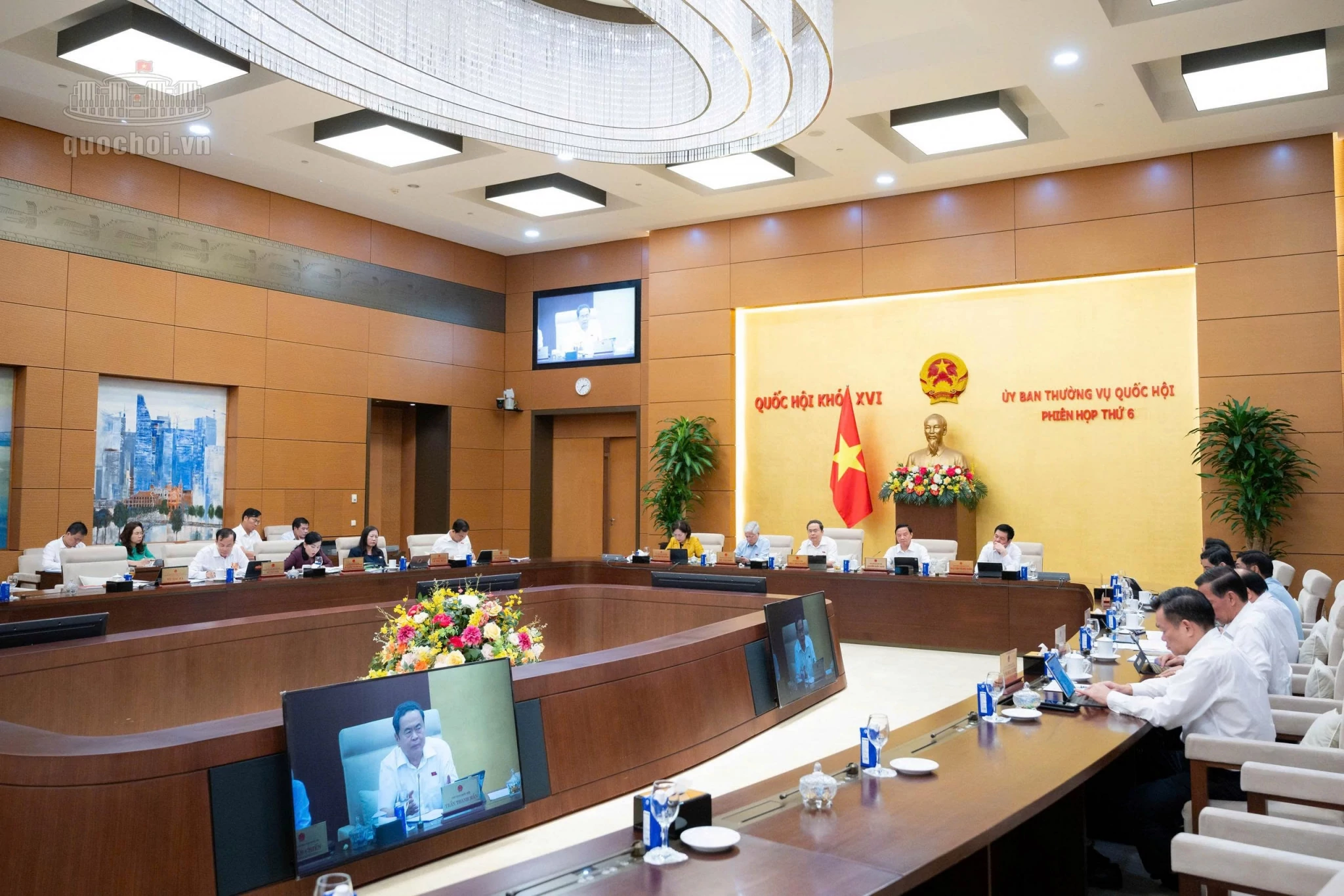
Overview of the session. Photo: Office of the National Assembly
Speaking at the session, National Assembly Chairman Tran Thanh Man emphasized that in 2027, there should be a “strong shift from making many laws to making laws well, ensuring stability and creating a foundation for development.” The National Assembly Chairman noted that the legislative workload in recent years has been substantial and has contributed to removing many bottlenecks, but the next important requirement is to organize implementation and enforce the law.
The National Assembly Chairman noted that the legislative program had been subject to frequent adjustments, including cases where dossiers were not adequately prepared, submitted late, or lacked in-depth impact assessments, resulting in projects having to be postponed, withdrawn, or processed under expedited procedures.
Therefore, when a project is included in the program, its issues, policies, scope, resources, and feasibility of completion must basically be clearly defined. Adjustments to the program should not be used to compensate for inadequate forecasting, nor should expedited procedures be used to make up for insufficient preparation.
The National Assembly Chairman also emphasized the need to maintain discipline regarding the stability and consistency of the legal system. The law needs to respond more quickly to practical developments, but “being quick does not mean amending laws continuously.”
In this spirit, the National Assembly Chairman agreed that projects that are not sufficiently mature, whose scopes overlap, or for which the necessity of having a separate law has not been clearly established should not yet be included in the program. These include projects concerning the protection of national sovereignty in cyberspace, UAVs, urban management and development, and amendments to Resolution No. 96/2023/QH15.
For emerging areas such as data, artificial intelligence, cybersecurity, digital technology and UAVs, the National Assembly Chairman requested a review from the perspective of the entire legal ecosystem and that clear regulatory boundaries be identified before deciding whether a separate law is necessary.
Another requirement emphasized by the National Assembly Chairman is that the legislative program must be designed based on the logic of the legal system as a whole, rather than the individual needs of each agency. The lead and reviewing agencies should coordinate from the policy development stage and prepare dossiers thoroughly, rather than merely completing them through successive meetings.
The National Assembly Chairman also called for stricter discipline in implementing the program from the outset; additions to the program during the year should only be made in exceptional cases with sufficient grounds and should not become a regular working practice.
“The 2027 Legislative Program must meet three requirements: first, early preparation; second, fewer adjustments; and third, higher quality,” National Assembly Chairman Tran Thanh Man emphasized.
Concluding the session, National Assembly Vice Chairman Nguyen Khac Dinh said that the National Assembly Standing Committee highly appreciated the preparation work carried out by the relevant agencies. Regarding the Law Amending and Supplementing Certain Provisions of the Law on Environmental Protection Tax, the Government proposed submission at the 4th Session, while National Assembly agencies proposed submission at the 3rd Session. Accordingly, if the dossier is well prepared, the project may be passed at the 3rd Session; if there are still issues requiring further completion, it will be submitted at the 4th Session.
Regarding the Law Amending and Supplementing Certain Provisions of the Law on Corporate Income Tax, the Vice Chairman of the National Assembly said that the project would not be included in the 2027 Program. Instead, the Ministry of Finance was requested to advise the Government on amending certain provisions and incorporating them directly into the draft law to be submitted at the 2nd Session.
At the session, 100% of the attending members of the National Assembly Standing Committee agreed in principle to approve the draft Resolution. The draft Resolution was assigned for completion and submission to the National Assembly Chairman for signature and promulgation this week.