To enhance the role of market regulation and address difficulties arising from supply disruptions, the Ministry of Finance has proposed adding a mechanism for the “issuance with repayment” of national reserve goods. Under this mechanism, recipients would be required to fully return the quantity and quality of the goods within the prescribed period...
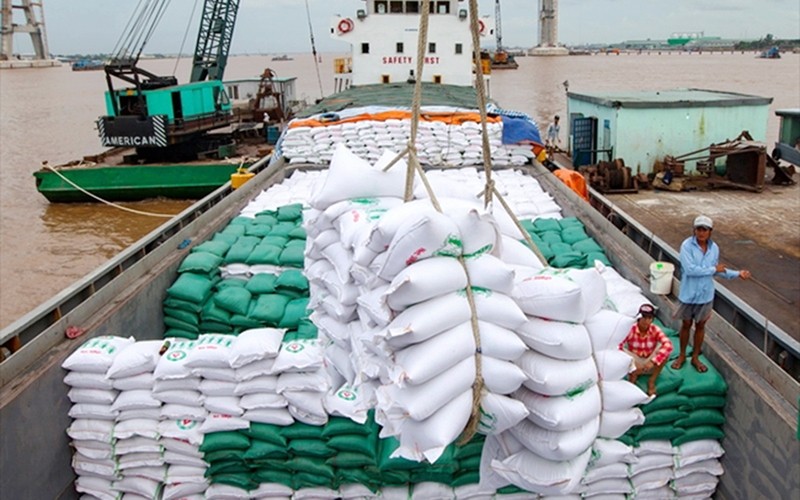
The Law provides for the participation of entities, organizations, and enterprises in national reserve activities to strengthen national reserve resources – Illustrative photo
On September 17, the Ministry of Finance submitted the appraisal dossier for the draft Government Decree detailing a number of articles and measures for implementing the Law on National Reserves regarding the management and use of strategic reserve goods to the Ministry of Justice for appraisal.
According to the Ministry of Finance, the issuance of the Decree will provide the basis for implementing the new provisions of the Law on National Reserves from January 1, 2027.
Notably, strategic reserves constitute a new legal framework. The Law provides for the participation of entities, organizations, and enterprises in national reserve activities to strengthen national reserve resources.
Resolution No. 79-NQ/TW dated January 6, 2026 of the Politburo on the development of the state-owned economic sector sets the target of increasing national reserves to at least 1% of GDP by 2030 and 2% of GDP by 2045.
As this is a new area, specific policies and mechanisms are needed to encourage and support entities, organizations, and enterprises to participate in national reserve activities.
The draft Decree consists of three chapters, 20 articles, and two appendices, introducing a number of new provisions, including the “issuance with repayment” mechanism for reserve goods; criteria and lists of strategic reserve goods; criteria for selecting entities, organizations, and enterprises to participate in strategic reserve activities; and the conclusion and implementation of strategic reserve contracts, among others.
International Experience with the “Issuance with Repayment” Mechanism
Regarding the “issuance with repayment” mechanism, the Ministry of Finance said it had studied the experience of other countries.
In Russia, regulations provide for the lending of goods from state reserves, accompanied by a requirement to return an equivalent quantity of similar goods to the reserves. In the United States, enterprises receiving oil are required to return the amount of oil received together with an additional quantity as agreed, thereby both ensuring the timely supply of oil to the market and increasing reserve volumes after repayment.
A common feature of these mechanisms is that the release of reserve goods into circulation is tied to an in-kind repayment obligation, rather than merely collecting proceeds from the sale of the goods.
Based on Vietnam’s actual circumstances, the Ministry of Finance has proposed the “issuance with repayment” mechanism to address situations involving supply disruptions that require timely intervention.
According to the Ministry of Finance, the use of strategic reserve goods for market regulation must be accompanied by a mechanism for replenishing and restoring reserve volumes after use.
The effectiveness of this mechanism should be assessed from two perspectives simultaneously: meeting market stabilization requirements in a timely manner and ensuring the continued capacity to perform national reserve functions in subsequent situations.
Accordingly, “entities, organizations, and enterprises assigned to use strategic reserve goods in accordance with a plan approved by the competent authority shall be responsible for returning goods of the same type, in an equivalent or greater quantity and of equivalent or higher quality, within the specified period.”
The Ministry of Finance emphasized that this mechanism would fulfill the objective of national reserves as “a tool for market regulation” while preserving the overall level of strategic reserves.
Commenting on the proposal, the Gia Lai Provincial People’s Committee proposed adding specific principles applicable to medical goods. Returned goods should meet requirements regarding circulation, quality standards, technical specifications, batch- or serial-number traceability, storage conditions, and minimum remaining shelf life. In cases involving replacement goods, the relevant specialized regulatory authority should provide its opinion.
However, the Ministry of Finance stated that Point a, Clause 2, Article 15 already provides a general requirement that returned strategic reserve goods must not be lower than the goods originally issued in terms of type, quantity, and quality. Therefore, the draft applies a common provision to all categories of goods to ensure comprehensiveness and consistency.
Another opinion held that the concept of “issuance with repayment” does not clearly address the financial implications where commodity prices fluctuate during the period in which the goods are released for use. Accordingly, it was proposed that the draft supplement definitions of “high-tech strategic reserve goods” and “significant fluctuations in supply, demand, and prices” to provide a basis for determining the circumstances and conditions for applying this mechanism.
According to the Ministry of Finance, price fluctuations during the period of use are matters falling under the price mechanism and the conditions for contract performance and should therefore be handled in accordance with the contractual agreement. Regarding the proposal to add concepts related to high-tech products and fluctuations in supply, demand, and prices, these matters are already regulated under the Law on High Technologies and the Law on Prices. Therefore, the draft does not introduce additional provisions in order to avoid duplication.
Incentive Mechanisms Need to Be More Attractive
Regarding incentive mechanisms, the People’s Committees of Quang Tri Province, Hue, and Quang Ninh said that, in practice, stronger incentives are needed at the local level to mobilize social resources and enterprises’ lawful capital in accordance with the policy of socializing strategic reserves.
These opinions called for a review of the legal basis and authority for providing incentives related to land, taxation, interest rate support, and budgetary assistance, while ensuring that such policies do not exceed or conflict with the Law on Land, tax legislation, the law on the state budget, and credit regulations.
Regarding interest rate support, it was proposed that the support cap be relaxed or made more flexible for enterprises directly investing in the construction of large-scale reserve warehouses or storing strategic goods with particularly high preservation costs.
In addition, more detailed and clear regulations are needed on procedures for accounting for costs and deducting taxable income in respect of differences arising when enterprises implement the “issuance with repayment” mechanism, in order to avoid difficulties during tax finalization with tax authorities...
Taking these comments into consideration, the Ministry of Finance reviewed the draft to ensure compliance with relevant legislation.
Notably, Point a, Article 13 of the draft provides that: “The State shall provide interest rate support for loans actually used to participate in strategic reserve activities, with the level of support not exceeding the lending interest rate of the Vietnam Development Bank or provided through an off-budget state financial institution, and no interest rate support shall be provided for overdue loan balances, penalty interest, or refinancing loans.”