In the United States, the Ministry of Finance held direct discussions with institutional investors, Moody’s, and J.P. Morgan on Vietnam’s economic outlook, fiscal and monetary policy orientations, public debt management, and the Government’s capital-raising channels.
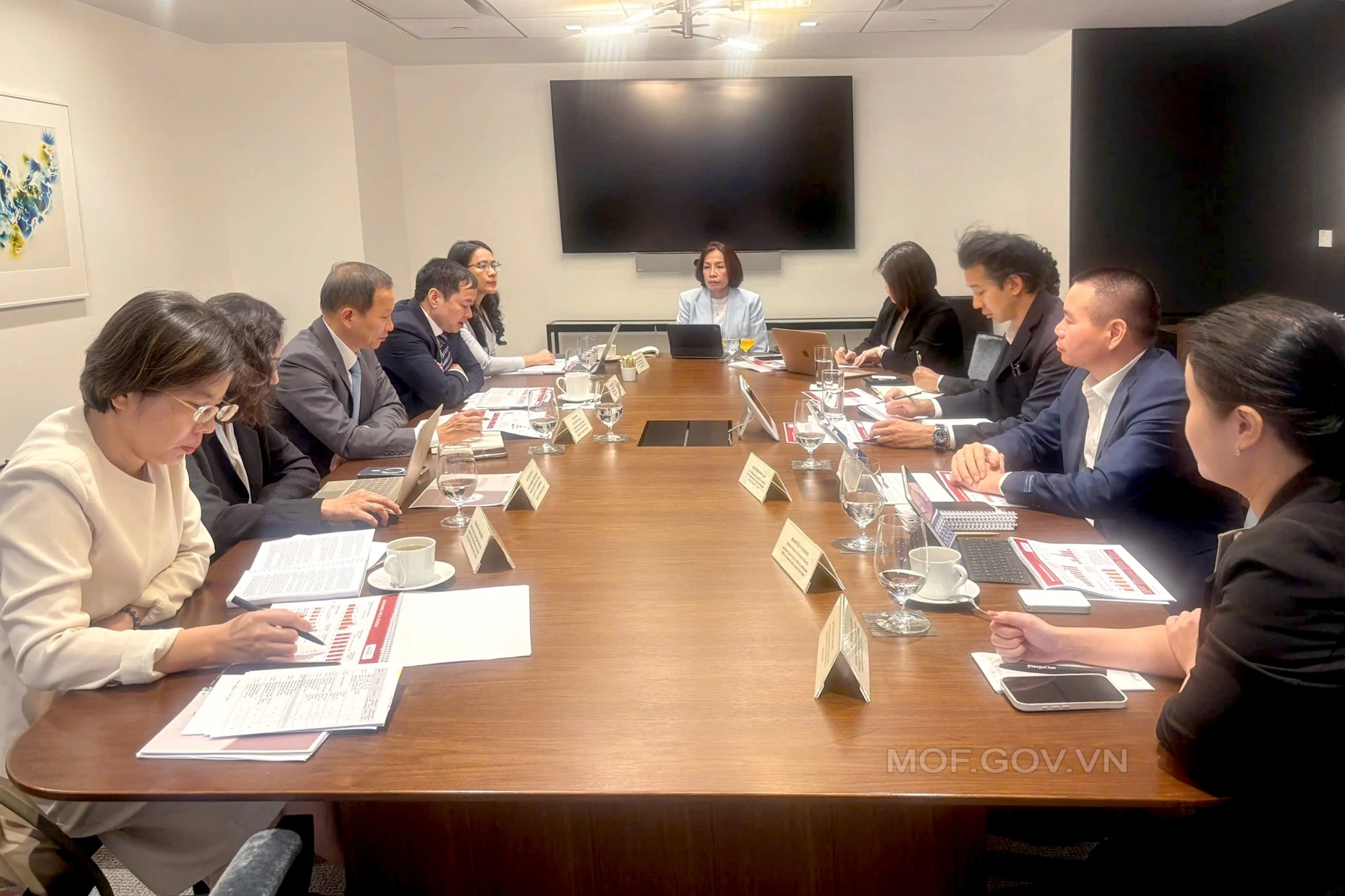
The Ministry of Finance delegation meets with financial institutions and investors in the United States.
As part of activities on the sidelines of General Secretary and President To Lam’s trip to the United States from September 21 to 25, 2026, to attend the 81st session of the United Nations General Assembly and conduct bilateral engagements, the Ministry of Finance, in coordination with the State Bank of Vietnam, successfully organized a Non-Deal Roadshow (NDR) for international investors in the United States, arranged and supported by J.P. Morgan.
Proactively Providing Information to International Capital Markets
The program was organized to proactively update the global financial community on Vietnam’s macroeconomic situation, fiscal and monetary policy orientations, and public debt management plans.
The investor engagement took place against the backdrop of high-level diplomatic activities in the United States, which conveyed Vietnam’s commitment to reform and international integration. During meetings with the U.S. business community and in an interview with Bloomberg TV, General Secretary and President To Lam affirmed that Vietnam would continue to accelerate reforms, improve its institutional framework, and create a transparent and favorable investment environment for international financial institutions and investors.
The Party and State leaders’ orientation toward promoting balanced and harmonious economic interests while enhancing the country’s financial credibility provides a basis for the financial sector to carry out investment promotion, financial and public debt management activities, and strengthen connections with international capital markets.
To implement this orientation, as part of the working program in the United States, the delegation from the Ministry of Finance and the State Bank of Vietnam held direct discussions with a number of leading global institutional investors, including asset management funds and globally scaled hedge funds.
During the meetings, representatives of the Ministry of Finance shared information on Vietnam’s macroeconomic conditions, growth outlook, and the Government’s strategy to diversify its capital-raising channels in the coming period. The meetings also provided an opportunity for the delegation to engage in dialogue with investors and gather their assessments of the Vietnamese market and their level of interest in debt instruments issued by the Vietnamese Government.
According to the Ministry of Finance, the international investor community highly appreciated Vietnam’s macroeconomic stability and long-term development potential, while recognizing the Ministry’s efforts to enhance transparency and strengthen information exchange.
Feedback from the program will provide a basis for the Ministry of Finance to continue closely monitoring developments in international capital markets and, accordingly, research and develop appropriate and cost-efficient capital-raising options for the Government.
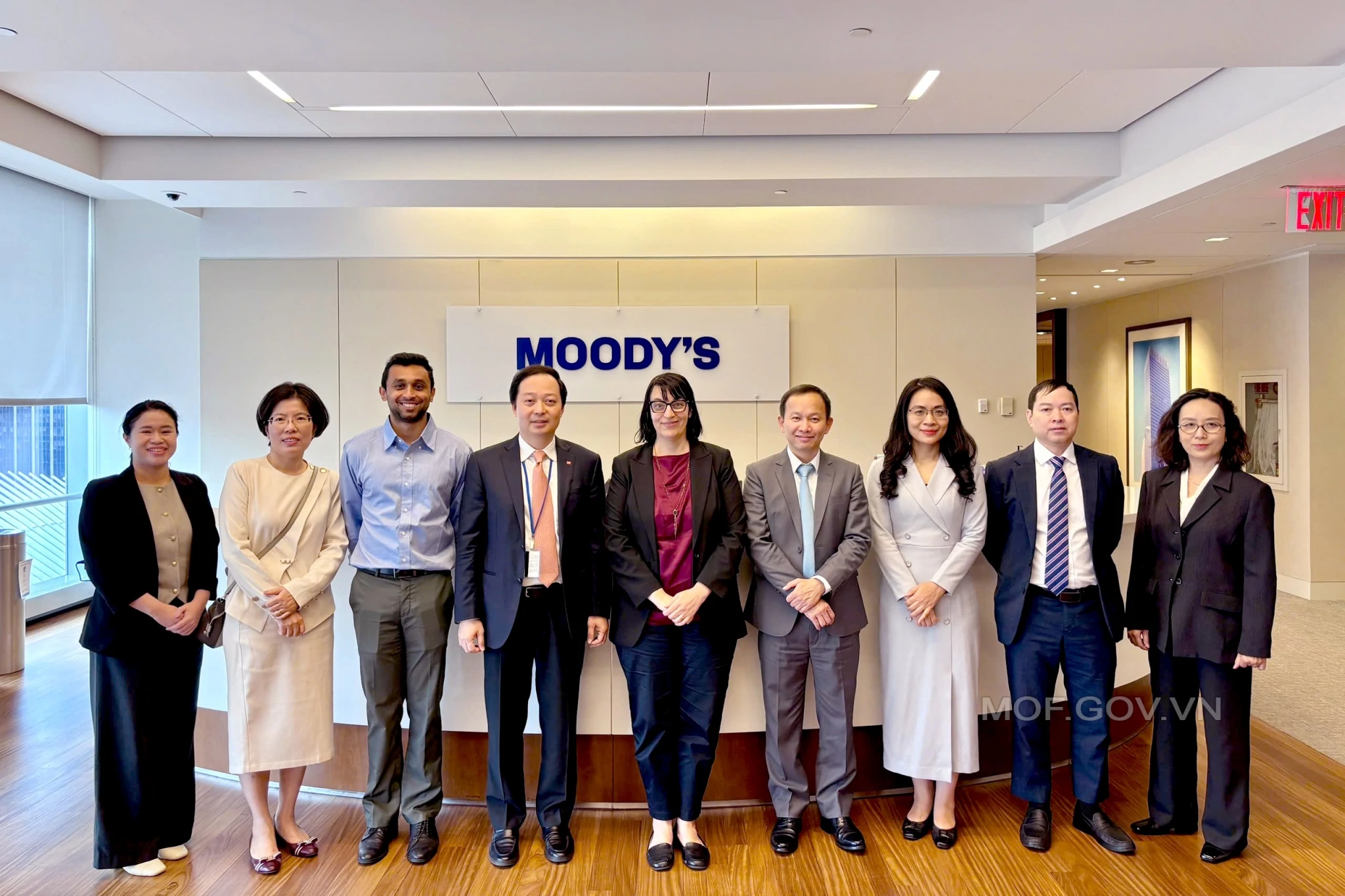
The delegation takes a commemorative photo with representatives of Moody’s in the United States.
Updating Information and Discussing the Sovereign Credit Outlook
As part of the working program, the delegation met with Ms. Elisa Parisi-Capone, Vice President and Senior Analyst of Moody’s Sovereign Risk Group in New York.
The meeting was held as part of the regular engagement between Vietnam and Moody’s under the sovereign credit rating assessment agreement that has been in place since 2010.
In May 2026, Moody’s announced its sovereign credit rating assessment for Vietnam, maintaining the rating at Ba2 while upgrading the outlook from “Stable” to “Positive.”
According to Moody’s assessment, Vietnam’s credit outlook is supported by its long-term growth prospects, dynamic trade activity, ability to attract foreign direct investment (FDI), fiscal position with relatively low and stable government debt, strong debt repayment capacity, and improvements in institutional quality and governance.
At the meeting, the delegation provided Moody’s with updated information on economic, financial, budgetary, and public debt developments, as well as institutional reform efforts and the Government’s policy measures aimed at maintaining macroeconomic stability and pursuing the target of double-digit economic growth.
Representatives of Moody’s highly appreciated the Vietnamese Government’s efforts to address challenges amid significant global economic volatility and expressed a positive assessment of Vietnam’s medium-term prospects.
Moody’s also shared experiences from countries that have achieved Investment Grade ratings and noted that Vietnam’s continued efforts to accelerate institutional reforms and control risk factors in the banking sector and state-owned enterprise debt would contribute positively to the country’s sovereign credit rating improvement in the coming period.
The delegation takes a commemorative photo with representatives of Moody’s in the United States.
Updating Information and Discussing the Sovereign Credit Outlook
As part of the working program, the delegation met with Ms. Elisa Parisi-Capone, Vice President and Senior Analyst of Moody’s Sovereign Risk Group in New York.
The meeting was held as part of the regular engagement between Vietnam and Moody’s under the sovereign credit rating assessment agreement that has been in place since 2010.
In May 2026, Moody’s announced its sovereign credit rating assessment for Vietnam, maintaining the rating at Ba2 while upgrading the outlook from “Stable” to “Positive.”
According to Moody’s assessment, Vietnam’s credit outlook is supported by its long-term growth prospects, dynamic trade activity, ability to attract foreign direct investment (FDI), fiscal position with relatively low and stable government debt, strong debt repayment capacity, and improvements in institutional quality and governance.
At the meeting, the delegation provided Moody’s with updated information on economic, financial, budgetary, and public debt developments, as well as institutional reform efforts and the Government’s policy measures aimed at maintaining macroeconomic stability and pursuing the target of double-digit economic growth.
Representatives of Moody’s highly appreciated the Vietnamese Government’s efforts to address challenges amid significant global economic volatility and expressed a positive assessment of Vietnam’s medium-term prospects.
Moody’s also shared experiences from countries that have achieved Investment Grade ratings and noted that Vietnam’s continued efforts to accelerate institutional reforms and control risk factors in the banking sector and state-owned enterprise debt would contribute positively to the country’s sovereign credit rating improvement in the coming period.
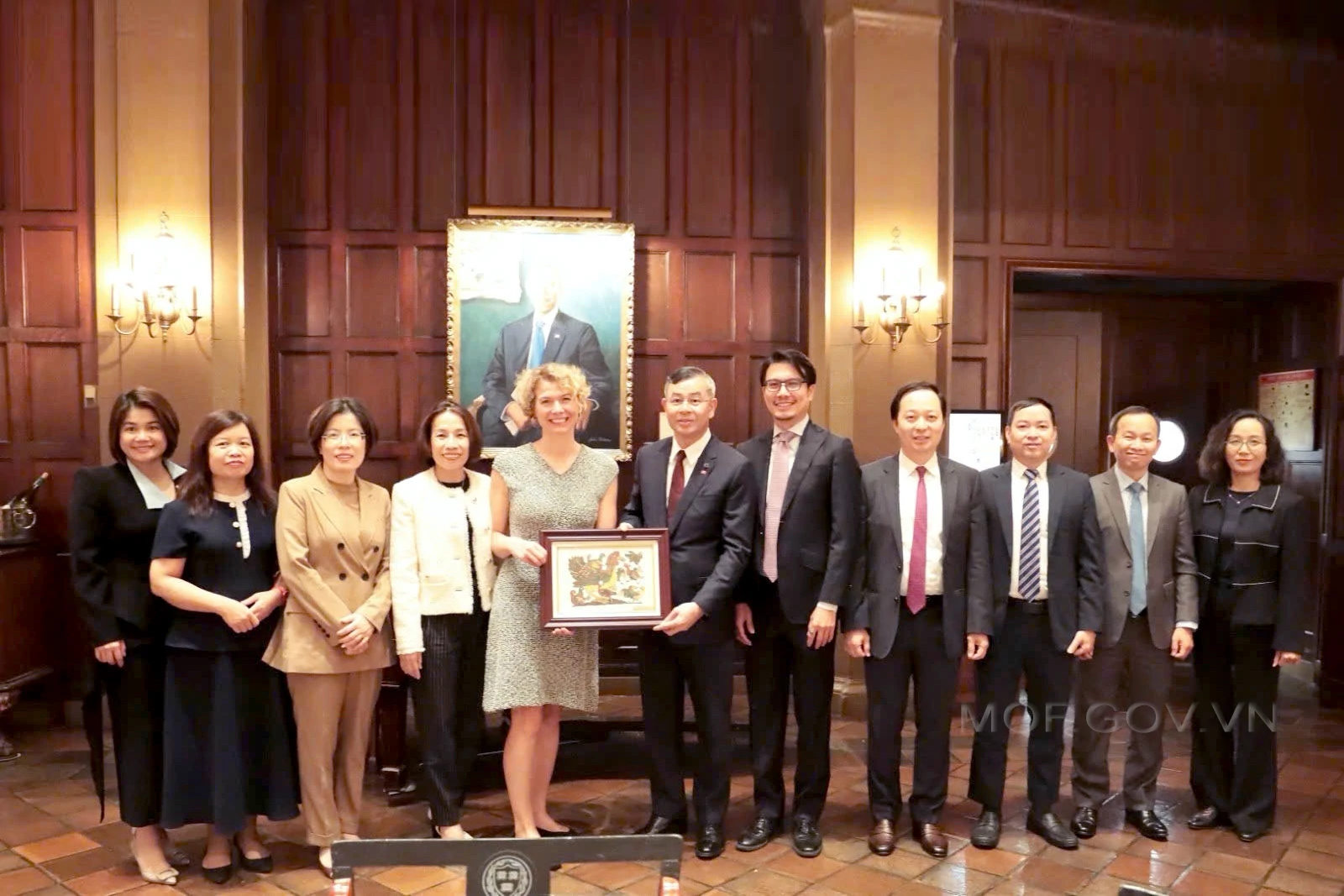
Minister Ngo Van Tuan presents a commemorative gift to a representative of J.P. Morgan following the bilateral meeting.
Expanding Cooperation with J.P. Morgan and Promoting International Financial Integration
In addition to investor engagement activities, Minister of Finance Ngo Van Tuan held a bilateral meeting with J.P. Morgan.
During the meeting, the two sides discussed the potential for strategic cooperation, including the role of J.P. Morgan in advising and supporting the development of Vietnam’s capital market and promoting the country’s integration into the global financial system.
Strengthening cooperation with international financial institutions while maintaining direct dialogue with major investors enables Vietnam to proactively provide information on its policy orientations and economic and financial conditions. It also creates additional channels for dialogue, helping the international market gain a clearer understanding of the changes, reforms, and development prospects of the Vietnamese economy.
The Non-Deal Roadshow is a regular professional activity organized by the Ministry of Finance to proactively maintain and strengthen dialogue with the international financial community.
As Vietnam enters a new stage of development, with the goal of achieving rapid and sustainable growth, proactive dialogue, regular information updates, and continued engagement with investors, credit rating agencies, and international financial institutions remain important components of financial and public debt management. These efforts contribute to strengthening the confidence of the international financial community in Vietnam’s economy.