Permanent Deputy Prime Minister Pham Gia Tuc has requested the Ministry of Finance to review and address proposals concerning tax incentives for the production of electronic components, materials, and supporting industries; and to propose tax policies aimed at encouraging domestic production while facilitating the import of inputs that are not yet available domestically.
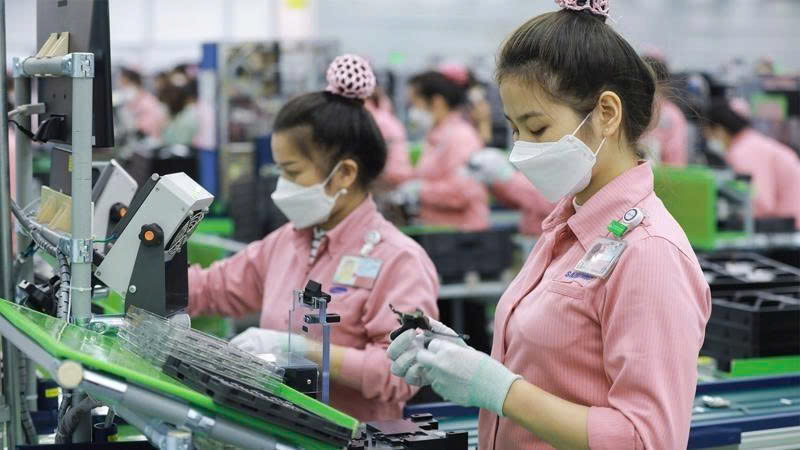
The Permanent Deputy Prime Minister requested the Ministry of Finance to consolidate, review, and handle within its authority proposals concerning tax incentives for the production of electronic components, materials, and supporting industries.
The Government Office has recently issued Notice No. 481/TB-VPCP dated September 14, 2026, announcing the conclusions of Permanent Deputy Prime Minister Pham Gia Tuc at a meeting with the Vietnam Electronic Industries Association and several major import-export enterprises in the electronics and semiconductor sectors.
Ministry of Finance to Review and Propose Appropriate Tax Policies
With respect to the Ministry of Finance, the Permanent Deputy Prime Minister requested the Ministry to consolidate, review, and handle within its authority proposals concerning tax incentives for the production of electronic components, materials, and supporting industries.
During the review process, the Ministry of Finance is required to pay particular attention to tax policies applicable to imported machinery, equipment, and raw materials used for investment in and expansion of electronics and semiconductor production. The review must be aligned with the implementation of Politburo Resolution No. 10-NQ/TW dated June 8, 2026, on the development of the foreign-invested economic sector, as well as policies and orientations for the development of strategic industries.
Against the backdrop of rapid and complex developments in the global and regional situation, production and exports continue to be key drivers of economic growth, contributing to job creation, macroeconomic stability, and Vietnam’s position in global supply chains.
However, the electronics industry continues to face a number of challenges, including the significantly higher value of imported components, raw materials, and equipment compared with export values over the same period in certain groups of products and enterprises; heavy dependence on foreign supply sources; limited domestic value added; and the low participation rate of Vietnamese enterprises in production and supply chains.
In this context, the Government has requested ministries, sectors, local authorities, and enterprises to implement coordinated solutions to promote balanced and sustainable trade, contributing to the target of double-digit economic growth.
For matters beyond its authority, the Ministry of Finance is responsible for promptly reporting them to the competent authorities for consideration and decision.
Notably, the Ministry of Finance has been assigned to take the lead and coordinate with the Ministry of Industry and Trade to review and propose appropriate tax policies, ensuring two objectives simultaneously: encouraging domestic production of components and products that can already be manufactured domestically, while facilitating the import of machinery, equipment, and raw materials that are not yet available domestically. This task must be completed in October 2026.
Alongside tax policy improvements, the Ministry of Finance is tasked with accelerating digital transformation, completing and connecting import-export databases, and ensuring the timely provision of data for analysis, early warning, risk management, and monitoring of the trade deficit.
The Ministry must also strengthen inspection and supervision of customs valuation for imported components and raw materials used in the production, processing, and assembly of electronic products and mobile phones; promptly detect and strictly handle trade fraud, transfer pricing, and other violations, where applicable.
This requirement aims to ensure that imports genuinely serve production activities, generate added value and export turnover in Vietnam, while mitigating risks affecting the trade balance and competitiveness of the electronics industry.
Coordinated Solutions to Develop the Electronics Supply Chain
In addition to the tasks assigned to the Ministry of Finance, the Permanent Deputy Prime Minister requested the Ministry of Industry and Trade to take the lead in working with enterprises with significant discrepancies between import and export turnover, particularly enterprises with large trade deficits, to clarify the structure and purposes of imports and the extent to which such imports serve production and exports, thereby developing appropriate solutions and accelerating production and exports.
The Ministry of Industry and Trade is also tasked with developing programs to connect and develop Vietnamese suppliers for domestic and foreign electronics, semiconductor, and technology corporations; reviewing mechanisms for supporting the development of supporting industries; strengthening early warning mechanisms; and supporting enterprises in responding to international trade fluctuations and taking advantage of next-generation free trade agreements (FTAs).
The Ministry of Science and Technology will focus on improving mechanisms to support domestic enterprises in researching and mastering core and foundational technologies in semiconductors, integrated circuits, electronic materials, and automation; promoting R&D, innovation, intellectual property protection, and the development of technical standards and regulations.
Local authorities are required to closely monitor the production, orders, and exports of key enterprises; urge enterprises to put imported projects, factories, raw materials, and equipment into production and export operations; and support enterprises in meeting the requirements of export markets.
For enterprises, the Permanent Deputy Prime Minister requested FDI enterprises to proactively participate in developing the electronics ecosystem in Vietnam and expand their lists of Vietnamese suppliers. Domestic enterprises are required to strengthen their technological capabilities, quality management, automation, digital transformation, R&D, and human resources.
In particular, enterprises must closely link imports with production and exports, make effective use of imported raw materials, machinery, and equipment, and gradually increase the proportion of value added generated in Vietnam. Enterprises with large import turnover and significant trade deficits must clarify the structure and purposes of their imports and their contribution to production and exports, while developing plans to expand domestic suppliers and improve the trade balance.