Decree No. 358/2026/ND-CP has significantly expanded the operational scope and debt resolution tools available to the Vietnam Debt and Asset Trading Corporation (DATC), ranging from debt trading and asset resolution to debt-to-equity conversion, corporate restructuring, and support for business recovery. A new legal framework is being established, but for these mechanisms to be effectively translated into debt-resolution capacity for the economy, the next challenge is to provide DATC with sufficiently strong financial resources commensurate with the increasingly large scale of the debt market.
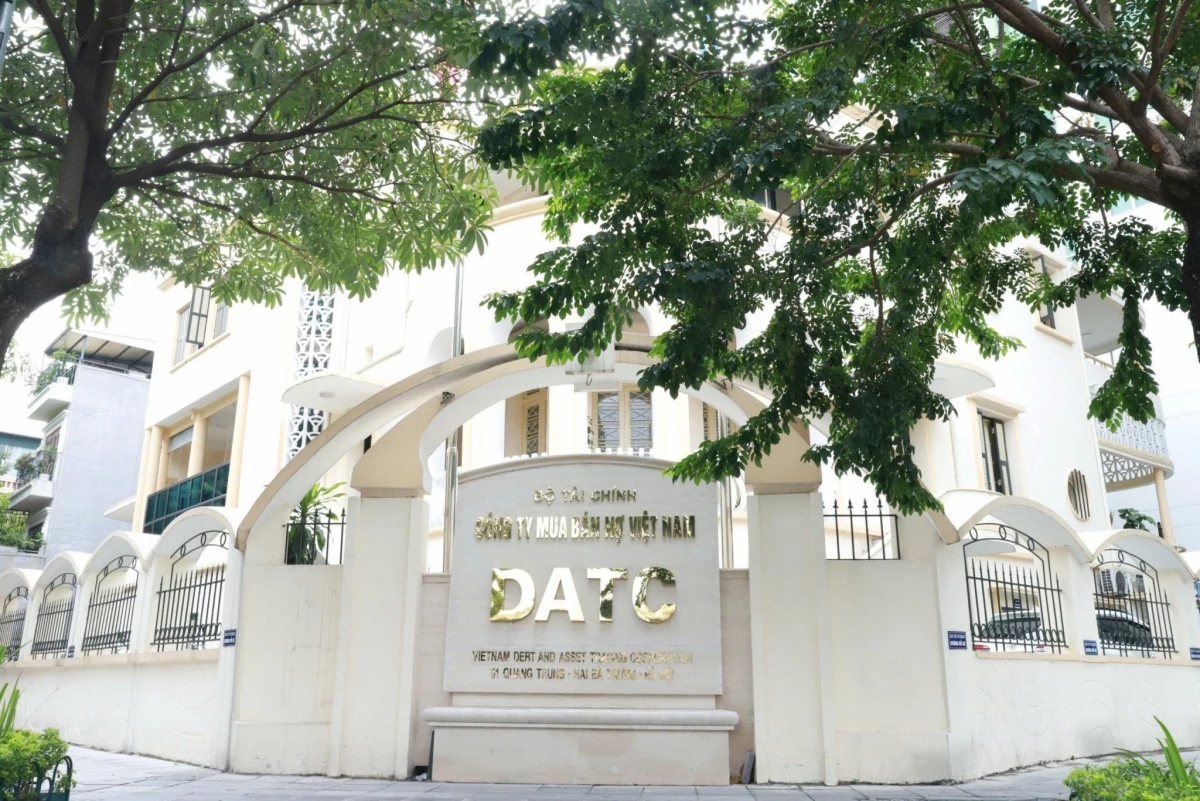
Head office of the Vietnam Debt and Asset Trading Corporation at 51 Quang Trung Street, Hai Ba Trung Ward, Hanoi.
A Dedicated Mechanism for a Specialized Enterprise
Within the system of state-owned enterprises, DATC is a unique case. The Company uses its capital to purchase debts that the market has identified as difficult to recover, and then resolves them in conjunction with the recovery process of the debtor enterprise. A debt-resolution plan may take years to complete, and its effectiveness is measured not only by the outcome of each transaction but also by the extent to which the enterprise is able to recover. This distinctive nature requires DATC to operate under its own operational and financial mechanisms, different from the general framework applicable to ordinary production and business enterprises.
Since 2020, DATC's operations have been governed by a dedicated government decree. Decree No. 358/2026/ND-CP builds upon and carries forward the provisions of Decree No. 129/2020/ND-CP that have operated effectively, while adding new specialized mechanisms in line with the framework of the Law on Management and Investment of State Capital in Enterprises.
In practice, after nearly six years of implementation, Decree No. 129/2020/ND-CP has provided an important legal framework for DATC's operations, but several provisions have become inadequate in light of current requirements. These include mechanisms for exploiting assets arising from debt purchase, sale, and resolution activities; mechanisms for debt and equity sales; and mechanisms for financial treatment when restructuring enterprises through debt trading activities. Issuing a replacement decree is therefore necessary to address these obstacles while adding mechanisms appropriate to DATC's operational model.
The Value DATC Brings to the Economy
The new mechanisms are built on DATC's 23 years of operational experience. One of the first tasks assigned to the Company when it was established in 2003 was to receive debts and excluded assets from state-owned enterprises undergoing equitization, including unused assets awaiting liquidation and difficult-to-collect receivables that were excluded from enterprise valuation.
By the end of 2025, nearly 3,000 state-owned enterprises had transferred debts and excluded assets to DATC to resolve financial difficulties during the equitization process. Assets that appeared to have little remaining value were persistently processed and recovered by the Company, generating additional recoveries for the state budget.
Building on this foundation, DATC expanded into market-based debt purchases and direct participation in corporate restructuring. More than 300 enterprises have had their debts resolved and undergone restructuring by the Company, including 17 state-owned corporations and general corporations. Many of these enterprises were on the verge of bankruptcy or had been unable to complete equitization for years due to negative equity and prolonged overdue debts. Through debt purchases and financial restructuring solutions, together with enterprises, DATC has restructured management systems and business and production plans, helping these businesses gradually restore their operations.
Many enterprises achieved stable production and business operations after restructuring, preserved jobs for workers, and continued contributing to the state budget and the economy. During periods of economic difficulty, DATC was also entrusted by the Government with special assignments, such as restructuring debts for SBIC and purchasing debt to support the restructuring of Vinalines. These tasks were larger in scale and more complex in nature than ordinary debt trading transactions.
These results have been made possible through the efforts of successive generations of DATC employees. In the early years, when debt trading was still a new model in Vietnam and the legal framework remained incomplete, the Company's first generation of employees developed solutions through practice, establishing procedures for receiving assets, valuation methods, and resolution plans for individual debts and assets that many had considered unrecoverable. Subsequent generations built on this foundation, making debt trading associated with corporate restructuring a core business activity and carrying out increasingly large-scale designated assignments.
Over 23 years, DATC has demonstrated in practice its role as an effective government instrument for resolving outstanding debts and restructuring enterprises.

Over 23 years, DATC has demonstrated in practice its role as an effective government instrument for resolving outstanding debts and restructuring enterprises.
Affirming Its Role as a Government Instrument
A fundamental new feature of Decree No. 358 is its designation of DATC as a government instrument supporting the restructuring of state-owned enterprises and other economic sectors through the receipt, purchase, and resolution of debts and assets as assigned by the Government and the Prime Minister. At the same time, DATC may purchase and resolve debts and assets under market mechanisms based on the principle of preserving and growing state capital.
This provision formally recognizes the role DATC has undertaken in practice while creating a solid legal basis for the Company to undertake specialized assignments in the future. It is accompanied by clearer implementation mechanisms regarding reporting procedures and the authority to decide on designated assignments, including consultation with the Ministry of Finance before submission to the Government or the Prime Minister. In particular, liabilities arising from the performance of designated assignments are excluded when DATC's creditworthiness is assessed and classified within the national credit information system. This is a highly practical new provision, as it ensures that designated assignments do not adversely affect the Company's ability to mobilize capital or its credit standing in the market.
Expanding the Operational Scope
The new Decree significantly expands DATC's business lines and activities. Real estate business associated with the resolution of received debts and assets is identified as a business line of the Company, applicable to collateral securing purchased debts, assets received in debt settlement, and assets purchased or received under designated assignments.
The Decree also adds a new group of responsibilities: DATC is permitted to purchase, manage, receive transferred debt obligations, and resolve debts and assets originating from the Government or the State, including debts and assets arising from ODA loans, foreign concessional loans, and government-guaranteed debts. It may also manage and exploit public assets in accordance with the law. In addition, DATC may provide consultancy on debt resolution, mergers and acquisitions, corporate restructuring, as well as valuation, debt management, and asset management services.
Decree No. 358/2026/ND-CP establishes a legal framework allowing DATC to go beyond debt purchase, sale, and recovery to participate more deeply in asset resolution, debt obligation restructuring, debt-to-equity conversion, corporate restructuring, and business recovery support.
The operational scope of DATC and VAMC is clearly differentiated in a complementary manner: VAMC resolves bad debts of commercial banks in connection with special bonds, while DATC purchases debt with cash to support enterprises in improving their financial position through debt-to-equity conversion, maturity restructuring, and reductions in debt repayment obligations.
Stronger Operational Tools
For bad debts purchased from or transferred by credit institutions, DATC is entitled to exercise the right to seize collateral and apply the payment priority order in accordance with the 2024 Law on Credit Institutions. This is an important step forward, helping shorten the time required to resolve cases where collateral is the main bottleneck.
The Decree also adds various flexible debt-resolution methods, including purchasing the equity of a debtor or a third party together with an agreement to resell it after the debtor fulfills its commitments; collecting debts through equity holdings in another enterprise; exchanging bonds and repurchasing bonds before maturity by agreement with the issuing enterprise, in accordance with securities regulations.
In corporate restructuring, financial treatment mechanisms are unified, with no longer a distinction between state-owned enterprises undergoing equitization and other enterprises. The maximum reduction in debt repayment obligations is equal to the negative equity amount and may not exceed the difference between the book value of the purchased debt and its purchase price. Where an enterprise has accumulated losses, DATC may consider a further reduction within the remaining difference. The Company may also provide loans from its business capital and guarantee loans obtained from credit institutions for restructured enterprises in which DATC holds more than 50% of charter capital, subject to strict principles governing the use of funds and implementation monitoring.
The financial mechanism has also been adjusted to reflect the way DATC uses these tools. DATC is not required to consolidate the financial statements of enterprises in which it holds more than 50% of charter capital resulting from debt purchase, sale, and resolution activities, accurately reflecting the nature of such equity holdings as debt-recovery instruments. Specific provisions on provisioning ensure that the remaining purchase price of debt is fully provisioned within no more than five years from the date the debt becomes overdue. Operational performance is also assessed based on indicators tailored to DATC's specific characteristics, including resources, debt recovery plans, provisions and reversals of provisions, and designated assignments.
Resources for the Road Ahead
For the first time, DATC's charter capital requirements have been given a separate method of determination, based on average planned revenue and average annual working capital turnover, together with investment levels for projects arising during debt and asset resolution.
This approach reflects the distinctive nature of DATC's operations. Enterprises whose debts and restructuring are handled by DATC are generally facing financial difficulties and stagnant production and business operations. As a result, a debt purchase plan typically takes an average of three to five years to complete. The Company's capital turnover is therefore much slower than that of ordinary enterprises. Moreover, given the specific nature of bad-debt purchase and resolution activities, the use of commercial financial leverage is highly restricted. As a result, operating capital is primarily based on charter capital of VND 6 trillion, a level established at the end of 2015.
Meanwhile, the scale of DATC's responsibilities continues to grow. Ahead are restructuring plans worth trillions of dong that require substantial available capital to absorb and circulate; new responsibilities involving debts and assets originating from the Government; and the requirement to expand support for the private sector in the spirit of Resolution No. 68-NQ/TW. The mechanism for determining capital requirements under the new Decree provides an important basis for DATC to report to competent authorities for consideration of additional charter capital, thereby creating resources commensurate with its assigned responsibilities.
Decree No. 358/2026/ND-CP has established a clearer position for DATC, opened up a broader legal framework, and provided the Company with stronger tools. Alongside the Government and Ministry of Finance's attention to strengthening resources, DATC's current employees, building on the efforts of previous generations, recognize their responsibility to proactively prepare human resources, internal procedures, and business plans to put the new mechanisms into practice from the date the Decree takes effect, continuing to affirm DATC's role as a trusted government instrument for corporate restructuring and resolving bad debts in the economy.