The draft Law amending and supplementing a number of articles of the Law on Marine and Island Resources and Environment proposes to improve the legal framework governing rights to use marine areas, including mechanisms for transferring, contributing as capital, and mortgaging such rights, thereby creating a basis for mobilizing long-term capital for the development of the marine economy.
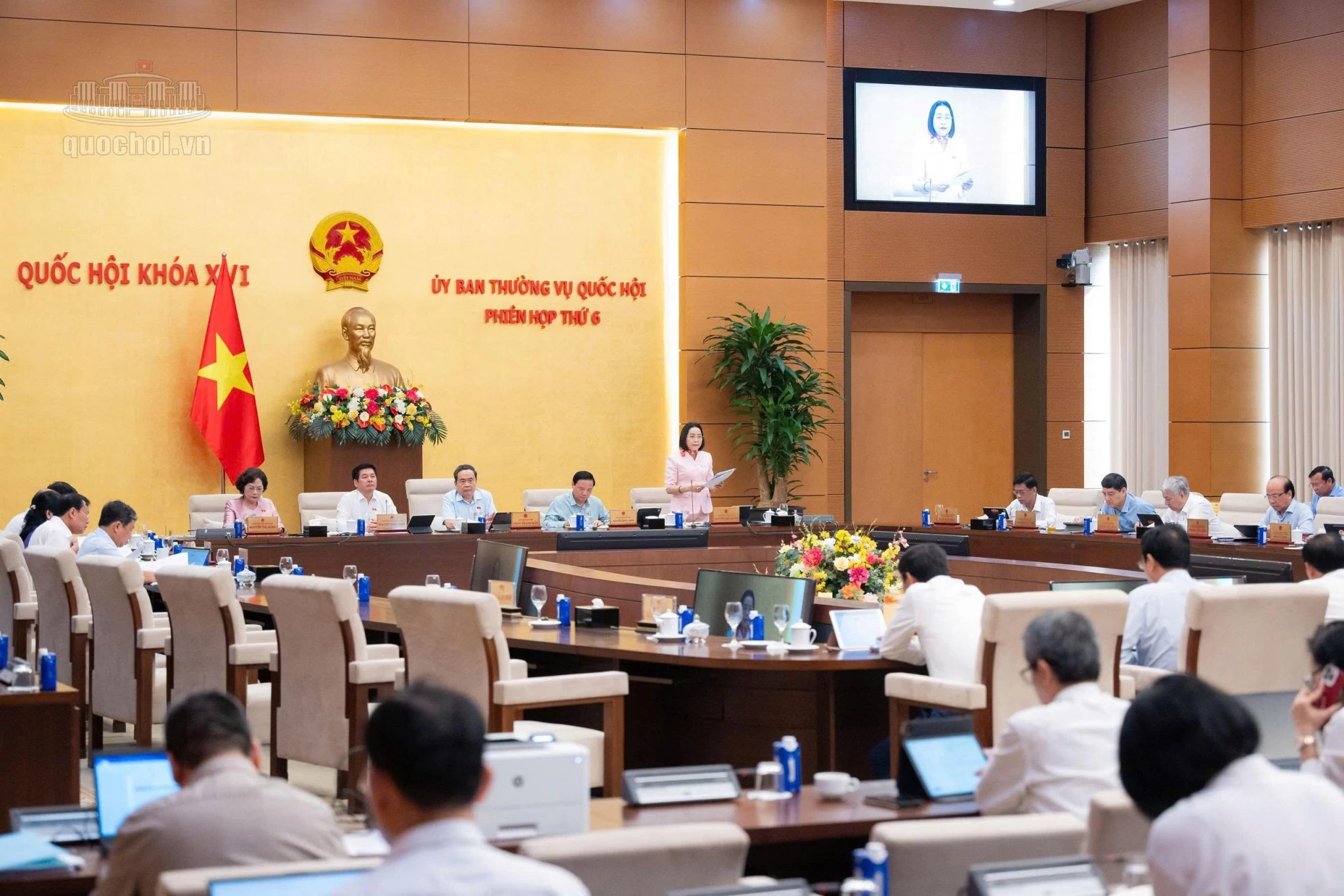
The National Assembly Standing Committee gives its opinions on the draft Law on Marine and Island Resources and Environment (amended). Photo: Office of the National Assembly
Improving Rights to Use Marine Areas and Unlocking Resources
At its morning session on September 22, the National Assembly Standing Committee gave its opinions on the draft Law on Marine and Island Resources and Environment (amended). Presenting the Government's submission, Deputy Minister of Agriculture and Environment Dang Ngoc Diep stated that the amendment aims to improve the institutional framework for marine management, address difficulties and obstacles, resolve overlaps, and unlock resources for marine economic development, while protecting the environment and ensuring national defense, security and sovereignty.
According to the submission, the draft Law consists of 6 chapters and 76 articles, focusing on the integrated management of marine spatial resources, protection of the marine and island environment, and the rights, obligations and responsibilities of relevant agencies, organizations and individuals.
A notable provision is the improvement of mechanisms for managing, allocating and using marine space. The draft provides for the allocation, leasing and registration of marine area use, auctions of rights to use marine areas, and the issuance of certificates of rights to use marine areas, thereby establishing a basis for transparent, effective and publicly accountable allocation of public resources and the resolution of conflicts over marine use.
The draft also improves the rights and obligations of marine area users. Accordingly, users may be granted rights to transfer, lease, contribute as capital, or mortgage rights to use marine areas and associated assets, as well as change the purpose of use, while also providing for recovery, compensation, support and financial obligations. These rights shall be exercised subject to conditions and limitations consistent with planning, purposes and duration of use, as well as requirements concerning the protection of national interests, national defense, security and the environment. According to the Deputy Minister, this provides a basis for greater legal certainty and the mobilization of long-term capital for marine development.
Regarding the development of economic activities in marine and island areas, the draft supplements preferential and support mechanisms and policies, specifying eligible beneficiaries, criteria and conditions for receiving incentives and support. It also introduces mechanisms for exemption from or reduction of marine area use fees, priority access to infrastructure and data, controlled pilot programs, and green marine finance.
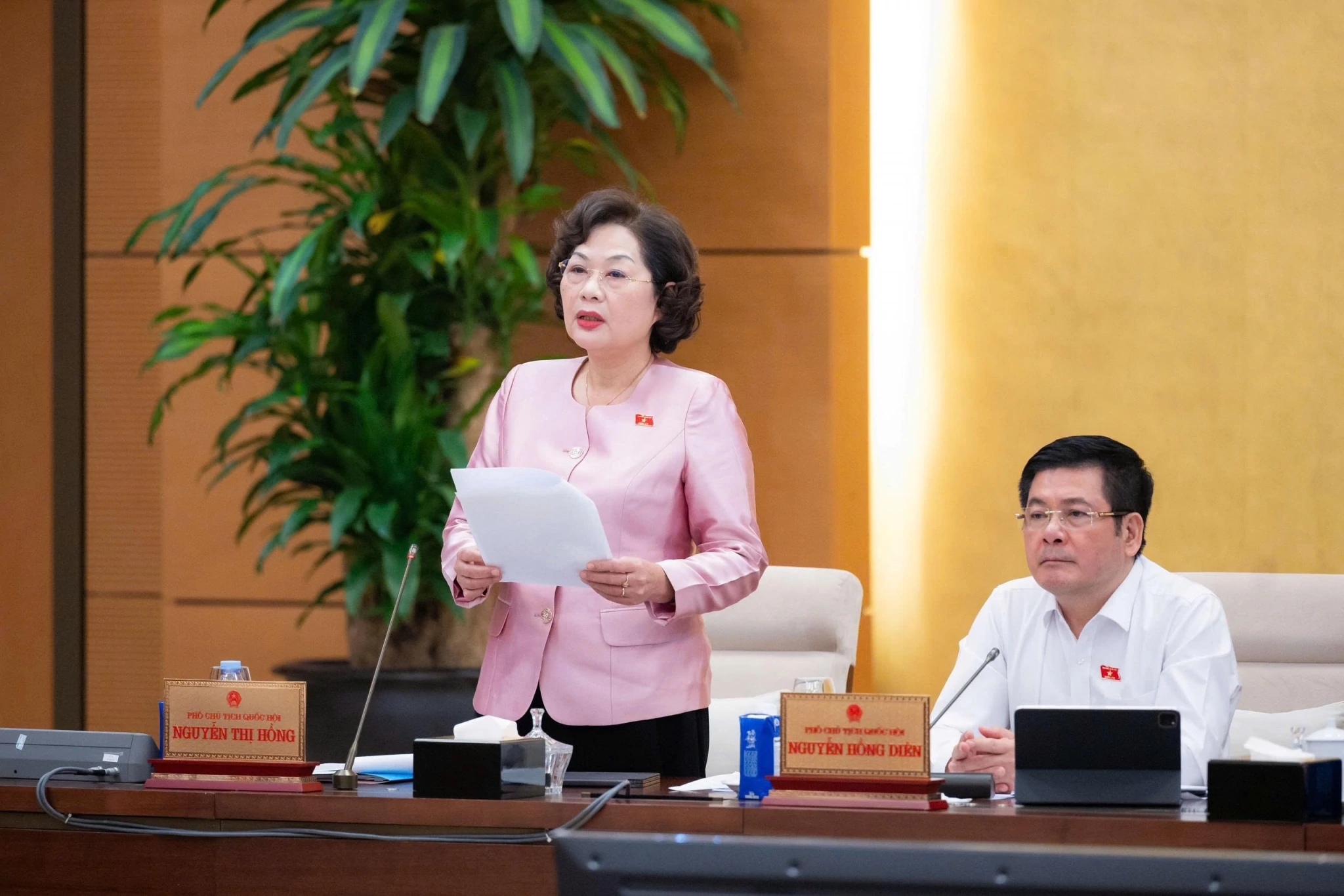
National Assembly Vice Chairwoman Nguyen Thi Hong called for further improvement of the compensation mechanism when the State recovers rights to use marine areas. Photo: Office of the National Assembly
The policies focus on marine infrastructure, offshore renewable energy, high-tech marine aquaculture, marine technologies and industries with leading and spillover potential. They also provide support for the livelihoods of coastal and island communities, while investment, tax, credit and other related incentives shall be implemented in accordance with specialized legislation.
The Deputy Minister also emphasized that improving rights to use marine areas, establishing specific incentive mechanisms, implementing controlled pilot programs and developing green marine finance would facilitate the development of industries with leading and spillover potential. The draft therefore provides a legal basis for achieving the objectives set for 2030 regarding marine functional zoning, data digitalization, offshore wind power development, and the formation of strong marine economic centers associated with environmental protection, ecosystem restoration and climate change adaptation.
According to the submission, the draft Law aims to establish unified governance of marine space, unlock investment resources, protect ecosystems and balance the interests of the State, enterprises and people, thereby creating a foundation for a green and sustainable marine economy.
Clarifying Mechanisms for Capital Mobilization, Incentives and Resources
Reviewing the draft Law, Nguyen Thanh Hai, Chairman of the National Assembly Committee on Science, Technology and Environment, said that the Standing Committee of the Committee basically agreed on the necessity of comprehensively amending the Law. However, as the draft covers various matters related to marine spatial management, rights to use marine areas, offshore structures, coastal zones and environmental protection, the reviewing body requested that the Government continue reviewing the draft to ensure consistency with the legal system.
Regarding policies, the reviewing body proposed that each policy should have a corresponding implementation mechanism, while incentives, exceptions and restrictions on the rights of organizations and individuals must be based on transparent criteria. It also recommended prioritizing modern, green and circular marine industries and sectors with high added value and leading and spillover potential, while gradually developing Vietnam's capacity to operate in offshore, deep-sea and other emerging marine spaces.
Regarding rights to use marine areas, the reviewing body requested clarification of the nature and implications of each form of use right, the applicable entities, the basis for determining fees, as well as the rights to transfer and mortgage such rights. It also called for a thorough review of cases exempt from auctions and for a distinction to be made between preferential policies and the selection of users, ensuring that only one competitive mechanism is applied when selecting a project.
The reviewing body also noted the issue of registering ownership rights over construction works and artificial islands at sea, as current legislation does not provide a mechanism for registering ownership of assets attached to marine space. This issue is directly relevant to the development and investment in offshore structures, including offshore wind power projects.
Regarding preferential policies and support for marine economic development, the reviewing body proposed clarifying their specific and superior nature and added value compared with existing policies, while clearly defining eligible beneficiaries, conditions, levels, duration and implementation resources in order to avoid fragmented or widespread application.
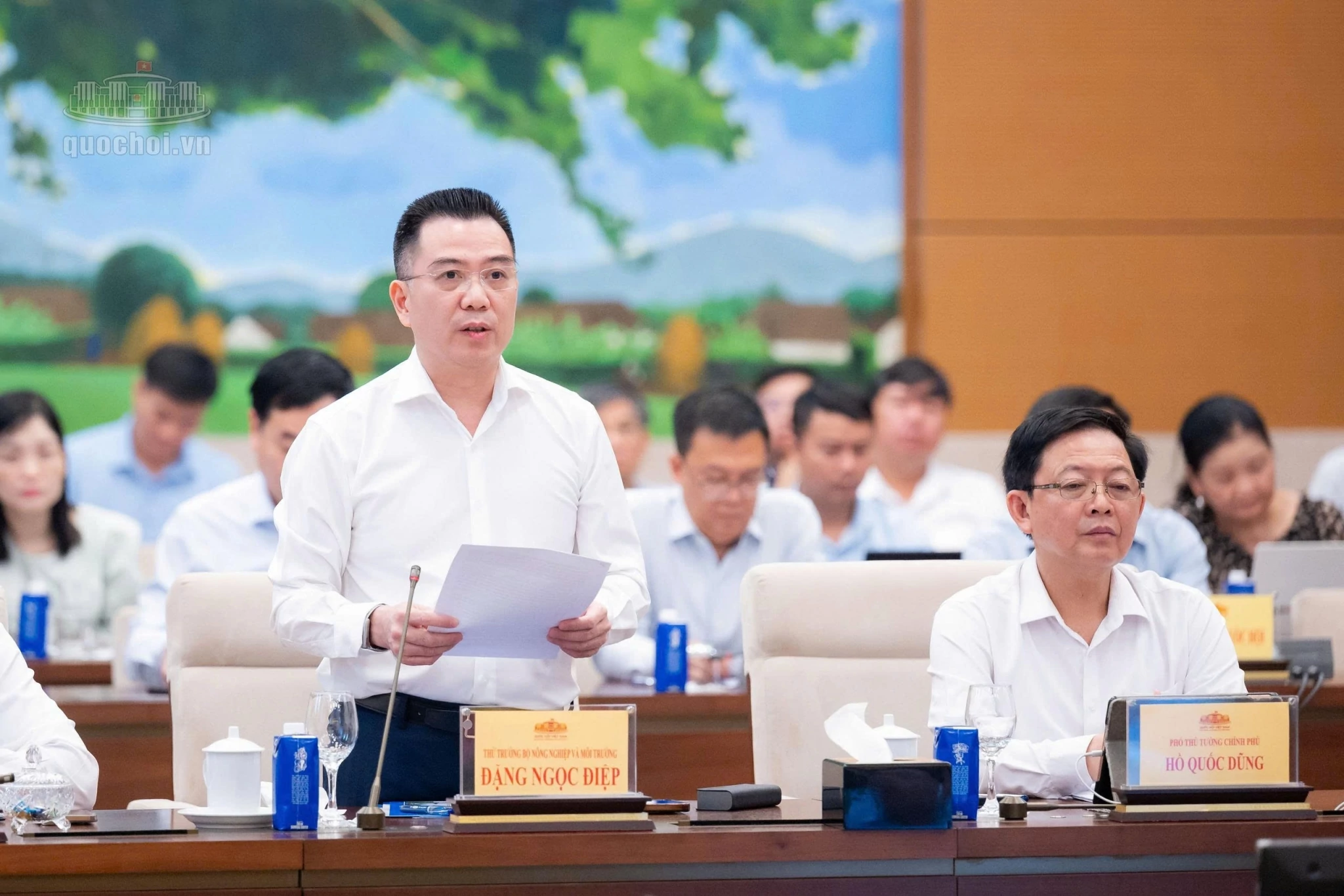
Deputy Minister of Agriculture and Environment Dang Ngoc Diep presented the Government's submission. Photo: Office of the National Assembly
Speaking at the session, National Assembly Vice Chairwoman Nguyen Thi Hong highlighted three issues, notably rights to use marine areas and the ability to mobilize capital.
According to the Vice Chairwoman, the draft allows, in certain cases, rights to use marine areas to be transferred, contributed as capital or mortgaged. However, further review is needed to ensure that mortgage rights have genuine value for capital mobilization, particularly for large-scale marine projects with long investment and payback periods.
The Vice Chairwoman noted that the value of collateral depends significantly on whether the scope of the rights is clearly defined, whether transactions are fully registered, and whether such rights can be enforced when bad debts arise. The enforcement mechanism must be clear and feasible, avoiding situations in which the law permits mortgaging but the collateral becomes difficult to realize when bad debts arise, thereby reducing the value of the collateral and projects' access to financing.
Regarding recovery and compensation, National Assembly Vice Chairwoman Nguyen Thi Hong called for further improvement of the compensation mechanism when the State recovers rights to use marine areas. Where the draft permits certain rights to use marine areas to be transferred, contributed as capital or mortgaged, marine use fees paid as a financial obligation to the State budget cannot replace the determination of the value of the recovered rights.
In addition, it is necessary to clarify the calculation of unrecovered legitimate investment costs, dismantling, relocation and reinstallation of structures, as well as direct losses arising from the recovery. In cases of recovery for national defense, security, national interests, public interests or implementation of planning, compensation and support plans and the funding for implementation should be approved and secured before a recovery decision is issued.
Regarding the “marine spatial fund,” the Vice Chairwoman requested clarification of its nature, objectives and management mechanism. According to the Vice Chairwoman, under the current definition, this refers to a collection of marine areas for which conditions have been prepared to facilitate investment, rather than a financial fund.
Concluding the session, National Assembly Vice Chairman Nguyen Hong Dien requested continued review and clear determination of the scope of the Law, focusing on integrated and intersectoral management of marine and island resources, the marine environment and marine space, in response to new requirements for the governance, allocation, development and use of Vietnam's national marine space.
The Vice Chairman also requested further improvement of policies and principles for the integrated management of national marine resources and marine space, ensuring that each policy has a corresponding implementation mechanism and that incentives, exceptions and restrictions on rights are governed by specific and transparent criteria. He also called for clarification of intersectoral coordination mechanisms and mechanisms for resolving conflicts and overlaps in the use of marine space.
Regarding marine economic development policies, National Assembly Vice Chairman Nguyen Hong Dien requested a review and clarification of the specific and superior nature of preferential and support mechanisms for marine economic development compared with existing policies, with clear provisions on eligible beneficiaries, conditions, levels, duration and implementation resources. Policies should focus on key emerging marine industries and sectors with leading and spillover potential and avoid fragmented or widespread application.