The Standing Committee of the National Assembly highly appreciated the State Audit Office of Vietnam (SAV) for making new strides in renewing its operating methods, streamlining its organizational structure, strengthening the application of artificial intelligence (AI), and improving audit quality. These notable achievements not only reaffirm the SAV’s position but also make positive contributions to strengthening discipline and order in the management and use of public finances and public assets, preventing and combating corruption and waste, and improving the legal and institutional framework.
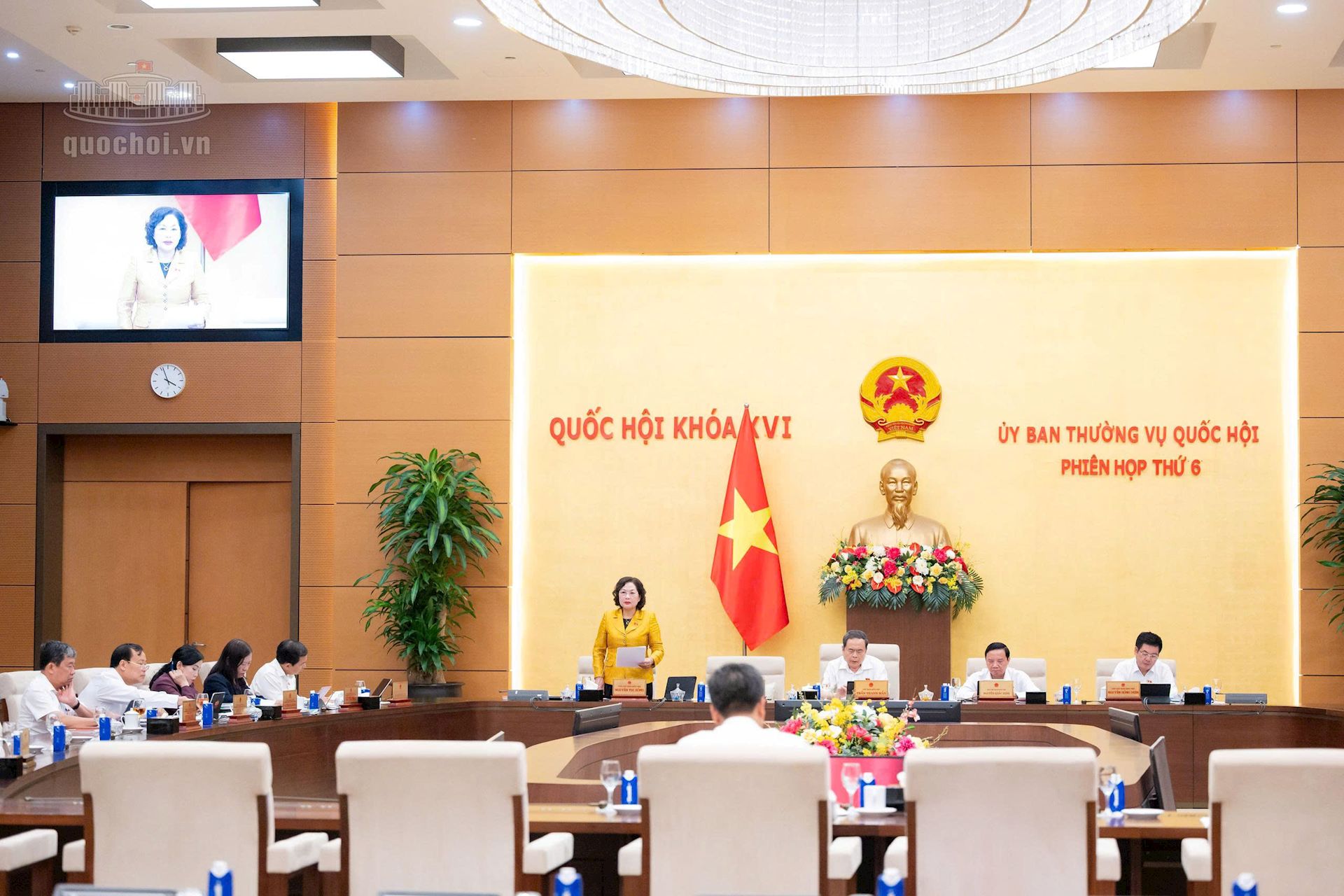
Overview of the session. Photo: National Assembly Office
Breakthrough Results in Task Implementation
Reporting on the SAV’s 2026 performance at the session of the National Assembly Standing Committee on the afternoon of September 21, State Auditor General Nguyen Huu Nghia affirmed that the SAV had made concerted efforts to comprehensively fulfill its plans and tasks for 2026, while achieving breakthroughs and positive changes in several areas.
Accordingly, solidarity, unity, discipline, and order in SAV operations continued to be strengthened and promoted. The leadership, direction, governance, and management methods of the SAV leadership underwent significant changes, becoming more innovative, systematic, decisive, and consistent.
In seriously and effectively implementing the policy of further streamlining the organizational structure, the SAV reviewed and streamlined its organizational apparatus, reducing one department-level unit and 30 division-level units, as well as one Party committee and 27 affiliated Party cells. The restructuring was carried out simultaneously for both administrative bodies and Party organizations. The new organizational model has operated stably since August 15, 2026, with a more streamlined structure and fundamental improvements in overlapping and fragmented functions and responsibilities.
This demonstrates the SAV’s strong political determination, organizational capacity, initiative, flexibility, and high sense of responsibility in implementing Resolution No. 308a/NQ-UBTVQH16 of the National Assembly Standing Committee.
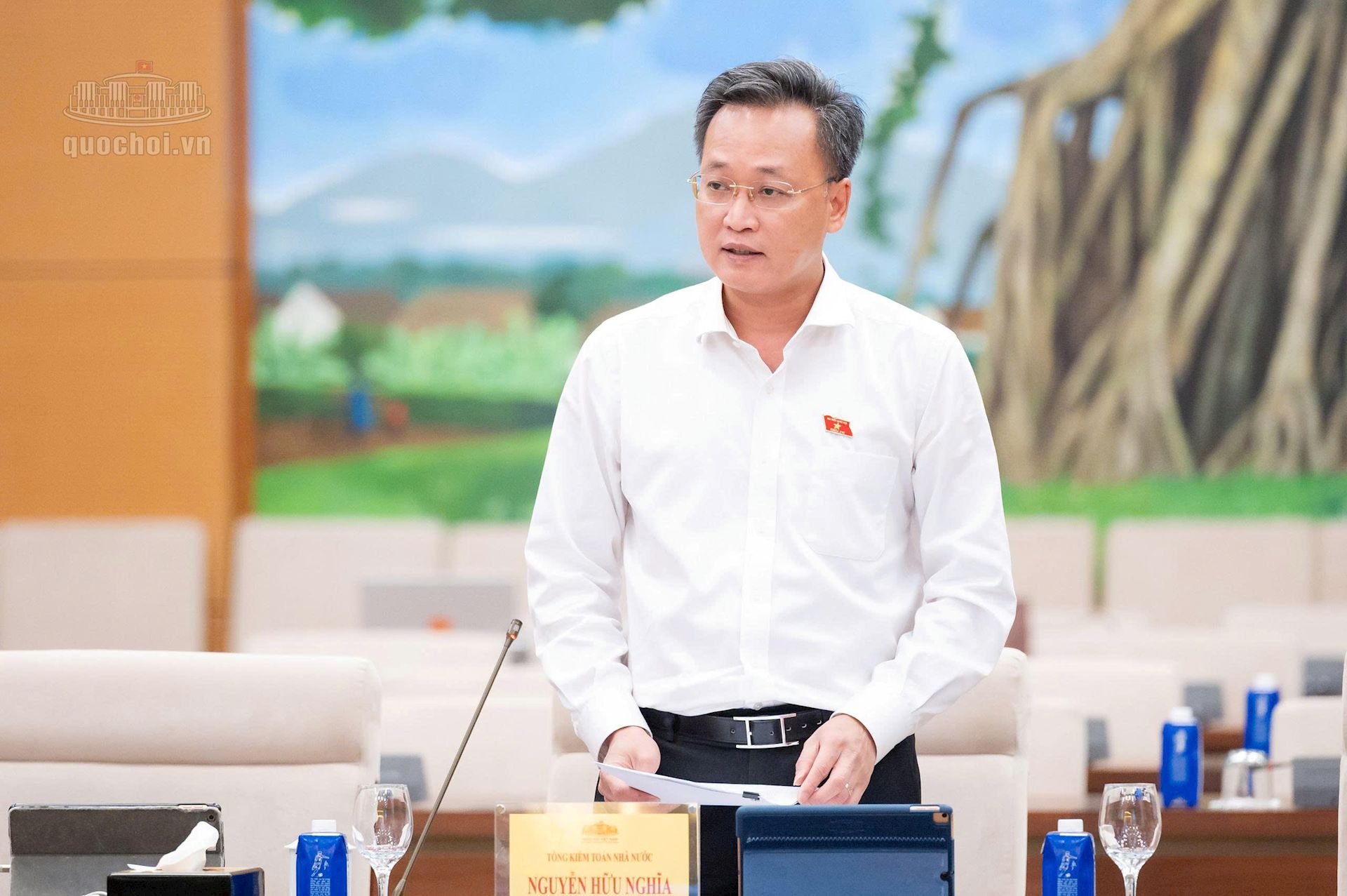
State Auditor General Nguyen Huu Nghia reports on the SAV’s 2026 performance. Photo: National Assembly Office
In addition, the SAV has focused on accelerating the development of policies and legislation, while promoting digital transformation in leadership, management, and administration, as well as in professional audit activities.
The application of technology and digital transformation across the sector has achieved numerous important results, initially becoming comprehensive across regulations, policies, technical infrastructure development, database development, and the deployment of technology-based application platforms. The results of digital transformation have also been effectively applied in SAV professional activities through various digital platforms.
The SAV is now able to trace and analyze transactions and flows of goods. Through the use of artificial intelligence, the SAV has also detected numerous violations, including cases showing signs of criminal offenses that have been referred for handling in recent times.
In particular, State Auditor General Nguyen Huu Nghia emphasized numerous innovations and positive improvements in the effectiveness and efficiency of audit activities.
In 2026, according to the plan, the SAV is carrying out 132 audit tasks organized into 180 audit teams. As of August 30, the sector had approved 143 audit plans and deployed 133 audit teams, of which 105 had completed their assignments and 74 audit reports had been officially issued.
Through its audits, the SAV promptly identified violations and recommended corrective measures and strict handling of violations, shortcomings, limitations, and weaknesses at audited entities. Particular emphasis was placed on recovering public funds and assets that had been misappropriated or used for improper purposes or contrary to regulations, or that posed risks of loss and waste. At the same time, the SAV attached great importance to the implementation of audit recommendations and conclusions.
In the first eight months of the year, the SAV recommended the handling of VND 79.651 trillion and USD 4,684,646, along with the repeal, amendment, or supplementation of 138 documents.
The implementation of financial recommendations was also a notable achievement, with the rate of implementation reaching nearly 73% for recommendations denominated in Vietnamese dong, compared with 58% over the same period last year, and nearly 85% for recommendations denominated in U.S. dollars.
To achieve this progress, the SAV implemented coordinated measures in accordance with Resolution No. 21 of the National Assembly. The Party Committee of the SAV issued a Directive on strengthening Party leadership over the inspection, supervision, urging, and monitoring of the implementation of audit conclusions and recommendations. In particular, the SAV conducted 79 inspections into the implementation of audit conclusions and recommendations, contributing to significant improvements in their implementation.
The SAV has stepped up efforts to prevent and combat corruption, waste, and negative practices. In the first eight months of the year, the SAV provided 193 audit reports and relevant documents to the Central Inspection Commission, investigative agencies, and other state agencies to support investigation, inspection, and supervision activities. Notably, the SAV has so far provided case files concerning 13 cases showing signs of criminal offenses to investigative authorities.
Overcoming Challenges and Affirming the Special Role of the State Audit Office
From the perspective of the reviewing bodies, the Standing Committee of the National Assembly’s Economic and Financial Committee, the Standing Committee of the Nationalities Council, and other National Assembly committees highly appreciated the SAV’s performance in 2026, particularly its continued organizational streamlining and innovations in implementing its 2026 tasks.
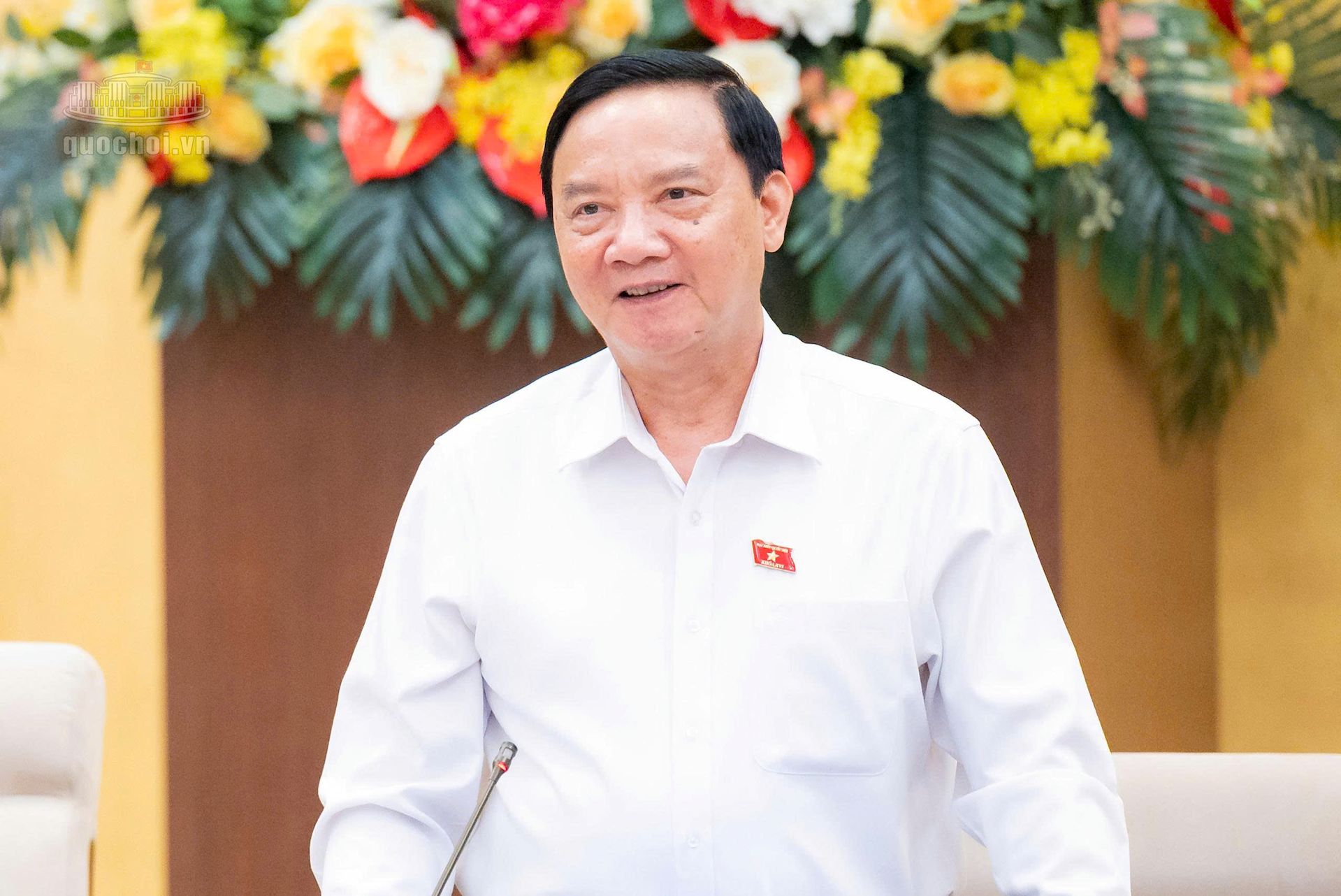
Vice Chairman of the National Assembly Nguyen Khac Dinh speaks at the session. Photo: National Assembly Office
Assessing the SAV’s organizational model and operating methods, Vice Chairman of the National Assembly Nguyen Khac Dinh acknowledged the sector’s efforts to overcome challenges in the context of a reduced workforce, while the workload continues to increase, the scope of operations is broad, and the nature of the work is increasingly complex.
Vice Chairman Nguyen Khac Dinh noted that the SAV’s current organizational structure demonstrates a high degree of unity and quality. In particular, significant progress in the application of information technology and digital transformation has enabled audit teams to carry out many tasks remotely in a digital environment. This not only improves the effectiveness and efficiency of auditing but also directly contributes to efforts to prevent and combat negative practices.
Vice Chairman Nguyen Khac Dinh also noted that the SAV has increasingly affirmed its special position.
“The SAV is a special institution, a constitutional institution that is highly valued by the Party and the State. The leadership of the SAV is a member of the Central Steering Committee for the Prevention and Control of Corruption, Waste, and Negative Practices, as well as the Steering Committee on Institutional Development. The SAV also actively participates in National Assembly oversight activities and sessions of the National Assembly Standing Committee, making valuable and critical contributions,” the Vice Chairman of the National Assembly emphasized.
The position of the SAV has been increasingly strengthened since the SAV Party Committee became part of the National Assembly Party Committee. In particular, I highly appreciate the SAV for taking the lead over the past two years in digital transformation and the application of artificial intelligence, as well as for seriously implementing the “Digital Literacy for All” movement and applying it in actual audit activities.
National Assembly Chairman Tran Thanh Man
Chairwoman of the National Assembly’s Committee for People’s Petitions and Supervision Le Thi Nga emphasized that the SAV has been exemplary in restructuring and streamlining its organizational apparatus, reducing the number of focal units, ensuring that functions do not overlap, and maintaining smooth operations.
Agreeing with the State Auditor General’s view that the most important issue is not the number of audit teams or audit conclusions issued, but rather how audit recommendations are implemented, Ms. Le Thi Nga highlighted the SAV’s implementation of 79 inspections into the implementation of audit recommendations.
“This is an appropriate direction for the SAV, because during National Assembly discussions, National Assembly deputies pay great attention to the rate at which audit conclusions are implemented,” Ms. Le Thi Nga stated.
The Chairwoman of the Committee for People’s Petitions and Supervision also highlighted the SAV’s efforts in preventing and combating corruption, noting that within just eight months, the sector had transferred cases showing signs of criminal offenses to investigative authorities, representing a significant increase compared with previous years.
Addressing Recurring and Widespread Violations
Contributing comments, Secretary General of the National Assembly and Chairman of the National Assembly Office Le Quang Manh acknowledged that the 73% implementation rate for financial recommendations was a significant result. However, he expressed concern that the implementation rate for recommendations to amend or repeal mechanisms and policies remained low, at only 21% (42 out of 201 documents recommended for revision by the SAV).

Chairwoman of the National Assembly’s Committee on Science, Technology and Environment Nguyen Thanh Hai speaks at the session. Photo: National Assembly Office
According to the Secretary General of the National Assembly, as long as gaps or shortcomings remain in the institutional and legal framework, the same errors may continue to recur in subsequent audits. Therefore, the SAV should focus on improving this area.
“The report should clearly distinguish between shortcomings in regulations and errors in implementation, while clearly identifying the responsible agencies and responsibilities for handling them, in order to prevent and fundamentally address recurring problems. Auditing should not only address an incident after it occurs, but also contribute to preventing similar issues from occurring in the future,” the Secretary General of the National Assembly stated.
Sharing this view, Vice Chairman of the National Assembly Nguyen Khac Dinh asked the SAV to prepare a specific list identifying which entities, ministries, sectors, and localities had not implemented audit conclusions or addressed financial and institutional recommendations. He also requested that the competent authorities be informed so that they could urge, remind, and take appropriate action to ensure the effectiveness and efficiency of auditing.
Chairwoman of the National Assembly’s Committee on Science, Technology and Environment Nguyen Thanh Hai appreciated the SAV’s initial shift from traditional document-based inspection toward large-scale data exploitation and analysis. The application of AI has enabled the sector to forecast and predict potential issues, detect anomalies at an early stage, identify risks, and issue early warnings.
Ms. Nguyen Thanh Hai proposed that the SAV provide audit reports and conclusions related to science and technology, innovation, and budget disbursement to the National Assembly’s specialized committees, providing a basis for reviewing and supervising the development of legal documents and addressing legal gaps.
In addition, participants proposed that the SAV continue strengthening personnel management to ensure that there are no cases of harassment or negative practices within audit teams, while focusing on completing the 2026 Audit Plan on schedule and ensuring quality.
Supporting the SAV’s proposal, Vice Chairman of the National Assembly Nguyen Khac Dinh suggested that the National Assembly Standing Committee include in its conclusions that, from 2027 onward, the SAV’s annual performance report should cover the period from January 1 to December 31 each year and be submitted to the National Assembly at its first annual session. Following the previous practice required an annual report to be prepared three times, resulting in unnecessary expenditure of time and effort, while the figures did not fully reflect the entire year.