On the morning of September 25, at the headquarters of the State Audit Office of Vietnam (SAV), the Steering Committee for Science, Technology Development, Innovation and Digital Transformation of the SAV held a regular meeting.

The Steering Committee for Science, Technology, Innovation and Digital Transformation of the SAV held a regular meeting under the chairmanship of State Auditor General Nguyen Huu Nghia. Photo: SAV
The meeting was held under the chairmanship of Comrade Nguyen Huu Nghia - Member of the Party Central Committee, Secretary of the Party Committee, State Auditor General, Head of the Steering Committee.
The meeting focused on discussing and giving opinions on the Draft Digital Architecture Framework of the SAV and comprehensively assessing the results of digital transformation work in the third quarter, and agreeing on key task directions for the fourth quarter of 2026.
Draft Digital Architecture Framework of SAV basically completed
Summarizing the report at the meeting, Director of the Department of Information Technology Pham Huy Thong and representatives of the consulting unit said that after more than 3 months of urgent work and close coordination with units in the Sector, the Draft Digital Architecture Framework of SAV has basically been completed.
The digital architecture framework establishes an overall model including 4 levels: Digital infrastructure and network security; Data and core platform; Common applications and nghiệp vụ; Interaction channels and efficiency measurement. Accompanying it are 5 detailed reference models for nghiệp vụ (BRM), data (DRM), application (ARM), technology (TRM) and information security (SRM).
In addition, the Draft also analyzes the current status of 27 operating software, identifies technical gaps and proposes 13 priority task groups, towards the goal of converting traditional audit methods to audits based on big data and artificial intelligence (AI) applications.
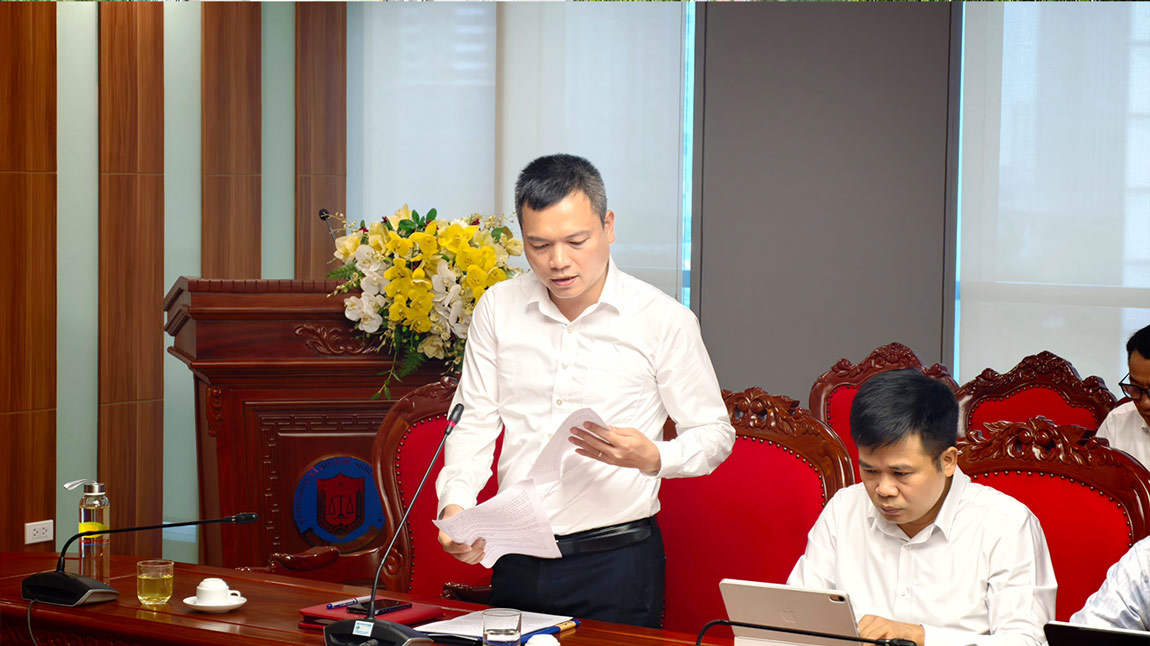
Director of the Department of Information Technology Pham Huy Thong reported at the meeting.
Although the IT Department and the consulting unit are highly appreciated, from a professional perspective, many opinions frankly point out: The architectural framework must not stop at general technical diagrams or abstract technology concepts, but must solve the practical interconnection problem between systems.
Taking 2030 as a milestone for transitioning to digital auditing
Speaking to direct and conclude the meeting, State Auditor General Nguyen Huu Nghia - Head of the Steering Committee praised the Department of Information Technology and the consulting unit for their efforts to complete a very large volume of work in a short time.
Comrade Nguyen Huu Nghia affirmed that SAV identifies digital transformation as a key and methodical political task, done thoroughly, and investment must bring real efficiency to professional work. In that process, the Digital Architecture Framework is the "guideline" document, a mandatory step to be taken to plan the overall problem, ending the situation of scattered, fragmented, and duplicated investment.
Specifically directing the completion of the Framework, the State Auditor General requested:
Adjusting the timeline to 2030: The draft is currently setting a vision to 2031, it is necessary to adjust it to the 2030 milestone to match the Strategy for Development of the State Audit Office to 2030 (according to Resolution No. 999 of the National Assembly Standing Committee) and the general orientation of the whole country. The entire 3-stage phasing roadmap must also be reviewed and recalculated to be compatible with this timeline.
Inheriting and clarifying the unique identity: Building the Digital Architecture Framework is not about "breaking and redoing" from the beginning, but about inheriting the architectural framework of the previous stage, keeping what is appropriate, eliminating unreasonable points and adding new technologies. In particular, the Framework must strongly reflect the unique characteristics of SAV - an independent audit agency, operating according to a centralized vertical industry system from the Central to regional SAVs.
Starting from the professional problem: "Advice only helps solve technical problems, and whatever you want, the professional units themselves must clarify". The State Auditor General requested the heads of professional units to directly get involved, prepare core professional procedures so that the digital technology side must definitely not entrust or entrust everything to the IT Department.
Proactive in audit data: Data is a resource, the "blood" of modern management. SAV has more than 11,000 audit subjects in many different industries, so it is not possible to apply a common formula for collecting data. Professional units cannot sit and wait for data available from outside but must proactively propose a list of data to be exploited, and complete the legal corridor to request audit subjects to provide detailed digital data.
The nature of digital audit: Remote audit and data-based audit are to detect early, warn early, and remotely detect signs of violations and risks, thereby shortening the on-site audit time (from 60 days to about 10-12 days). However, digital audit plays a supporting role, improving the quality of evidence, not completely replacing direct audits and professional judgments of auditors.
The State Auditor General requests units to send written comments to the IT Department no later than the afternoon of September 28, 2026; assigning the IT Department to closely coordinate with consultants to complete the Draft to sign and promulgate the Digital Architecture Framework before September 30, 2026 according to the set plan.
Assessing the results of the third quarter's work, the Steering Committee noted positive changes throughout the sector. However, the remaining workload in the fourth quarter is very large with more than 50 tasks to be completed. To create substantive changes, the Head of the Steering Committee requested units to closely follow the "6 clear" principle (clear people, clear tasks, clear time, clear responsibilities, clear products, clear authority) to focus on key tasks.