The State Audit Office of Vietnam (SAV) Party Committee requires that the designation “national-level scientific conference” be used only when approved by the competent authority. The designation must not be used for conferences that address issues solely within the scope of the SAV, or that are organized primarily as events, commemorations, promotional activities, or do not fully meet the prescribed criteria.
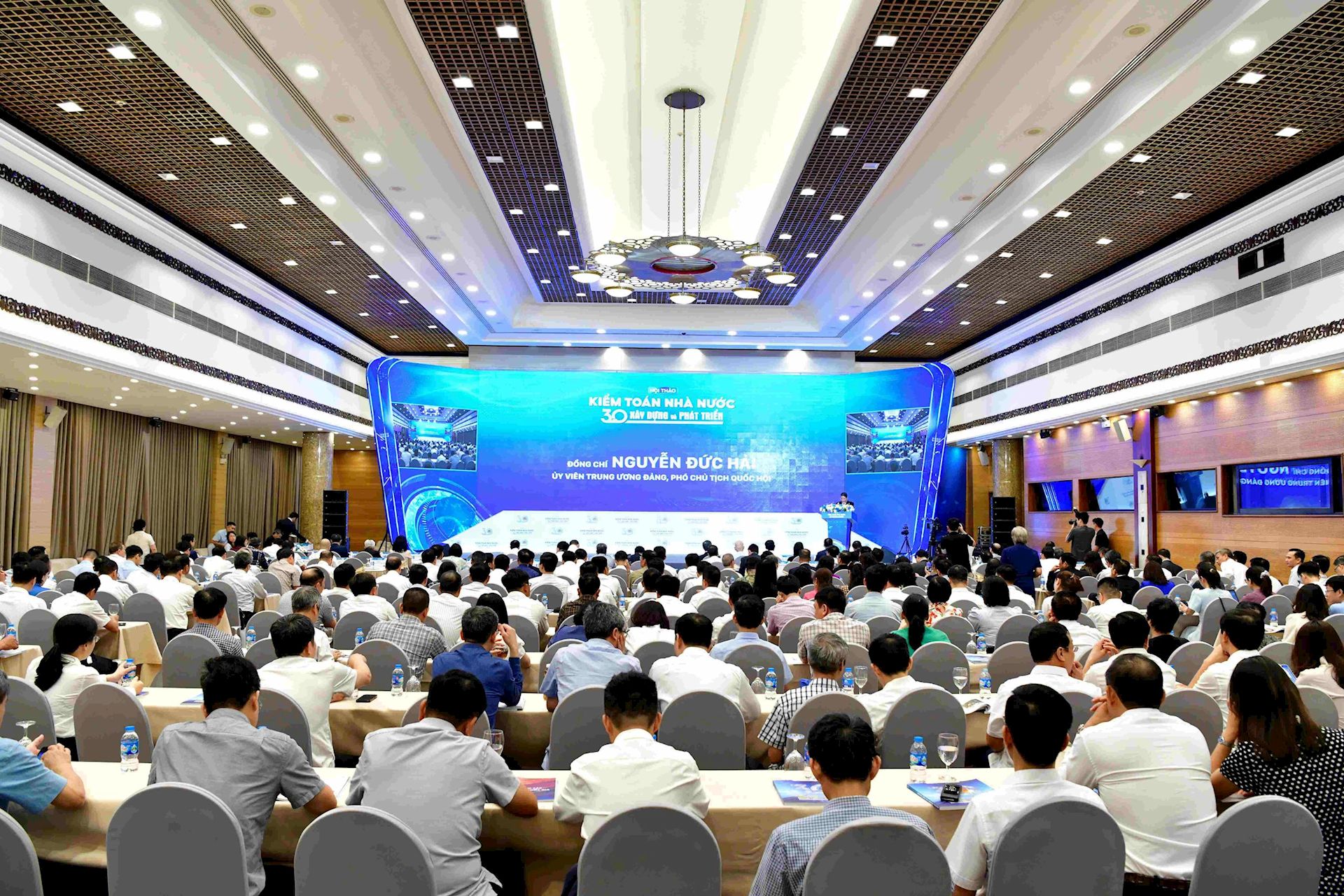
The identification and organization of national-level scientific conferences must ensure the Party’s leadership and comply with the Party’s guidelines and policies and the State’s laws and policies. Photo: TL
The SAV Party Committee has issued Official Letter No. 1492-CV/ĐU, requesting its subordinate Party committees and Party cells to thoroughly disseminate and strictly implement Guidance No. 01-HD/BTGTW on the identification and organization of national-level scientific conferences, ensuring that such activities are conducted within the proper authority and closely aligned with the SAV’s functions and responsibilities.
Implementing Guidance No. 01-HD/BTGTW dated August 19, 2026, issued by the Central Propaganda and Mass Mobilization Commission, and Official Letter No. 860-CV/ĐUQH dated August 27, 2026, issued by the National Assembly Party Committee, the Standing Committee of the SAV Party Committee requires its subordinate Party committees and Party cells to organize the study, dissemination, and strict implementation of regulations on the identification and organization of national-level scientific conferences among officials, Party members, civil servants, and public employees, particularly those directly involved in advising on and organizing scientific conferences.
Accordingly, the identification and organization of national-level scientific conferences must ensure the Party’s leadership; comply with the Party’s guidelines and policies and the State’s laws and policies; conform to the SAV’s functions, duties, and powers; maintain political and ideological orientation; and serve the interests of the nation and people.
One of the key requirements is that proposals to organize national-level scientific conferences may be made only when genuinely necessary and when they address new issues, without duplicating the themes, objectives, or contents of national-level conferences that have already been or are currently being organized, except where such conferences are held at the direction of the Politburo, the Party Central Committee Secretariat, or the Standing Secretariat, or in response to urgent practical requirements.
At the same time, the designation “national-level scientific conference” or any other title indicating a national-level nature may be used only after approval by the competent authority. Such national-level designations must not be used for conferences that address issues solely within the scope of the SAV, or conferences organized for events, commemorations, promotional purposes, or those that do not fully satisfy the criteria set out in Guidance No. 01-HD/BTGTW. The content, process, and outcomes of conferences must be publicly and transparently disclosed, except for information classified as confidential under regulations.
Regarding authority, subordinate Party committees and Party cells are responsible for leading and directing their respective units in reviewing and proposing conference topics that are appropriate to the SAV’s functions and responsibilities. The head of each Party committee is directly responsible for the proposal and must report it to the Auditor General for consideration within his or her authority before submitting it to the competent authority for approval of the conference policy.
The SAV may act as the organizer or co-organizer only when assigned by the competent authority. Its subordinate units may conduct such activities only when assigned by the Auditor General.
The proposal dossier for a national-level scientific conference must clearly state the necessity of the conference; its political, legal, and practical bases; its novelty and the results of the review confirming that it does not duplicate existing conferences; its objectives, theme, content, and scope of impact; and the grounds for determining the authority responsible for deciding on, organizing, or co-organizing the conference.
The dossier must also specify the organizing agency and coordinating agencies; the participation of experts, scientists, policymakers, and practitioners; the procedures for selecting, reviewing, editing, and managing conference papers; the program, schedule, funding, and necessary supporting conditions; as well as the expected outputs, receiving agency, and mechanisms for transferring, studying, incorporating, and utilizing the conference outcomes.
Notably, the proposed arrangements for managing documents, statements, press activities and communications; protecting internal political security, Party secrets, State secrets, information security, and intellectual property must also be specified in the proposal dossier. The national-level designation must not be included in official plans, invitations, documents, press releases, or communication products before approval is granted by the competent authority.
During the organization of the conference, the organizing units must strictly adhere to the objectives, contents, and program approved in advance and closely manage documents, conference papers, statements, press information, and communications. The Official Letter strictly prohibits using conferences as a means to disseminate erroneous viewpoints, unverified information, or content contrary to the Party’s guidelines and policies or the State’s laws and policies. At the same time, organizers must ensure the confidentiality of Party and State secrets, protect internal political security, maintain information security, and satisfy other relevant requirements.
After the conference concludes, the organizing unit is responsible for finalizing the conference report and scientific outputs in accordance with the plan; reporting the conference results to the competent authority as prescribed; storing, sharing, and utilizing the outcomes in accordance with regulations; and monitoring the incorporation and use of recommendations and proposals.
To ensure consistent implementation, subordinate Party committees and Party cells are required to thoroughly disseminate and strictly implement Guidance No. 01-HD/BTGTW, Official Letter No. 860-CV/ĐUQH, and Official Letter No. 1492-CV/ĐU.
The Standing Committee of the SAV Party Committee assigns the Party Cell of the Department of State Audit Policies to take the lead, in coordination with relevant agencies, in monitoring, guiding, inspecting, and consolidating the implementation situation and results, and reporting them to the Standing Committee of the SAV Party Committee. During implementation, if any difficulties or obstacles arise, subordinate Party committees and Party cells are required to promptly report them to the Standing Committee of the SAV Party Committee through the Party Cell of the Department of State Audit Policies for consideration and direction.