Despite spending 99.6% of its allocated budget for the 2025–2026 financial year, South Africa's Department of Sport, Arts and Culture (DSAC) has yet to address longstanding weaknesses in governance and financial controls. The Auditor-General of South Africa (AGSA) has warned that numerous gaps in the internal control system are increasing the risk of fraud, undermining budget efficiency and accountability.
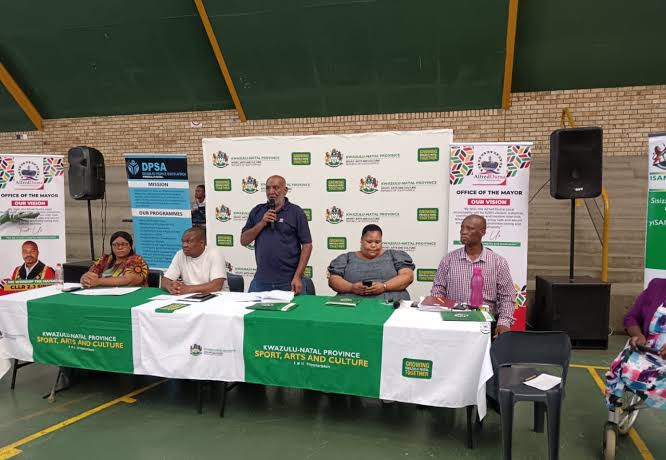
DSAC and its affiliated entities attend a workshop ahead of a major event. Photo: Encrypted-tbn0.gstatic.com
Longstanding Governance Weaknesses Persist
In a recent audit report, AGSA identified numerous shortcomings in the operations of DSAC and its affiliated entities, ranging from administrative management and financial oversight to performance monitoring. Despite regularly organizing major sporting and cultural events, the Department has yet to fully address governance and administrative deficiencies that have persisted for years.
Key issues highlighted by the audit authority include serious deficiencies in performance reporting, violations of procurement and contract management procedures, and inadequate accountability mechanisms for internal irregularities. Notably, several senior management positions have remained vacant for extended periods without permanent replacements, increasing operational and governance risks.
During the 2025–2026 financial year, DSAC spent 99.6% of its allocated budget of 6.3 billion South African rand (approximately USD 385 million). However, the high budget execution rate has not translated into corresponding improvements in management efficiency. The Department and its affiliated entities have failed to resolve numerous outstanding issues from previous years. Financial management irregularities continue to recur, while several key performance targets remain unmet. DSAC remains under close parliamentary scrutiny.
According to AGSA, the main reasons behind DSAC's failure to achieve many of its objectives include weak management capacity, inadequate planning and record-keeping, and delays in approval procedures. These shortcomings are also evident in internal audit activities and the effectiveness of audit committees and governing boards at several affiliated entities.
Specifically, monitoring of corrective action plans has been insufficient, while internal controls have not received adequate attention. Contracts for outsourced internal audit services have been repeatedly extended for short periods, while several critical positions remain unfilled. According to AGSA, these deficiencies weaken oversight mechanisms, reduce the ability to detect and address irregularities, and undermine institutional accountability.
The audit authority also identified weaknesses in disaster recovery planning and contingency controls for asset management systems. Delays in fund disbursement, the provision of benefits to beneficiaries, and the misuse of allocated funds continue to occur. Several infrastructure construction projects are behind schedule, posing risks of cost overruns, disrupting public service delivery and increasing financial pressure.
In October 2026, the Auditor-General of South Africa released its Budget Review Report for the 2025–2026 financial year and submitted it to Parliament's Portfolio Committee on Sport, Arts and Culture.
Strengthening Controls and Taking Strict Action Against Fraud
Notably, AGSA detected several irregularities in payment transactions, including invalid bank account details, inaccurate payment information and discrepancies between payment documents and bank statements. These findings reveal significant gaps in beneficiary verification and payment control procedures, raising concerns about potential fraud and the misappropriation of public funds.
One of the identified causes is DSAC's excessive reliance on documentation provided by beneficiaries, while some payment evidence has proven inaccurate. To address these issues, the Department announced that it would verify bank account information directly with banks rather than relying solely on beneficiary-submitted documents. It also plans to introduce a new system for verifying personal identification numbers and strengthen coordination with AGSA in addressing audit findings.
Weaknesses in governance and internal controls have also affected the implementation of government programs. Previously, the President of South Africa called for greater efforts to promote job creation initiatives in the sport, arts and culture sectors. However, weaknesses in program implementation, monitoring and reporting have prevented these initiatives from achieving their expected outcomes.
Among affiliated entities, the National Library of South Africa and Boxing South Africa have demonstrated some improvements compared to the previous year. Nevertheless, persistent deficiencies remain at several institutions, including the Mandela Bay Theatre, Iziko Museums, the National Heritage Council and Robben Island.
AGSA has called on DSAC to develop a comprehensive corrective action plan focusing on addressing violations in procurement, contract management and financial reporting. The Department must also strengthen controls over irregular, fruitless and wasteful expenditure. Budget management and utilization should be subject to stricter oversight to ensure that public resources are used for their intended purposes, minimize financial losses and improve the efficiency of public spending.
DSAC Minister McKenzie affirmed that individuals involved in fraudulent activities would be held criminally accountable in accordance with the law. He emphasized that strict disciplinary measures would be imposed on any officials found to have facilitated or participated in fraudulent conduct.