Disbursed investment capital from the state budget in the first 10 months of 2026 was estimated at VND 783.9 trillion, equivalent to 69% of the annual plan and up 19.8% year-on-year. Total registered foreign investment reached USD 54.85 billion, an increase of 74%, while disbursed foreign direct investment (FDI) amounted to USD 24.08 billion, up 13.1%. Increasing capital inflows are providing additional momentum for the economy. However, the key issue is not merely how much capital can be mobilized and disbursed, but more importantly, how much value, productive capacity, and competitiveness each unit of investment capital can generate.
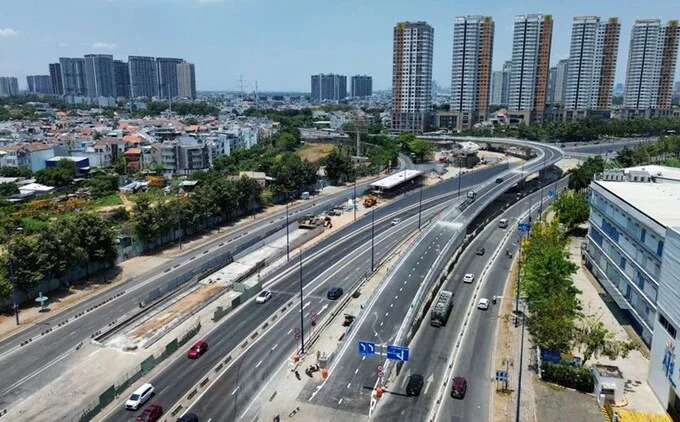
The overarching requirement is not merely to mobilize additional resources or accelerate disbursement, but to ensure that every unit of capital is used for its intended purpose. Photo: VNA
Looking Beyond the Scale of Capital Flows
Vietnam's investment landscape recorded positive developments during the first 10 months of 2026. According to the Socio-Economic Situation Report for October and the First 10 Months of 2026 released by the National Statistics Office, disbursed investment capital from the state budget was estimated at VND 783.9 trillion, representing 69% of the annual plan and an increase of 19.8% compared with the same period last year. In October alone, the figure reached VND 121.6 trillion, up 23.7%. These results indicate an improvement in the implementation of state-funded investment compared with the same period last year, when the disbursement rate reached only 64.3% of the annual plan.
In the foreign investment sector, total registered investment capital in Vietnam as of October 31 reached USD 54.85 billion, an increase of 74% year-on-year, while disbursed FDI during the first 10 months was estimated at USD 24.08 billion, up 13.1%. The substantial increase in registered capital demonstrates the attractiveness of Vietnam's investment environment, while the continued growth in disbursed capital reflects the ongoing implementation of investment projects within the economy.
Industrial production and trade indicators also demonstrate an expansion in economic activity. The industrial production index increased by 12.4% during the first 10 months, while total preliminary merchandise import-export turnover reached USD 1,010.55 billion, up 32.3% year-on-year. This marked the first time Vietnam's total import-export turnover exceeded USD 1 trillion. These achievements provide further grounds for expecting investment capital to continue supporting the expansion of productive capacity, infrastructure development, and economic growth.
However, an increase in investment capital does not automatically translate into a corresponding improvement in investment efficiency. Registered capital represents investment commitments rather than resources that have already been fully deployed in production and business activities. Disbursed capital reflects the extent of project implementation but is insufficient to determine whether projects are operating efficiently, generating added value, or making sustainable contributions to the economy. Similarly, the implementation rate of state-funded investment reflects the progress of capital allocation to projects rather than providing a comprehensive measure of construction quality and capital utilization efficiency.
Therefore, investment evaluation must go beyond figures relating to capital volume and growth rates. The fundamental questions are where capital is allocated, whether it helps remove development bottlenecks, to what extent productive capacity is improved, and whether the resulting socio-economic benefits are commensurate with the resources invested.
From Disbursement Pressure to Accountability for Results
Disbursed investment capital from the state budget reached 69% of the annual plan after 10 months, higher than the 64.3% recorded during the same period last year. Nevertheless, a substantial amount of capital remains to be disbursed during the final two months of the year. Pressure to fulfill annual targets may lead ministries, sectors, and local authorities to focus heavily on accelerating disbursement. However, prioritizing the release of budgetary funds without adequate quality control may increase the risks of waste and reduced investment efficiency.
In practice, disbursement progress is influenced by numerous factors, including investment preparation, site clearance, implementation capacity, material supply, investment procedures, and coordination among relevant authorities. Project delays not only increase financing costs and extend the time required to bring facilities into operation but may also result in lost development opportunities in sectors and localities where infrastructure is urgently needed. Conversely, accelerating disbursement at all costs when project documentation, designs, cost estimates, or construction conditions are inadequate may create risks relating to quality, additional expenses, and management accountability.
Rapid disbursement is an important requirement, but it is meaningful only when accompanied by completed work, construction quality, operational capacity, and socio-economic efficiency. For each project, accountability should not end with the completion of administrative procedures or timely disbursement. Instead, it must be assessed throughout the entire project lifecycle, from investment proposal, appraisal, investment approval, contractor selection, and construction to acceptance, handover, and operation.
From a public financial management perspective, greater investment discipline and clearer accountability among all stakeholders throughout the project lifecycle are essential. Investment decision-making authorities must be responsible for project necessity, efficiency, and resource availability. Investors and project management boards must be accountable for progress, quality, and costs. Contractors must fulfill their commitments, while regulatory authorities must promptly address obstacles without weakening inspection and supervision. Clearly defined responsibilities provide a practical basis for addressing delays, errors, and financial losses.
Measuring Investment Efficiency Through Added Value
Regarding FDI inflows, the 74% increase in registered capital during the first 10 months is a noteworthy signal. However, the quality of foreign investment attraction should be assessed based on the ability to translate commitments into productive capacity and tangible contributions to the economy. Disbursed FDI increased by 13.1%, significantly lower than the growth rate of registered capital. Since these two indicators differ in nature and recognition periods, the gap between them cannot be used to conclude that project implementation is delayed. Nevertheless, this development highlights the need to continue monitoring the implementation of registered projects, the quality of investment inflows, and post-investment performance.
One important indicator is the role of the FDI sector in export activities. During the first 10 months, the foreign-invested sector, including crude oil, recorded exports of USD 405.31 billion, accounting for 81.2% of total export turnover. Meanwhile, the domestic economic sector recorded USD 93.93 billion, representing 18.8%. The country posted an overall merchandise trade deficit of USD 12.07 billion, with the domestic sector recording a deficit of USD 37.83 billion, while the FDI sector achieved a trade surplus of USD 25.76 billion.
These figures highlight the significant role of the FDI sector in exports while emphasizing the need to strengthen the capabilities of domestic enterprises and enhance linkages between the two sectors. Attracting substantial foreign investment is important, but long-term efficiency also depends on technology transfer, the development of supporting industries, the employment of skilled workers, higher localization rates, and greater participation by Vietnamese enterprises in supply chains.
For public investment, efficiency assessments should also extend beyond disbursement rates to include project outputs and development impacts. A project completed on schedule but underutilized, poorly connected to surrounding infrastructure, or burdened by high operating costs cannot necessarily be considered an efficient investment. Conversely, projects that improve infrastructure connectivity, expand development opportunities, reduce logistics costs, enhance access to public services, and facilitate private investment should receive appropriate recognition in investment evaluations.
These requirements also apply to auditing activities. Through audits of the management and use of public finances, public assets, and investment projects, the State Audit Office of Vietnam (SAV) can help identify shortcomings in capital allocation mechanisms, project preparation, cost management, implementation progress, construction quality, and the responsibilities of relevant stakeholders. The value of auditing lies not only in detecting violations and recommending financial adjustments but also in identifying risks, proposing policy improvements, and encouraging organizations to enhance the efficiency of resource management.
As demand for development capital continues to grow, both budgetary resources and the capacity to mobilize private and other non-state resources must be utilized strategically. Increasing investment capital is a necessary condition for expanding development capacity, but the efficiency of capital utilization ultimately determines the quality and sustainability of economic growth. Therefore, the overarching requirement is not merely to mobilize additional resources or accelerate disbursement, but to ensure that every unit of capital is used for the right purpose, at the right time, with clear accountability, and generates tangible value for the economy.