On the morning of October 8, the Vietnam Association of Accountants and Auditors (VAA), in coordination with the Lao Cai Provincial Department of Finance, held the opening ceremony of a professional training conference on financial management for commune-level officials, civil servants, and public employees across the province at the Department of Finance's headquarters.
Pursuant to Decision No. 2707/QD-UBND dated August 5, 2026, issued by the Provincial People's Committee on supplementing the 2026 training and professional development plan for officials, civil servants, and public employees of Lao Cai Province, and Plan No. 89/KH-STC dated August 23, 2026, issued by the Department of Finance, the Lao Cai Provincial Department of Finance coordinated with VAA to organize this training conference on financial management for commune-level personnel throughout the province.
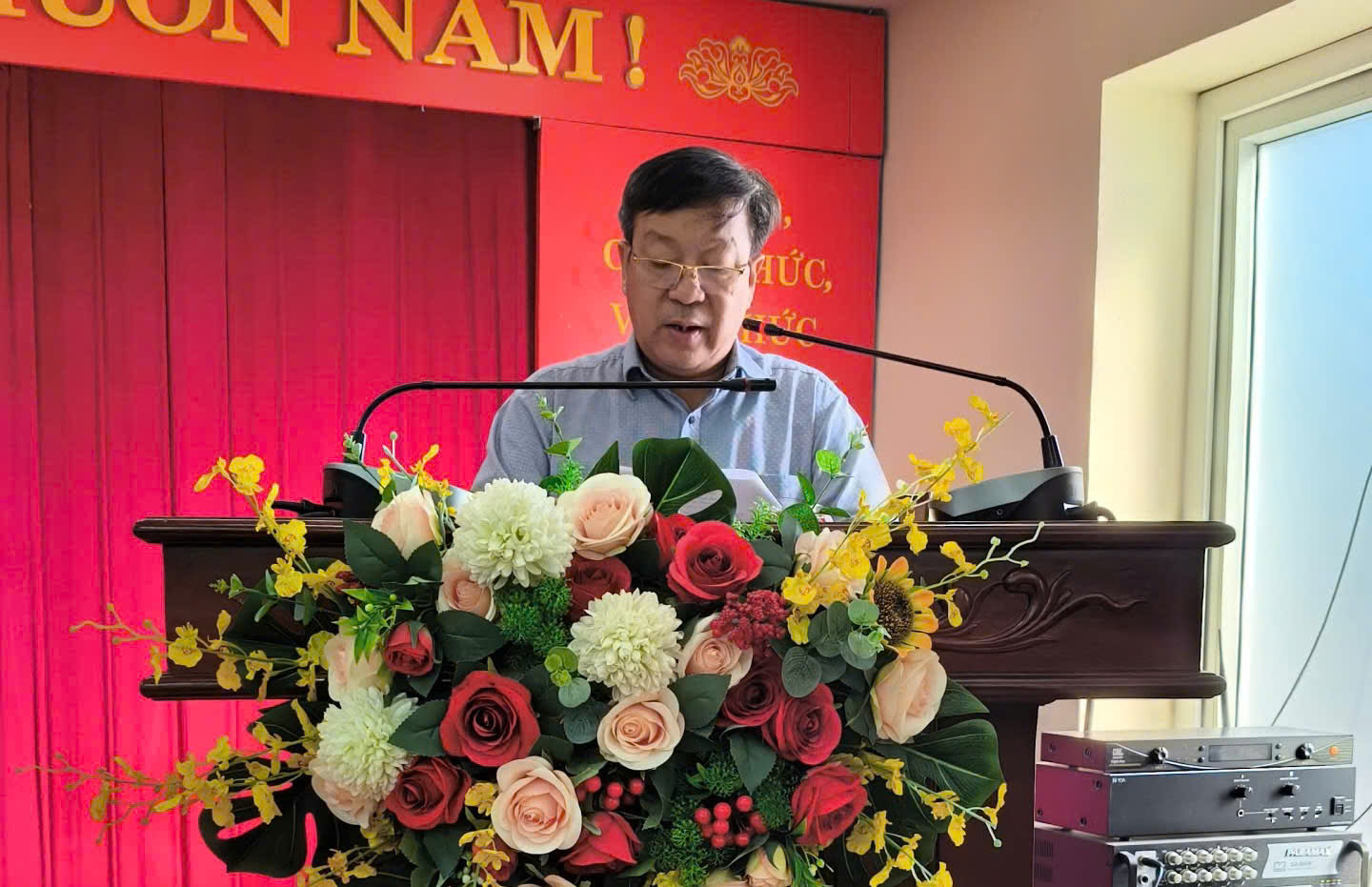
Mr. Nguyen Thanh Vinh, Deputy Director of the Lao Cai Provincial Department of Finance, delivering the opening remarks
The conference was attended by Mr. Nguyen Thanh Vinh, Mr. Tran Thanh Chuong, and Mr. Hoang Van Hong, Deputy Directors of the Lao Cai Provincial Department of Finance, together with leaders and officials from the Department's specialized divisions.
The lecturers and speakers included Mr. Huynh Huu Tho, Deputy Director General of the Legal Affairs Department, State Audit Office of Vietnam; Ms. Vu Thi Hai Yen, Deputy Director General of the Department of Finance for Economic Sectors, Ministry of Finance; and Mr. Tran Tuan Linh, Head of Division at the National E-Procurement Center, Public Procurement Agency, Ministry of Finance.
The conference also brought together Chairpersons and Vice Chairpersons of commune- and ward-level People's Committees responsible for financial affairs, leaders and specialists from commune-level Economic Divisions, and accountants from commune-level departments, units, and organizations.

Overview of the conference on the morning of October 8, 2026
The conference took place over two days, from October 8 to 9, 2026, in a hybrid format combining in-person and online participation. The main venue was the Department of Finance's headquarters, with additional online venues established across 99 communes and wards throughout the province.
In his opening remarks, Mr. Nguyen Thanh Vinh, Deputy Director of the Lao Cai Provincial Department of Finance, emphasized:
"Under the two-tier local government model, strengthening the management and administrative capacity of local leaders, as well as the task performance skills of commune-level officials and civil servants, is of great importance. In the financial sector, it is essential to clearly understand assigned authority, procedures, and processes, while ensuring that allocated resources are managed and utilized for their intended purposes, economically, and effectively.
Areas such as budget management, public investment, public assets, procurement, and the management of national target programs require consistent understanding and implementation, closely linked to the responsibilities of each agency, unit, and assigned personnel. Therefore, this training program focuses on specific tasks currently undertaken at the commune level, clarifying implementation approaches and addressing difficulties encountered during execution."
Accordingly, the training program focused on updating participants on new regulations, providing guidance on professional procedures, and discussing practical cases. Its objectives were to help commune-level leaders take a more proactive approach to management and administration, while enabling officials, civil servants, and accountants to strengthen their professional knowledge, improve the quality of advisory work, and enhance task implementation.
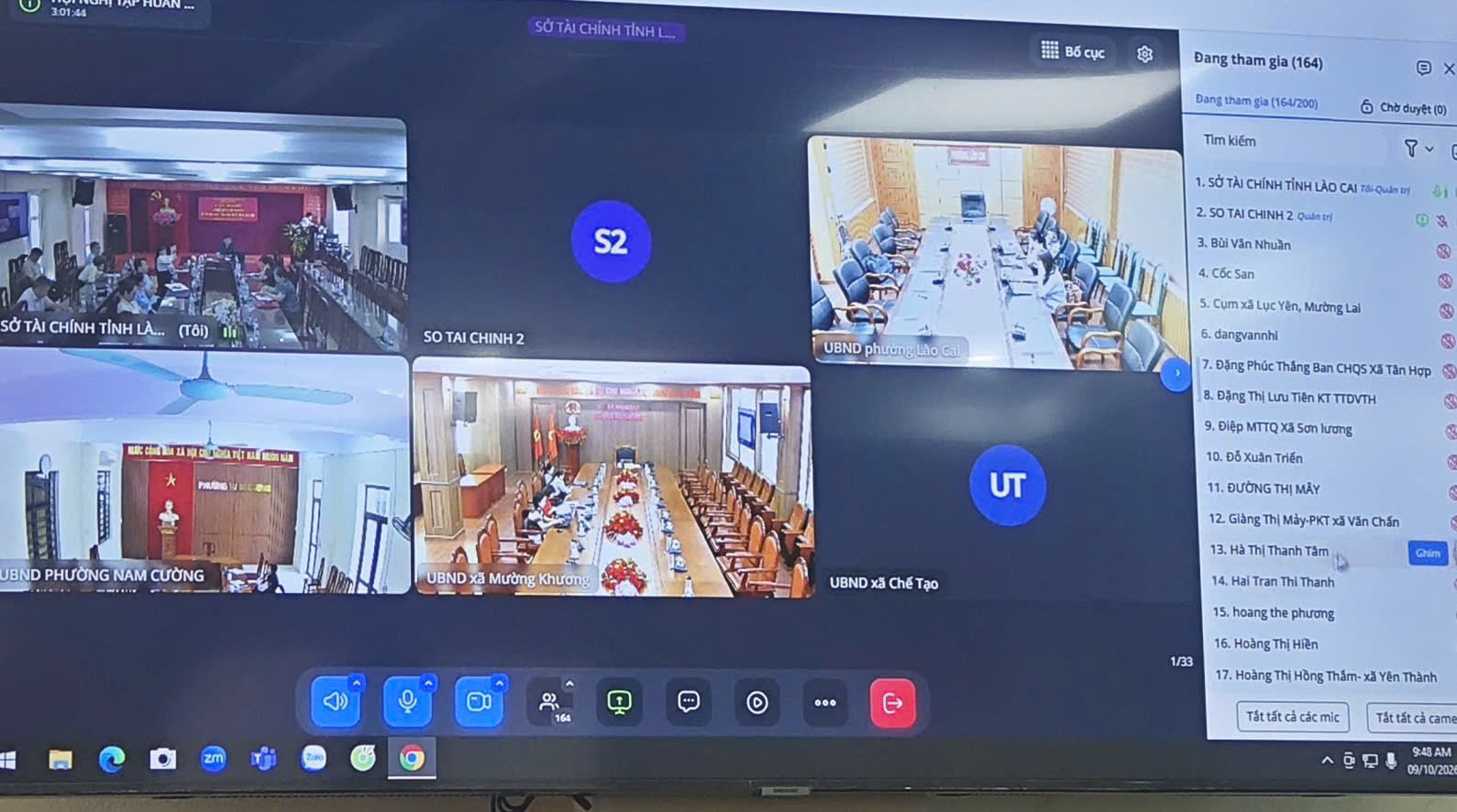
The two-day conference, held on October 8–9, 2026, combined in-person and online participation, with the main venue at the Department of Finance and additional venues across 99 communes and wards throughout the province.
The training program covered six key topics: (1) Budget management; (2) Public investment management; (3) Management and use of public assets; (4) Management, payment, and finalization of public investment capital; (5) Procurement management; and (6) Management of funding for national target programs.
Through the conference, participants were updated on new regulations, received professional guidance, and had opportunities to discuss and seek clarification on difficulties and challenges arising in the performance of their duties at the local level.
With the lecturers' strong sense of responsibility and the participants' proactive engagement, the conference contributed to strengthening the professional capacity of local personnel and supporting the effective implementation of responsibilities under the two-tier local government model.