The restructuring and streamlining of the political system's organizational apparatus, together with the implementation of the two-tier local government model, have resulted in adjustments to the functions, responsibilities, audited entities, and designated focal points of various agencies and organizations. Consequently, although many audits have been completed and recommendations issued, some recommendations may not yet have been fully implemented. It is therefore essential to ensure their timely and comprehensive handover and receipt to maintain continuity in monitoring, follow up on all outstanding recommendations, and prevent any omissions. The implementation of audit recommendations is a decisive factor in determining the effectiveness and efficiency of audit activities and serves as a basis for the State Audit Office of Vietnam (SAV) to demonstrate its performance and accountability to the National Assembly and the public.
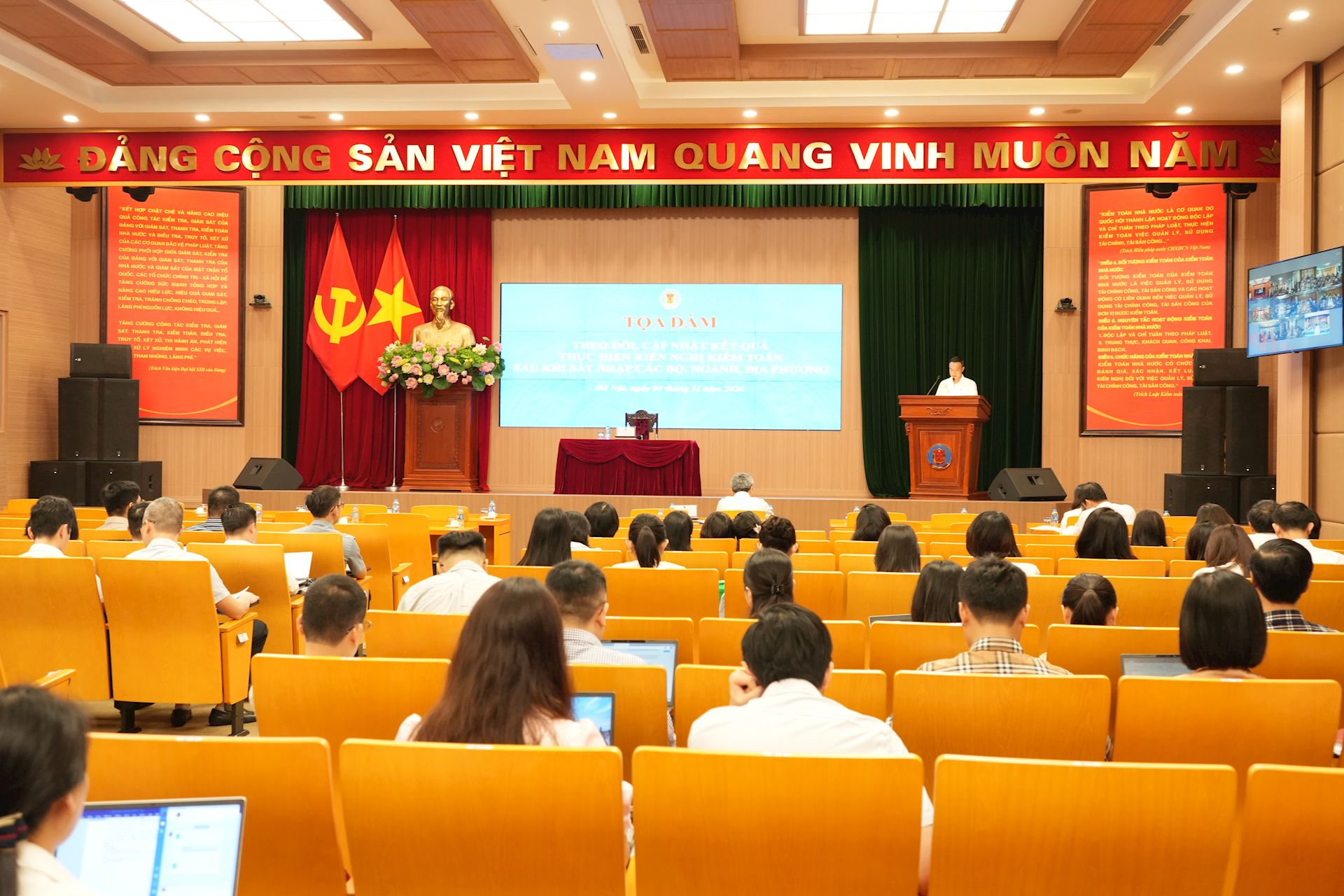
Overview of the seminar on "Monitoring and Updating the Implementation Results of Audit Recommendations Following the Merger of Ministries, Sectors, and Localities." Photo: H. THOAN
In line with the policies of the Party and the State on continuing to reform and streamline the organizational structure of the political system to enhance effectiveness and efficiency, the Government completed the restructuring and consolidation of several ministries and ministerial-level agencies in 2025, reducing the number of organizational units from 22 ministries and ministerial-level agencies to 14 ministries and three ministerial-level agencies. This large-scale reform has had certain impacts on the SAV's monitoring, supervision, and examination of the implementation of audit conclusions and recommendations.
Difficulties in Identifying the Actual Responsible Entities
According to SAV Specialized Audit Department IV, audit units have proactively reviewed their newly assigned functions and responsibilities, identified audits requiring handover, and transferred relevant documentation in phases in accordance with regulations. Although the handover process is still ongoing, initial results indicate that the units fully recognize its importance. The overarching principle is to ensure that recommendations are received and monitored as soon as they are handed over, preventing any gaps in accountability between transferring and receiving units.
However, a major challenge arising from the restructuring of ministries and sectors is identifying the new entities responsible for implementing audit recommendations when former ministries or agencies no longer exist or have undergone changes in their functions and responsibilities. This has also made it more difficult to address long-standing recommendations that can no longer be implemented, according to Mr. Nguyen Hong Quang, Deputy Head of Division at SAV Specialized Audit Department II.
In practice, when a former ministry or agency is fully merged into a new ministry, difficulties in identifying the responsible entity often arise because audit recommendations relate to specific units, projects, or funding allocations previously managed by departments, divisions, public service units, or project management boards. Following consolidation, these entities may be reorganized, renamed, or merged, making it difficult to identify the actual responsible unit based solely on the name of the ministry.
A second challenge occurs when the functions and responsibilities of a former ministry are divided among several new ministries. For recommendations involving two or more ministries, determining the entity with primary responsibility can be difficult, potentially leading to delays and the shifting of accountability. A third challenge is the lack of specific regulations governing the transfer of responsibility for individual recommendations. A fourth challenge concerns the distinction between "formal succession" and "substantive succession": some agencies may change their names while retaining their original functions, whereas others may retain their names despite significant changes in their responsibilities.
Ms. Nguyen Thi Lan Huong, Deputy Head of Division at SAV Specialized Audit Department V, emphasized that, in addition to recommendations addressed to audited entities, many audit reports also contain recommendations directed at third parties, including ministries, sectors, and competent authorities. These recommendations may involve amending or supplementing mechanisms, policies, and regulatory documents; approving final accounts; allocating capital; or resolving matters falling within the scope of state management authority.
In practice, however, the SAV's follow-up correspondence with third parties is largely advisory in nature. Many recommendations remain unresolved for extended periods because their implementation depends on the legislative agendas of competent authorities. Agencies receiving recommendations may respond that the matters are "under consideration" or that no agreement has been reached on proposed amendments, without any clear mechanism for further action. In particular, regarding recommendations to amend, supplement, or repeal legal normative documents and administrative documents from the 2023 audit year and earlier, approximately three-quarters of the relevant documents had not been fully addressed as of July 31, 2026.
From the perspective of monitoring and following up on recommendations addressed to third parties, representatives of SAV Specialized Audit Department II also identified several bottlenecks. These include difficulties in determining the appropriate responsible entities, clarifying accountability, and assessing implementation status amid organizational and functional changes. Another challenge is determining the current legal status and continued relevance of recommendations, particularly those concerning mechanisms and policies that have remained unresolved for years while the legal framework has evolved.
Long-Standing Outstanding Recommendations Remain the Greatest Challenge
According to SAV Specialized Audit Department II, in addition to difficulties in identifying the agencies and units responsible for implementing recommendations, there are also challenges arising from the lengthy implementation periods associated with recommendations on mechanisms and policies. If monitoring continues to rely solely on the timelines and responsible entities identified when recommendations were originally issued, without updating the agencies currently responsible for implementation, recommendations may remain outstanding for extended periods without clearly defined accountability or measurable outcomes.
Another challenge arises when the legal framework has changed while recommendations remain unresolved. SAV Specialized Audit Department II considers this a particularly important issue for recommendations concerning mechanisms and policies that have remained outstanding for many years. Furthermore, there is still no unified mechanism or methodology for addressing recommendations that are no longer relevant or feasible. The difficulties involve not only determining the competent authorities but also establishing consistent procedures for reviewing, classifying, and documenting the grounds for proposing appropriate solutions for individual recommendations, especially those that have been outstanding for a long time.
According to SAV Specialized Audit Department IV, the handover, receipt, and coordinated monitoring of audit recommendations continue to face challenges relating to the progress and procedures of handover activities, incomplete understanding of recommendation details, and unclear allocation of responsibilities among audit units. In addition, software systems have not been promptly updated or access permissions reassigned to reflect the new organizational structure, making it difficult for designated focal points to access complete information. The focal points of audited entities are also sometimes uncertain about which SAV unit is responsible for continuing to monitor recommendations and receive implementation reports.
In response to these difficulties and obstacles, the SAV's specialized audit departments have identified four principal causes:
First, the large scale of organizational restructuring has simultaneously changed agency names, functions, responsibilities, organizational structures, and management focal points.
Second, audit recommendations are associated with specific periods, entities, funding allocations, and projects, while organizational structures may change after audit reports have been issued.
Third, the management of records, data, and the history of recommendation transfers has not been standardized in a timely manner.
Fourth, the general mechanism for addressing recommendations that can no longer be implemented remains incomplete, with no clear regulations distinguishing cases involving organizational mergers from those involving force majeure circumstances.
Identifying and analyzing the causes of difficulties in monitoring and following up on the implementation of audit recommendations addressed to ministries and central agencies following restructuring, particularly those relating to determining responsible entities and resolving long-standing recommendations that can no longer be implemented, represent objective challenges during the transitional phase of organizational reform.
Similar challenges, along with other specific difficulties, also arise when other SAV units monitor and follow up on the implementation of audit recommendations concerning provinces and cities following administrative mergers. These issues will be further examined by the State Audit Newspaper in its next issue.