The State Audit Office of Vietnam (SAV) is expected to strengthen data-driven auditing, remote auditing, thematic auditing and performance auditing in the coming years, with a particular focus on auditing public resources, development programs, nationally important projects and macroeconomic policies of the Party and the State, thereby serving the common interests of the country and its people.
This was emphasized by Mr. Nguyen Huu Nghia, Member of the Party Central Committee and Auditor General of Vietnam, while chairing a meeting of the Steering Committee for the Evaluation of the Implementation of SAV's Development Strategy to 2030 and the Formulation of SAV's Development Orientation to 2035, with a Vision to 2045, in his capacity as Head of the Steering Committee. The meeting took place at SAV headquarters on the morning of November 7.
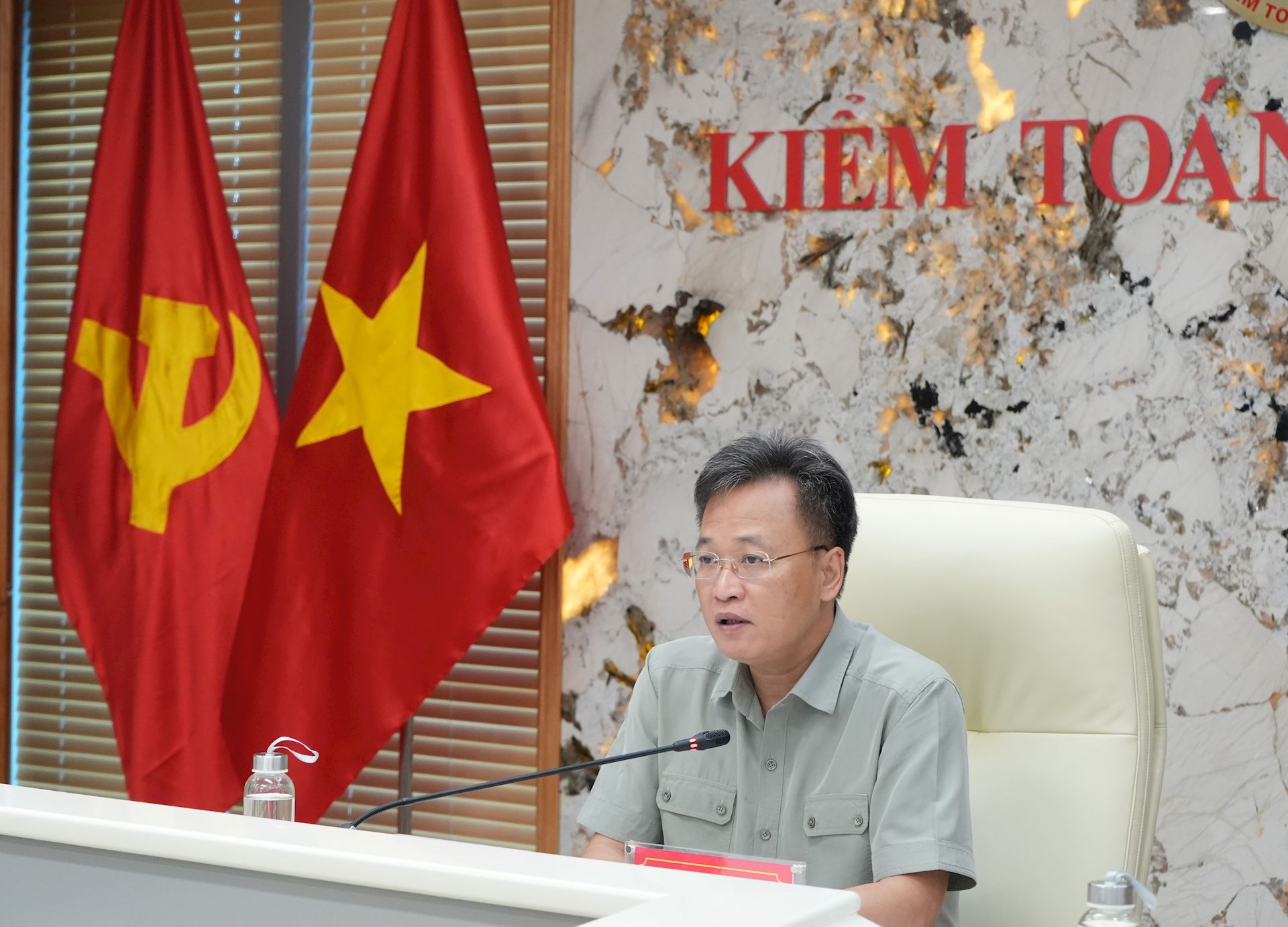
Mr. Nguyen Huu Nghia, Member of the Party Central Committee and Auditor General of Vietnam, chairs the meeting. Photo: QUYNH ANH
Deputy Auditors General Doan Anh Tho, Ha Thi My Dung and Bui Quoc Dung attended the meeting at SAV headquarters. Deputy Auditor General Tran Minh Khuong participated remotely from SAV Regional Office IV.
The meeting was also attended by leaders of SAV's affiliated units, both in person and online.
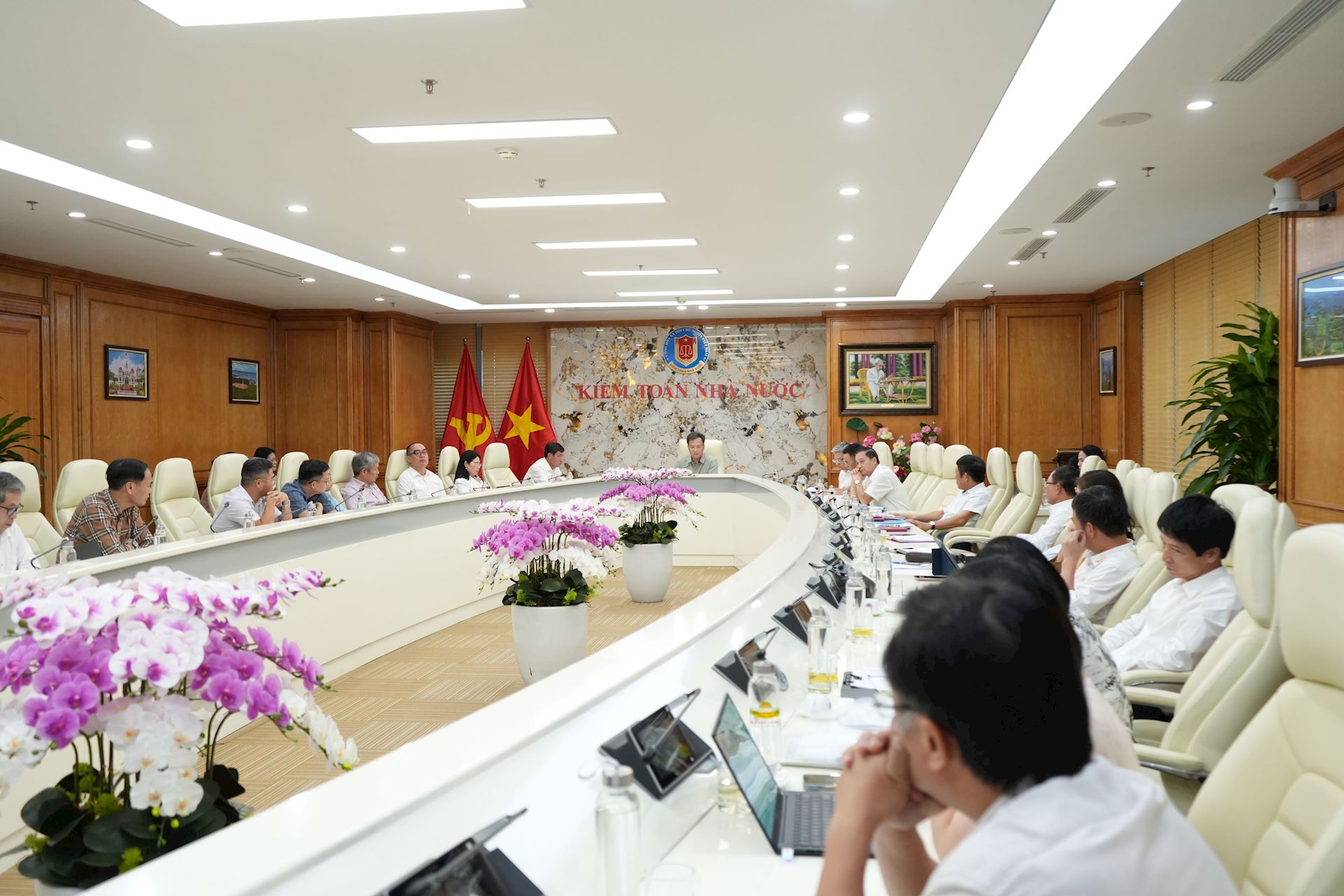
Overview of the meeting. Photo: QUYNH ANH
Active Contributions to Improving the Draft SAV Development Scheme
Mr. Hoang Van Luong, Director General of the General Affairs Department, stated that, in continuing to fulfill its assigned tasks, the Standing Agency of the Steering Committee had prepared the second draft of the Scheme for SAV Development to 2035, with a Vision to 2045. The draft was circulated for comments from the Standing Members and other members of the Steering Committee, as well as Party Committees and Party Cells under SAV.
According to the Standing Agency of the Steering Committee, Party Committees and Party Cells under the SAV Party Committee had studied and contributed opinions to improve the Scheme, focusing on the position and role of SAV within the political system; the subjects and scope of SAV's audits; decentralization and delegation of authority to specialized and regional audit units; achievements, positive outcomes, limitations and bottlenecks.
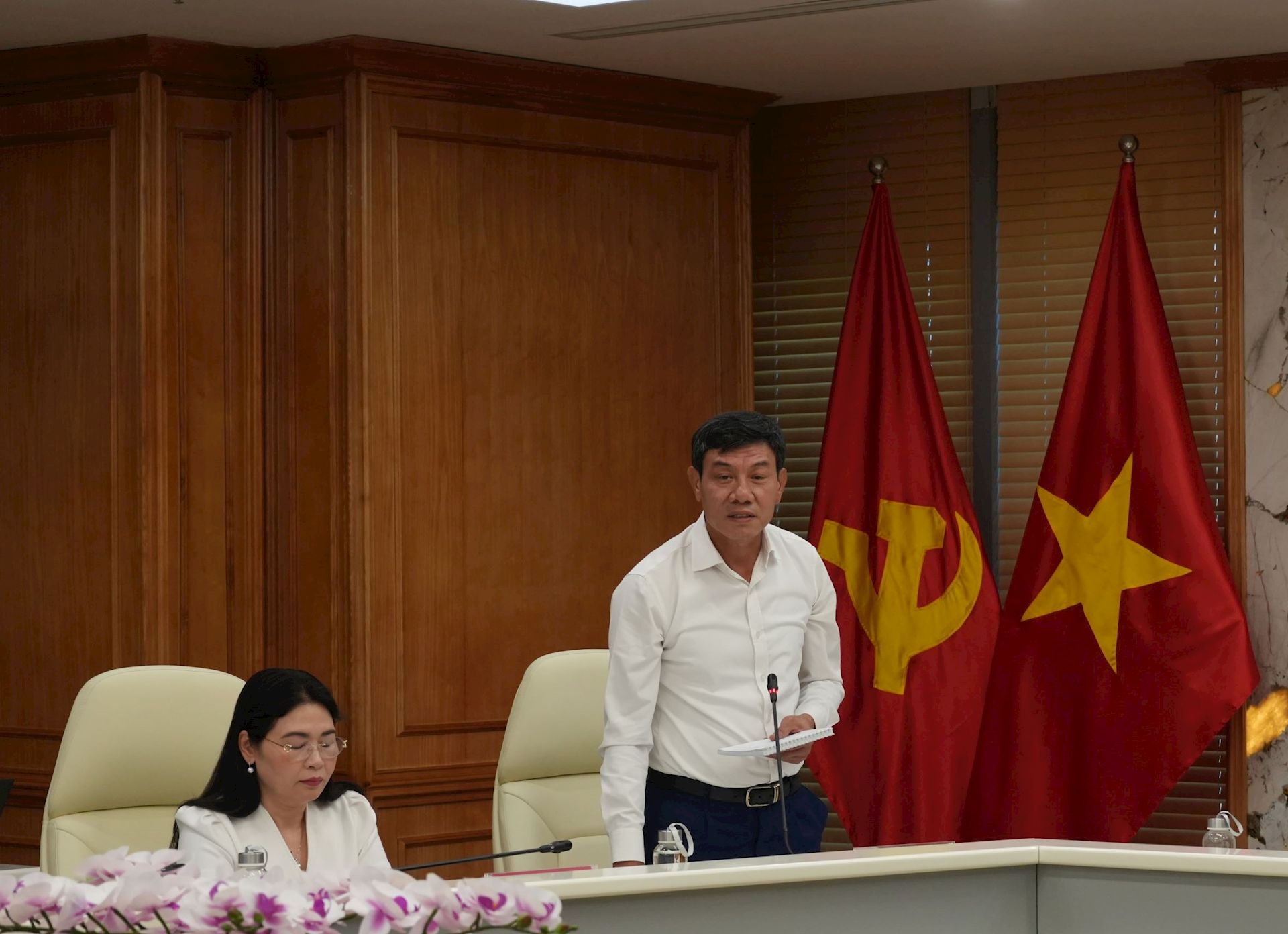
Deputy Auditor General Doan Anh Tho speaks at the meeting.
Party Committees and Party Cells also provided feedback on the development perspectives, overall objectives, system of specific objectives, tasks and solutions, including the need to assess their feasibility; the modernization of auditing methods, promotion of big data-driven auditing, application of information technology and digital transformation to support continuous and regular monitoring for the prevention and early warning of errors and risks; and recommendations and proposals to relevant authorities.
The Steering Committee's Supporting Team promptly reviewed and incorporated more than 200 comments from Party Committees and Party Cells under the SAV Party Committee, submitting them to the Standing Agency of the Steering Committee for consideration in finalizing the third draft of the Scheme for SAV Development to 2035, with a Vision to 2045.
In addition, according to Mr. Hoang Van Luong, the successful organization of the international seminar "Supreme Audit Institutions in the New Context: Vision, Institutions and Innovation" on October 27, with the participation of 16 Supreme Audit Institutions (SAIs) worldwide and domestic and international delegates, was particularly significant for SAV as it focused on developing its future strategic orientation and studying proposed amendments to the Law on State Audit.
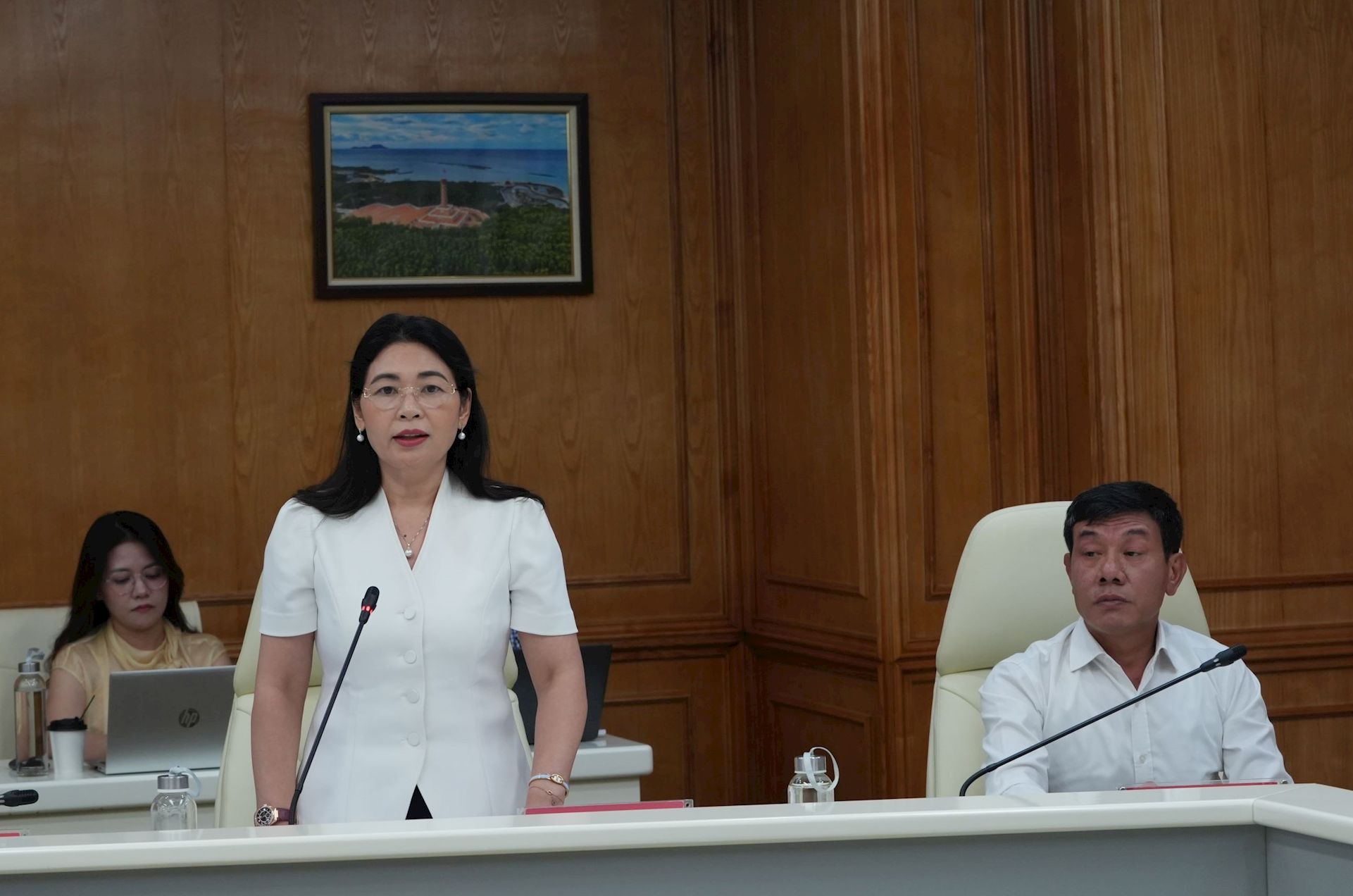
Deputy Auditor General Ha Thi My Dung speaks at the meeting.
Through 51 presentations and discussions, the seminar clarified numerous issues concerning the legal status, independence, responsibilities, roles and emerging trends in the modernization and development of SAIs; mechanisms for ensuring the effectiveness and efficiency of auditing activities; the legal validity of audit reports; and the implementation of audit recommendations.
The seminar also provided an opportunity to exchange international experiences regarding the vision and development strategies of SAIs, emerging auditing trends, digital transformation, artificial intelligence applications and the use of big data in auditing activities.
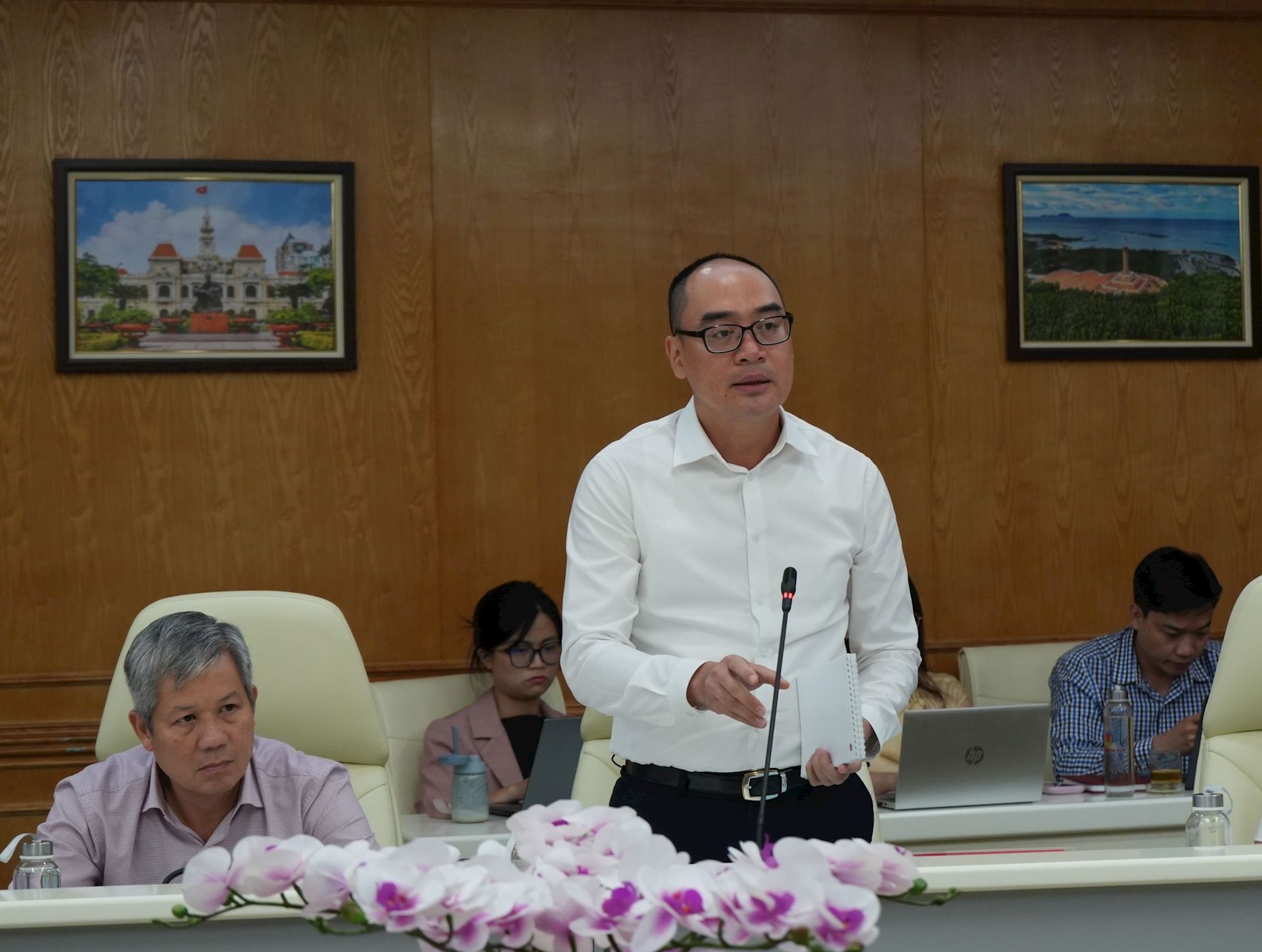
Deputy Auditor General Bui Quoc Dung speaks at the meeting.
Continuing to Revise, Supplement and Finalize the Draft
Regarding the third draft of the Scheme for SAV Development to 2035, with a Vision to 2045, Mr. Hoang Van Luong also reported on the contents that had recently been incorporated and revised.
First, the draft was supplemented with analyses of several legal grounds for developing the Scheme; the history of the establishment of supreme audit institutions, the international community of SAIs and their professional activities; shortcomings and bottlenecks related to ensuring resources for SAV's operations; mechanisms linking the implementation of audit conclusions and recommendations with personnel management at audited entities; difficulties in applying Regulation No. 131-QD/TW; challenges in identifying entities that inherit responsibility for implementing audit recommendations amid mergers, consolidations, organizational restructuring and administrative unit reorganization; and the utilization of databases containing audit results and digitized audit files.
Second, the section addressing overlaps between auditing and inspection activities was revised to clarify that criteria for delineating responsibilities had not yet been fully institutionalized, thereby limiting SAV's ability to proactively determine audit scope and perform its duties when audit contents overlap with inspection activities under the Law on State Audit.
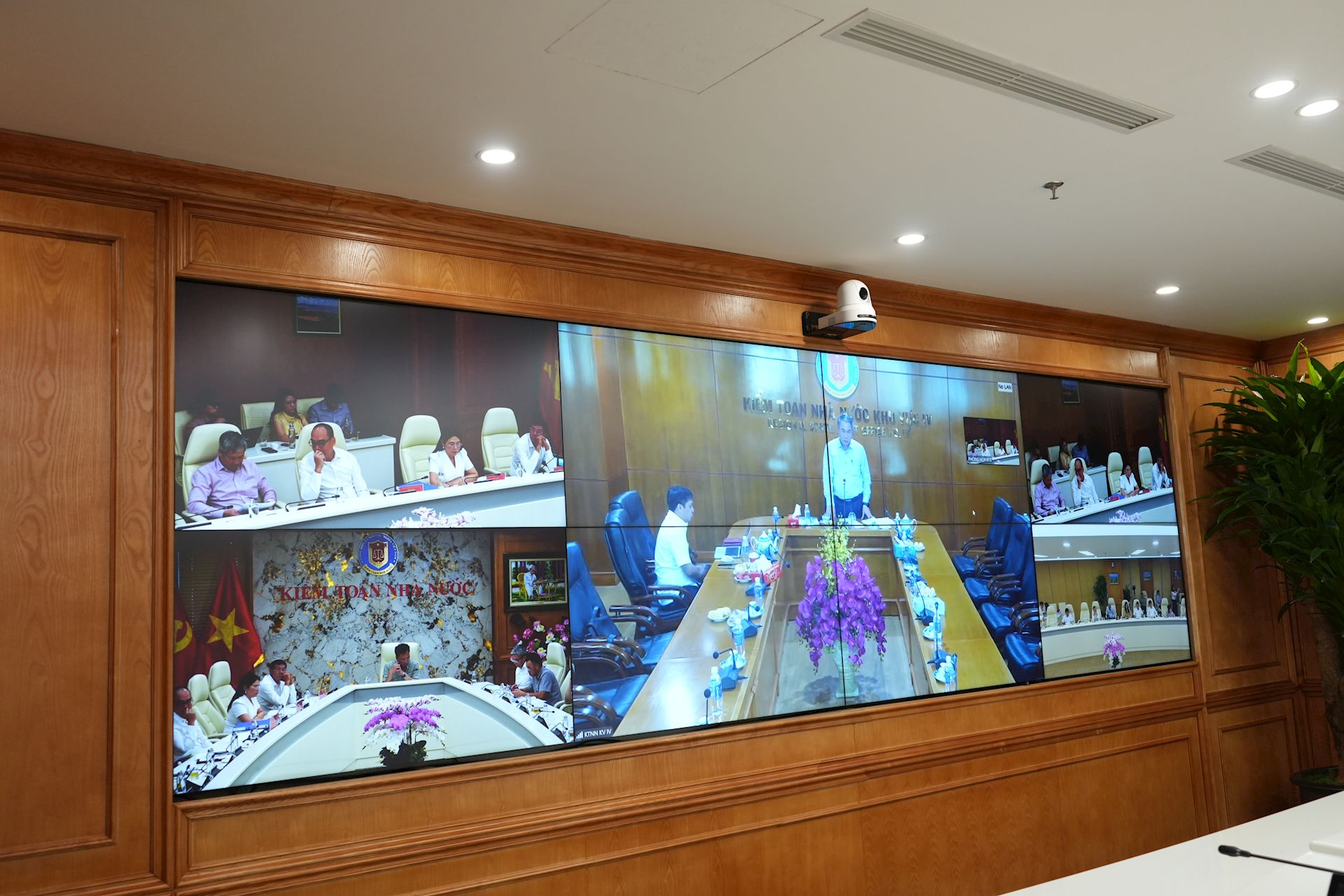
Deputy Auditor General Tran Minh Khuong attends the meeting remotely from SAV Regional Office IV.
Third, in the draft Vision to 2045, the phrase "based on data and advanced technology" was revised to ensure that the vision comprehensively covers future developments rather than being limited to artificial intelligence.
Fourth, regarding the draft specific objectives, several words and phrases were revised, incorporating feedback from units on improving audit quality, with future quality control expected to adopt a risk-based approach. In science, technology and digital transformation, the target proportion of audits applying data analytics tools by 2035 was increased to 60%.
Fifth, regarding the draft tasks and solutions, the identified shortcomings, inadequacies and bottlenecks were supplemented and reviewed to ensure that corresponding tasks and solutions were proposed to address and resolve each issue.
At the meeting, the Standing Agency reported to the Steering Committee and sought opinions on SAV's audit scope and its responsibilities in examining and monitoring the management and use of public resources through auditing activities.
In addition, the Standing Agency sought the Steering Committee's opinions on supplementing several recommendations and proposals to higher-level authorities to ensure that SAV's operations become increasingly effective and efficient.
Developing SAV to Meet the Requirements of the New Context
At the meeting, delegates generally agreed that the draft Scheme had been thoroughly prepared, with relatively comprehensive political, legal and practical foundations, and had identified the core issues concerning SAV's operations in the coming period. The draft also placed SAV's development within the requirements of modernizing national governance, controlling the exercise of power, preventing and combating corruption, waste and misconduct, and ensuring the efficient use of public resources. The Scheme initially reflected a shift in thinking from auditing primarily focused on detecting and addressing violations toward emphasizing analysis, early risk warnings, policy evaluation and the role of data and digital technology, while identifying development objectives, pillars and roadmaps.
Delegates also focused their discussions on further clarifying several issues, including institutional improvement and SAV's professional independence; establishing a clear model of SAV as an institution that creates public value through examination and evaluation, in-depth analysis and early warnings; developing the capacity to analyze systemic risks and provide warnings on strategic issues; placing audit quality and post-audit impact at the center of performance measurement; considering data and digital transformation as breakthroughs in modernizing auditing methods; strengthening performance auditing, policy evaluation and waste prevention; reinforcing quality management, independence and accountability; concentrating resources on breakthrough programs with measurable outputs and outcomes; and continuing to study and incorporate international experiences.
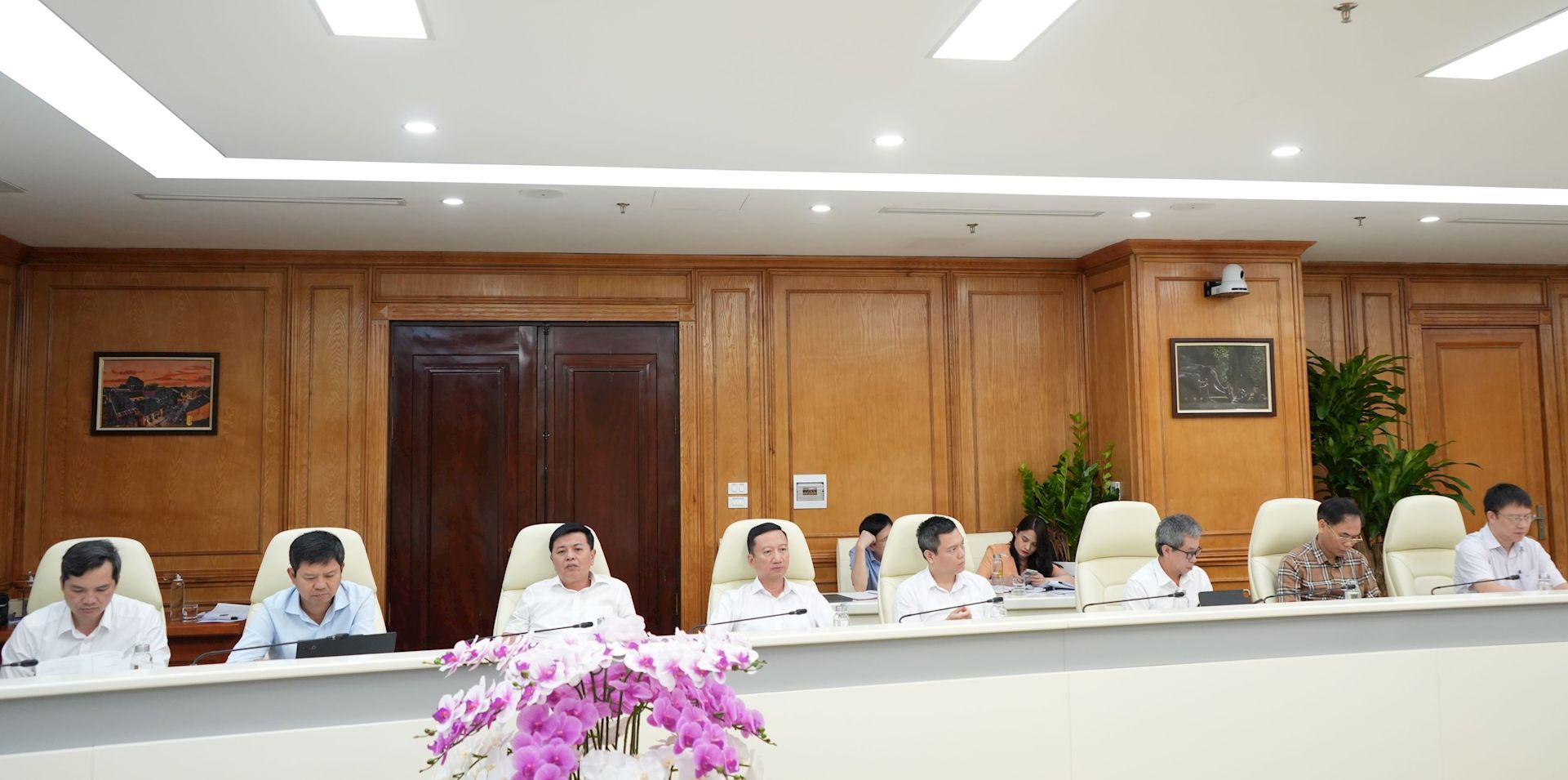
Delegates attend the meeting.
Concluding the meeting, Auditor General Nguyen Huu Nghia thanked the Supporting Team for assisting the Steering Committee in preparing a comprehensive and thoroughly developed draft Scheme.
The Auditor General emphasized that, based on the discussions at the meeting, the Steering Committee should continue refining the draft Scheme, focusing on clarifying SAV's function of examining and evaluating the management and use of public resources. According to the Auditor General, the essence of auditing lies in examination and evaluation, with evaluation already encompassing monitoring activities. Monitoring serves only to support auditing and facilitate the early prevention and detection of violations and risks.
In the context of digital transformation, auditing activities can rapidly shift toward remote auditing once SAV has obtained sufficient monitoring evidence, enabling it to promptly produce audit reports in accordance with legal regulations, the Auditor General emphasized. At the same time, it is necessary to clarify and resolve overlaps and duplication among inspection, examination and auditing activities.
In directing the finalization of the draft Scheme, the Auditor General requested a stronger focus on assessing actual conditions to highlight existing bottlenecks and demonstrate the necessity and urgency of issuing the Scheme, thereby enabling SAV to develop in line with its responsibilities in the new context and with global trends in the development of public audit institutions.
Regarding development perspectives, the draft must clearly demonstrate SAV's commitment to innovation in the coming period through strengthening data-driven auditing, remote auditing, thematic auditing and performance auditing, with particular attention to auditing public resources, development programs, nationally important projects and macroeconomic policies of the Party and the State, thereby serving the common interests of the country and its people. SAV will also modernize its operations by strengthening its capacity to prevent, warn of, detect and address risks and potential violations in the management and use of public resources.
Regarding the overall objective, the draft should clearly establish SAV as an important institution and an effective instrument of the Party and the State, as well as a modern and professional audit institution responsible for examining and evaluating the management and use of public resources, contributing to the development of modern, integrity-based, effective and efficient national public governance.
According to the Auditor General, the draft Scheme should also place greater emphasis on clarifying solutions to address existing problems and bottlenecks in SAV's auditing activities. Particular attention should be paid to the principles of Independence - Integrity - Openness - Transparency and Accountability. Independence, in this context, refers to professional independence in auditing activities.
To achieve innovation in auditing expertise and professional practices, SAV will continue reorganizing and streamlining its organizational structure to ensure operational performance, effectiveness and efficiency, in line with the requirements of digital transformation and technology applications, the Auditor General emphasized.
The Auditor General also requested continued research into international experiences to identify the most common issues and prominent trends among public audit institutions worldwide. Alongside research and proposals to improve the legal framework through amendments to the Law on State Audit, SAV should review and完善 its system of legal documents, mechanisms and sectoral policies.
In addition, the draft Scheme should further clarify the relationship between SAV and agencies and organizations within the political system, as well as the rights and responsibilities of relevant parties in providing reports, documents and records to support auditing activities.
At the meeting, the Auditor General instructed the Standing Agency and the Supporting Team to continue finalizing the draft Scheme in accordance with the directions of the Head of the Steering Committee, the Standing Members of the Steering Committee and the Standing Committee of the SAV Party Committee, while selectively incorporating relevant findings and professional recommendations from the international seminar. The finalized draft is to be submitted to the Steering Committee for consultation with relevant agencies before November 15, 2026.