The State Audit Office of Vietnam (SAV) has developed a proposed 2027 State Audit Plan comprising 139 audit tasks, including audits of 100% of budget final accounts reports of ministries, central-level agencies and localities. Notably, the SAV will focus on a range of major projects involving expressways, urban railways, high-speed railways, airports, seaports, and educational, healthcare and social infrastructure.
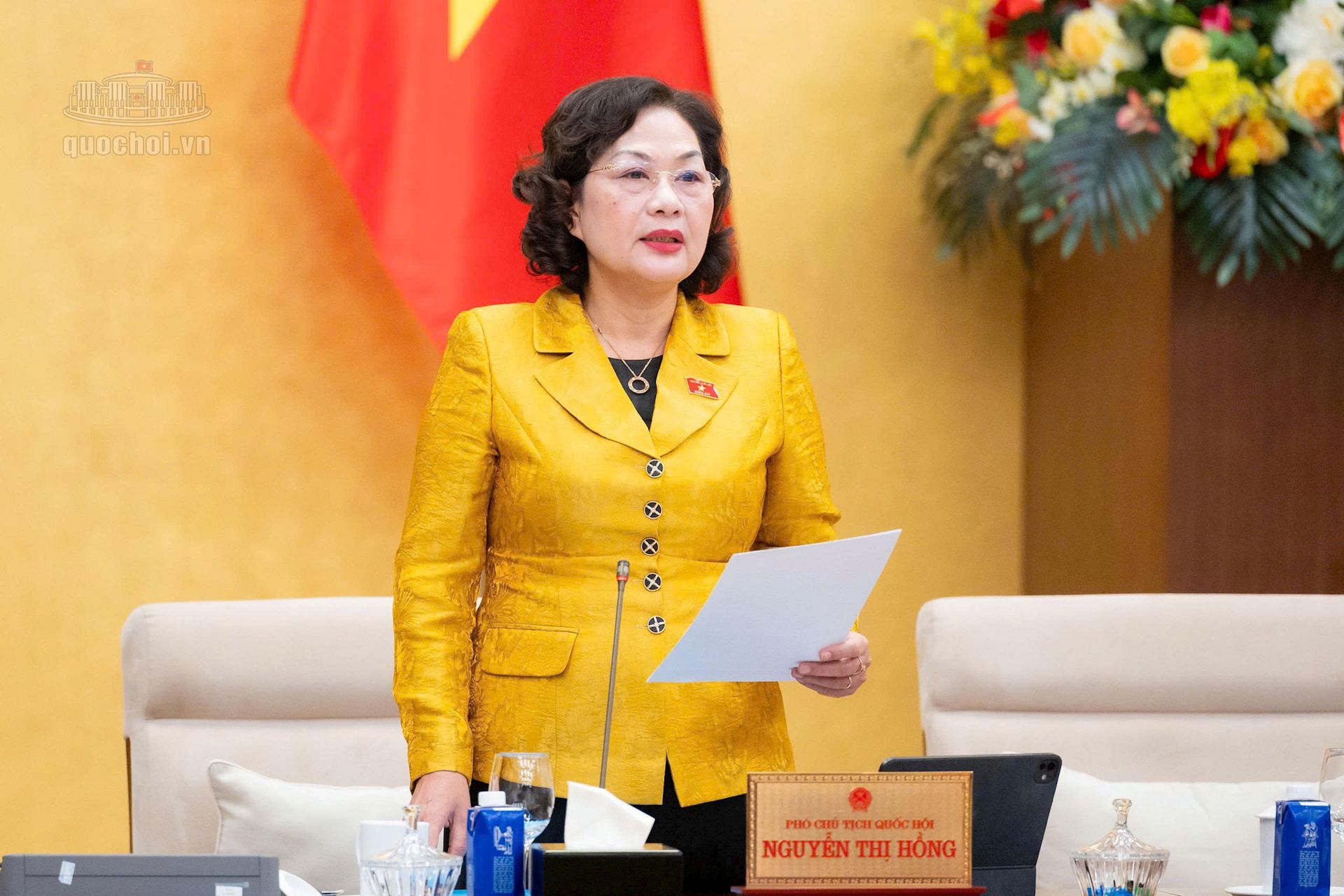
National Assembly Vice Chairwoman Nguyen Thi Hong chairs the session. Photo: Office of the National Assembly
Strengthening Audits in High-Risk Areas with Potential for Violations
On the afternoon of September 21, under the chairmanship of National Assembly Vice Chairwoman Nguyen Thi Hong, the National Assembly Standing Committee gave its opinions on the 2026 Work Report and the proposed 2027 State Audit Plan of the SAV.
At the session, State Auditor General Nguyen Huu Nghia presented a summary of the SAV's 2026 work results and the proposed 2027 State Audit Plan.
The State Auditor General said that in 2026, under the close leadership and direction of the National Assembly Party Committee, the National Assembly Standing Committee, the Party Committee and leadership of the SAV, the entire SAV sector had made efforts to comprehensively fulfill the plans and tasks set out in its 2026 work program, achieving a number of breakthroughs and positive changes.
On that basis, in 2027, the SAV will continue to comprehensively innovate and develop its operations and improve the effectiveness and efficiency of state auditing in line with the objectives of the State Audit Development Strategy through 2030. It will adhere to the motto of “Independence, objectivity, lawfulness, integrity, responsibility, safety and credibility,” with a view to further strengthening discipline and order in the performance of public duties; promoting the role, position and credibility of the SAV in inspecting and supervising the management and use of public finance and public assets, as well as preventing and combating corruption, waste and other negative practices; contributing positively to the effective mobilization and use of public resources; strengthening a safe, efficient and sustainable national financial system; and promoting “double-digit” growth and rapid, sustainable national development.
With this orientation, the State Auditor General stated that the 2027 State Audit Plan would focus on auditing budget final accounts reports of 100% of ministries, ministerial-level agencies, central-level agencies and localities; increasing thematic, performance, environmental and information technology audits in accordance with the roadmap of the State Audit Development Strategy through 2030; and strengthening audits of issues of public concern and matters raised by National Assembly deputies during National Assembly sessions.

State Auditor General Nguyen Huu Nghia presents the report at the session. Photo: Office of the National Assembly
At the same time, the SAV will focus on auditing major programs and policies of the Party, particularly a number of strategic resolutions of the Politburo, as well as audit areas prescribed by law and those assigned to the SAV by the Party Central Committee, the National Assembly, the National Assembly Standing Committee, the Government, and Party and State leaders.
The SAV will strengthen audits of nationally important projects and focus on entities and areas with potential risks of violations, corruption, waste and other negative practices, thereby promptly identifying and recommending strict action against violations, shortcomings, and inadequacies and obstacles in mechanisms and policies, and removing bottlenecks and barriers to the management and use of public assets and public finance that affect the target of double-digit growth.
State Auditor General Nguyen Huu Nghia
In 2027, the SAV is expected to carry out 139 audit tasks, including audits covering 100% of ministries, central-level agencies and localities. The proportion of thematic, performance, environmental and information technology audits is expected to reach 39%. Under the State Audit Development Strategy through 2030, this proportion is targeted to reach 35%–40% by 2030; however, “we will strive to achieve this target ahead of schedule,” the State Auditor General emphasized.
24 Thematic Audits and 31 Major Investment Projects Expected to Be Audited
According to the SAV's report, based on the orientations and principles for formulating the audit plan, the SAV has proposed six areas for priority auditing.
Among them, the SAV is expected to audit the management and use of assets, public finance and the state budget at nine ministries, central-level agencies and units; audit final accounts at 34 out of 34 central-level agencies; and audit final accounts reports of 34 localities, including simultaneous audits of local budgets and the 2026 local budget final accounts in 26 localities.
The SAV will also conduct 24 thematic audits, including several large-scale audits with broad scopes that are of public concern.
These include thematic audits on the implementation of policies and laws on the management and use of public assets in the form of houses, land and office premises following the implementation of policies on restructuring and reorganizing state agencies and administrative units at ministries, central-level agencies and localities;
the implementation of the autonomy mechanism during 2025–2026 at public higher education and vocational education institutions under ministries, central-level agencies and localities;
and the management and use of capital and state assets, fulfillment of state budget obligations, and operations in 2026 of state-owned enterprises for which ministries, central-level agencies and localities act as representatives of the state capital owner, among others.
In addition to the above thematic audits, the SAV is expected to select audit topics associated with the state management functions and specialized fields of ministries and central-level agencies, socio-economic development programs and projects in localities, and issues of local concern, serving the People's Councils in overseeing and deciding on important local matters.
Regarding performance, environmental and information technology audits, the SAV is expected to audit seven topics, focusing on areas related to environmental protection, information technology and climate change.
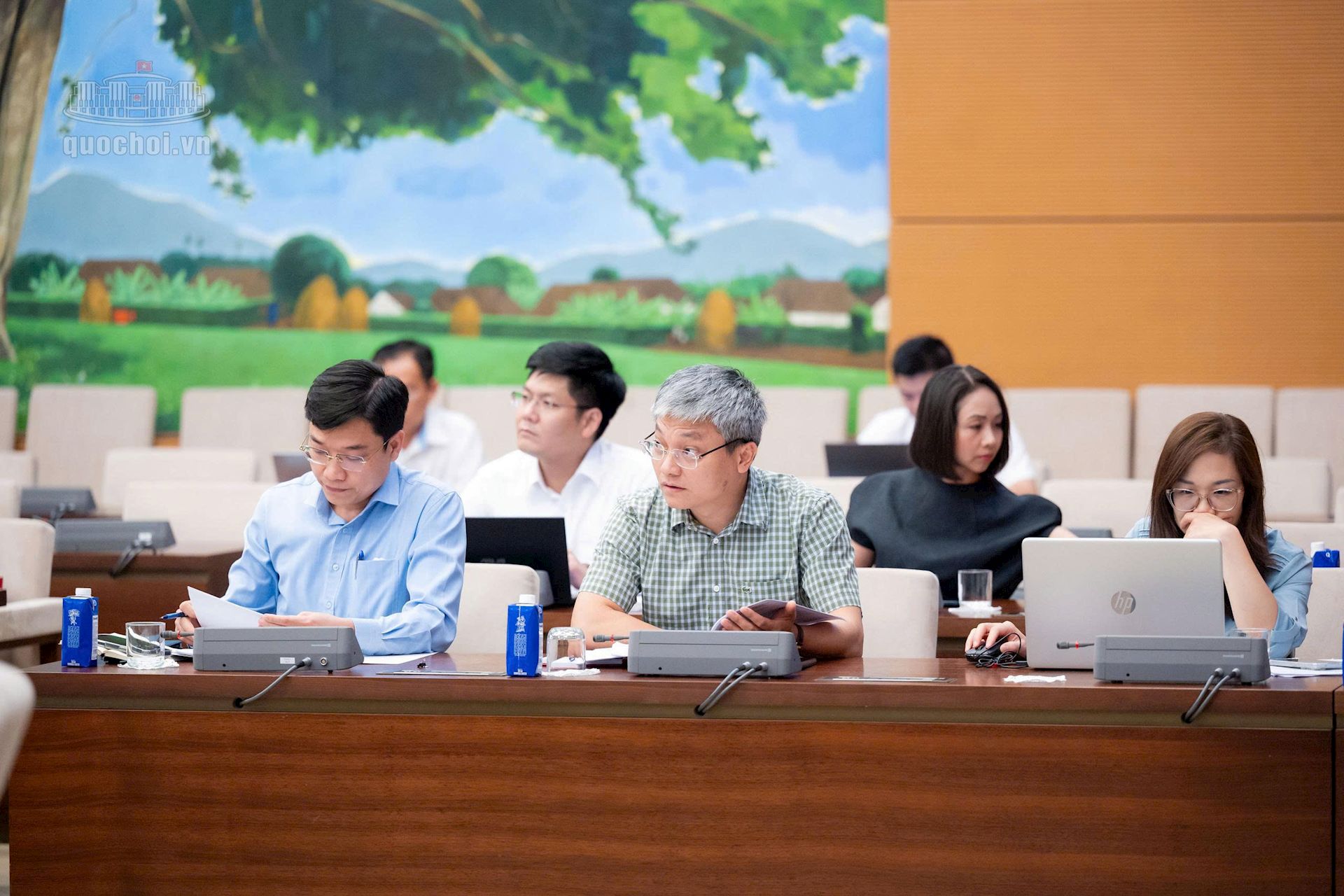
Delegates attend the session. Photo: Office of the National Assembly
For investment and construction and programs and projects, the SAV is expected to conduct 31 audits, focusing on Group A projects, nationally important projects, and major projects involving expressways, urban railways, high-speed railways, airports, seaports, and educational, healthcare and social infrastructure; transport infrastructure projects connecting regions, seaports, border gates, industrial parks and industrial clusters; urban infrastructure projects, coastal economic zones, and agricultural and rural infrastructure; environmental protection and climate change response projects; and irrigation works, among others.
These will also include development investment projects using state budget funds, ODA funds (loans and grants), and funds from lawful revenues of state agencies and public non-business units allocated for investment outside the state budget balance.
In addition, the SAV is expected to audit the State Bank of Vietnam, nine groups and corporations, and five financial and banking institutions. It is also expected to conduct 25 audits in the defense and security sector and among central Party agencies.
Focusing on the Quality of Resource Allocation, Resource Utilization Efficiency and Output Results
Reviewing this content, Chairman of the National Assembly's Committee on Economic and Financial Affairs Phan Van Mai said that the Standing Committee basically agreed with the proposed 2027 State Audit Plan.
The reviewing body recommended that the SAV closely follow the medium-term State Audit Plan; ensure continuity and stability; and concretize the “six clearly defined” principle for each task, including clearly defined objectives, subjects, scope, focus, responsibilities, timelines and outputs. Audit tasks should be selected based on risk assessment and materiality.
With 139 audit tasks, many of which have broad scopes, the Committee on Economic and Financial Affairs recommended that the SAV continue reviewing the plan toward reducing the number of audit entities while increasing depth and connectivity; avoid deploying multiple audit teams to the same locality at the same time; prioritize resources for auditing the 2026 state budget final accounts and major thematic audits, high-risk areas, and tasks directly supporting the oversight activities of the National Assembly and the National Assembly Standing Committee; and proactively allocate reserve resources for emerging tasks.
Regarding budget audits, the Committee recommended focusing on assessing the implementation of the 2025 Law on the State Budget, particularly the decentralization of revenue sources and expenditure tasks; budget formulation, allocation, execution and settlement; carryovers, surpluses and budget reserves; and the management of assets, projects and debts. It also called for greater attention to the quality of resource allocation, the efficiency of resource utilization, output results and impacts on socio-economic development objectives.
For thematic and performance audits, the reviewing body recommended clearly defining criteria for economy, effectiveness, efficiency and output results; and strengthening assessments of the effectiveness of technology investment, the degree of connectivity, interoperability and data sharing, and the efficiency of resource utilization in the fields of natural resources, the environment and climate change.
Regarding investment and construction, programs and projects, the SAV should focus on auditing resource mobilization, capital absorption capacity, implementation progress and output results, as well as assessing the economic and social effectiveness of projects for which sufficient time and data are available. For enterprises and financial and banking institutions, the focus should be on the effectiveness of managing and using capital and assets, asset utilization efficiency, investment effectiveness, and expenditures at risk of loss or waste.
The reviewing body also recommended promoting data-driven and remote auditing and limiting requests for agencies and units to resubmit information and data already available to state agencies, thereby improving audit efficiency and reducing compliance costs.
To facilitate the SAV's effective fulfillment of its assigned tasks in the coming period, the SAV proposed that the National Assembly and the National Assembly Standing Committee direct relevant agencies to actively coordinate with the SAV in completing its legal framework in accordance with Politburo Resolution No. 66-NQ/TW dated April 30, 2025, particularly the development and promulgation of the amended Law on State Audit to fully institutionalize the Party's policies and orientations, selectively and creatively apply international experience and standards on the organization and operation of state audit, and ensure consistency with Vietnam's practical circumstances; as well as the development of orientations for the SAV's development through 2035, with a vision to 2045.
At the same time, policies and laws should be reviewed, amended, supplemented and improved, particularly those concerning the economy, public finance, public assets, the state budget, public investment, land investment, planning, construction, natural resources and the environment, auctions and bidding; and the effectiveness and efficiency of law enforcement and oversight should be strengthened.