On the afternoon of October 17, during the second session of the 16th National Assembly, the National Assembly heard the submission and appraisal report on the draft Law amending and supplementing a number of articles of the Law on Accounting and the Law on Independent Auditing.
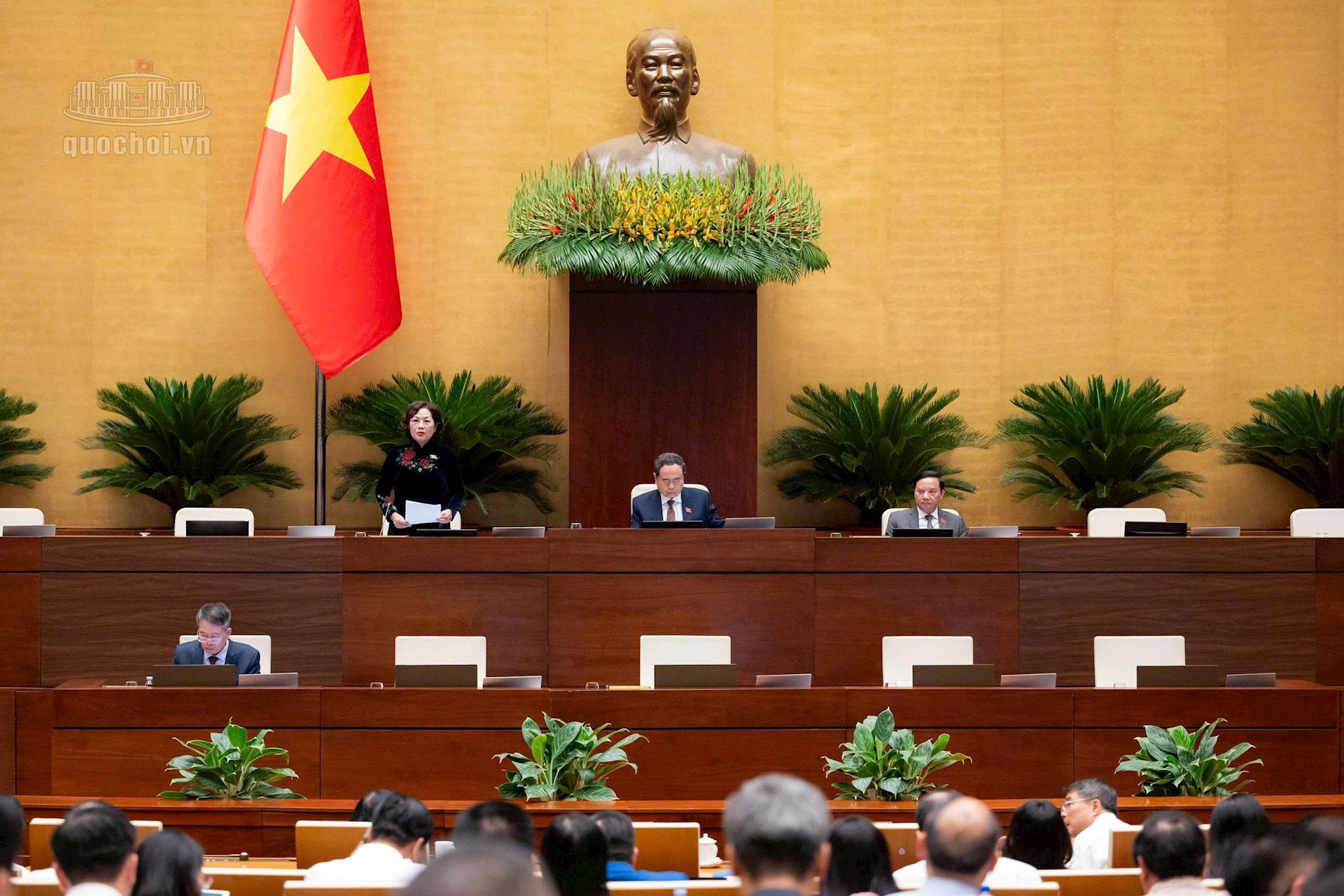
The second session of the 16th National Assembly. Photo: quochoi.vn
Maximizing the Reduction of Business Conditions to Unlock Development Resources
Presenting the submission to the National Assembly, Minister of Finance Ngo Van Tuan emphasized that the draft Law amending and supplementing a number of articles of the Law on Accounting and the Law on Independent Auditing was developed to promptly institutionalize key resolutions and conclusions of the Party and the National Assembly on reforming lawmaking and law enforcement, developing the private sector, and reducing and simplifying unnecessary investment and business conditions.
Based on Government resolutions, particularly Law No. 24/2026/QH16 dated August 24, 2026, which amends the Law on Investment and officially removes accounting services from the list of conditional investment and business sectors, the draft Law proposes abolishing all business conditions and pre-approval administrative procedures for accounting services.
Under the new regulatory model, individuals who fully meet the professional standards prescribed by law may provide accounting services independently, as household businesses, or through accounting service enterprises. Notably, practitioners may proactively provide services to clients without having to register or pay a fee to obtain prior approval from the Ministry of Finance before commencing operations.
For independent auditing, the draft Law focuses on substantially reforming and simplifying administrative procedures through interconnected data systems. It abolishes the requirement for audit firms to submit copies of their business registration certificates, enterprise registration certificates, or investment registration certificates when applying for a Certificate of Eligibility to Provide Audit Services.
At the same time, administrative processing times will be reduced by up to 50%. The time required to issue a new Certificate of Eligibility to Provide Audit Services will decrease from 30 days to 10 working days, while the time required for reissuance or amendment will fall from 20 days to five working days. These reforms are expected to minimize businesses' time and compliance costs, making the audit market more flexible and efficient.

Minister of Finance Ngo Van Tuan presents the submission on the draft Law amending and supplementing a number of articles of the Law on Accounting and the Law on Independent Auditing. Photo: quochoi.vn
Differentiating Professional Competency Standards and Strengthening Ex-Post Supervision
Although the draft Law removes pre-approval barriers, it establishes a robust legal framework to ensure effective state management and maintain the quality of financial services. A key innovation is the differentiation of professional competency standards according to the nature and risk level of each type of service.
The draft Law introduces a “Certificate of Competency for Accounting Services” as proof of professional competence. The certificate is mandatory for individuals who directly sign clients' financial statements or provide chief accountant services. In the latter case, practitioners must also hold a chief accountant training certificate and have at least two years of practical experience.
To prevent legal risks and improve transparency, the draft Law supplements and clarifies the responsibilities of relevant parties. Article 50 of the Law on Accounting is amended to stipulate that the legal representative of an accounting entity bears full legal responsibility for its accounting activities, including when external organizations or individuals are engaged to provide accounting services.
Article 67 clarifies the liability of individuals and organizations providing accounting services to compensate for damages in accordance with contractual agreements and civil law. In particular, Article 13 retains and strengthens prohibitions against the hiring, borrowing, leasing, or lending of professional competency certificates in any form, as well as collusion or improper arrangements with clients to falsify accounting figures or documents.
Regarding cross-border accounting services, Article 59 of the draft Law introduces a stricter regulatory framework for foreign organizations and individuals providing services in Vietnam without a commercial presence in the country. The Government will provide detailed regulations on eligible service providers, methods of service delivery, the responsibilities of foreign organizations, and the responsibilities of Vietnamese accounting entities participating in joint ventures. At the same time, state management will shift decisively toward technology-enabled ex-post supervision.
Improving Ex-Post Supervision and Risk-Based Control
Presenting the appraisal report, Phan Van Mai, Chairman of the National Assembly's Economic and Financial Committee, stated that the Committee strongly supported the need to promulgate the Law amending and supplementing a number of articles of the Law on Accounting and the Law on Independent Auditing.
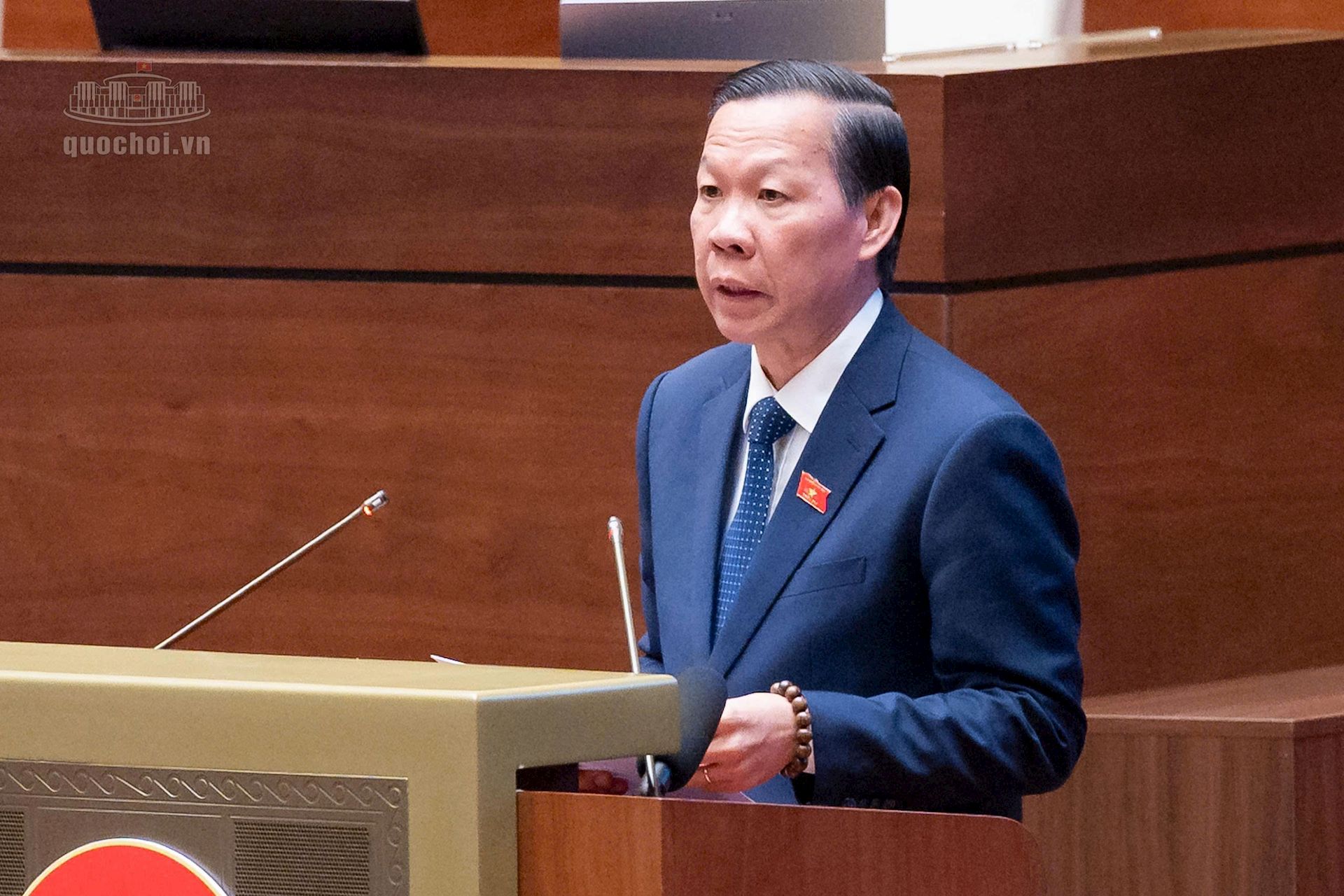
The Chairman of the National Assembly's Economic and Financial Committee presents the appraisal report on the draft amendments to the Law on Accounting and the Law on Independent Auditing. Photo: quochoi.vn
The Economic and Financial Committee noted that the drafting body should continue to conduct a comprehensive assessment of the impact of the new policies on the market and relevant stakeholders. It also emphasized the need to ensure the feasibility and practical effectiveness of ex-post supervision and service-quality control mechanisms replacing the previous pre-approval regime.
Regarding the abolition of all business conditions for accounting services, the Committee considered the proposal fully consistent with practices in most countries worldwide, where accounting services are not classified as a conditional business sector. The change would expand service supply and significantly reduce compliance costs for small and medium-sized enterprises, household businesses, and individual business operators.
With respect to service providers and professional competency standards, the Committee acknowledged that the draft Law clearly distinguishes the concepts, rights, obligations, and legal responsibilities of independent practitioners, household businesses, and accounting service enterprises. Nevertheless, it recommended that the drafting body review and standardize the definitions of accounting service providers throughout the Law and its implementing regulations. It also called for a mechanism requiring accounting service enterprises to maintain appropriately qualified professionals responsible for technical matters, particularly in business models where ownership structures may change.
Regarding the Certificate of Competency for Accounting Services, the Committee broadly agreed with retaining the certificate as voluntary proof of professional competence, which individuals may obtain by taking an examination at their own discretion. The certificate would serve as an important benchmark of professional ability and provide transparent information to the market and clients in the absence of mandatory pre-approval business conditions, helping prevent risks from being shifted onto clients and users of financial statements.
The Committee recommended further reviewing the certificate provisions to clearly distinguish between “professional competency certification” and “business conditions,” thereby ensuring proper implementation of the Party's policy.
To establish an effective ex-post supervision mechanism without creating unnecessary burdens for the market, the Economic and Financial Committee urged the drafting body to improve risk-based supervisory infrastructure and ensure that requirements to declare or update information do not become a form of “sub-license” or disguised business condition.
The appraisal body also called for clarification of mechanisms for connecting, sharing, and accessing interoperable data among state agencies. The Law should transparently specify inspection principles, scope, procedures for receiving and handling complaints, and requirements for public disclosure, while ensuring the protection of personal data and business secrets.
Regarding cross-border accounting services provided in Vietnam, the Economic and Financial Committee supported the introduction of a legal framework for foreign organizations and individuals without a commercial presence in the country. To ensure enforceability and protect the legitimate interests of domestic clients, the Committee recommended adding core principles on compliance with Vietnamese law, fulfillment of tax obligations, identification of a legally accountable contact point in Vietnam, and the security, confidentiality, storage, and transfer of data across borders.
Regarding the removal of dossier requirements for documents that state agencies can retrieve from the National Database, as well as the 50% reduction in administrative processing times, the appraisal body emphasized that only documents for which the relevant authorities already have access to connected data should be eliminated. It also recommended further review to ensure that audit firms are established and operate in full compliance with enterprise and investment laws.