Pursuant to Decision No. 1641/QD-KTNN dated October 1, 2026, issued by the State Audit Office of Vietnam (SAV), on the morning of October 5, SAV Regional Audit Office II, in coordination with local authorities, held a conference to launch an audit of construction activities and the management and use of investment capital for school construction projects in border communes of Nghe An, Ha Tinh, Quang Tri and Hue.
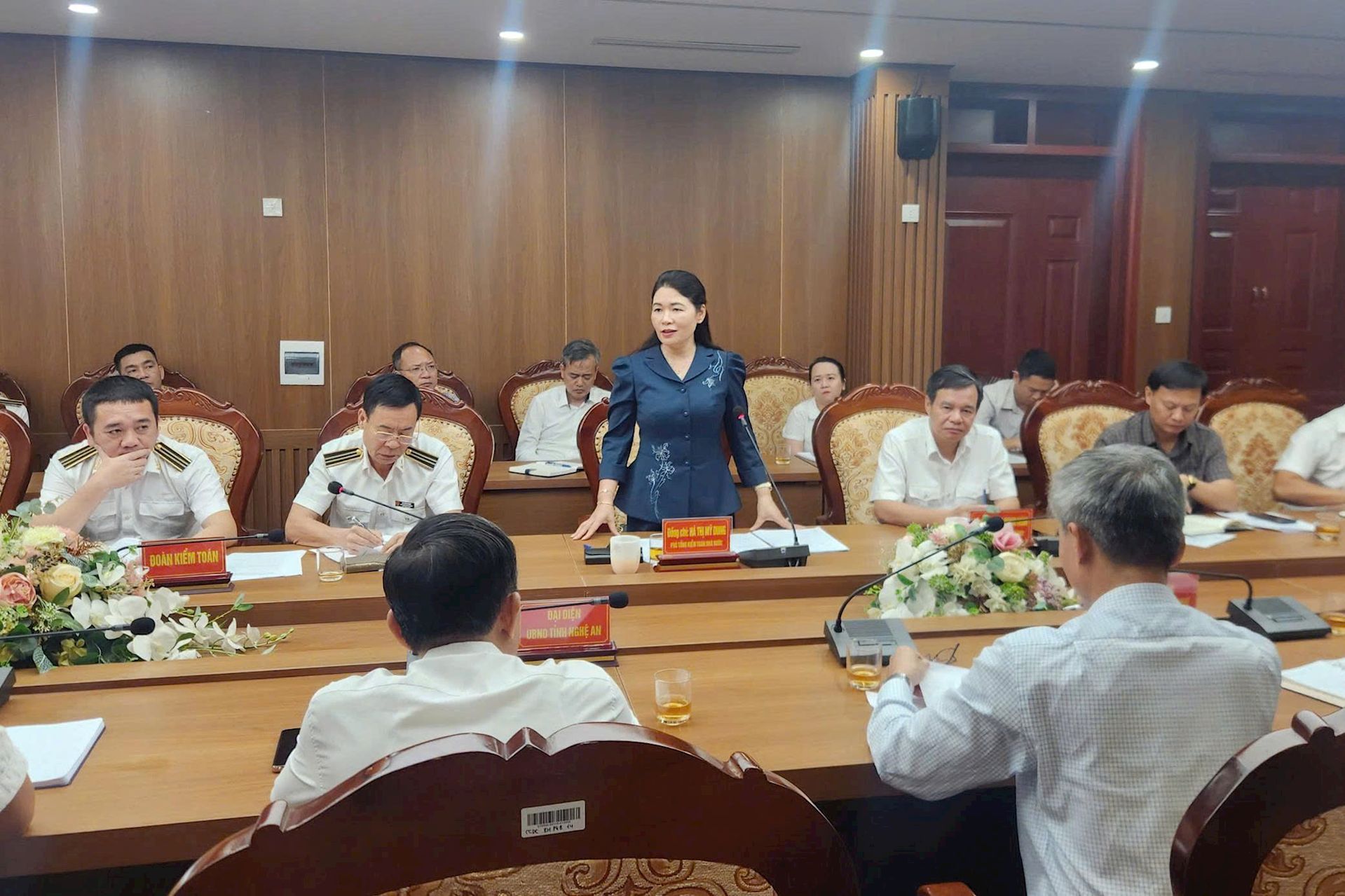
Deputy State Auditor General Ha Thi My Dung speaks at the conference. Photo: MAI TU
This is the first audit under the sector-wide thematic audit of construction activities and the management and use of investment capital for school construction projects in border communes. The audit was added by SAV to its 2026 Audit Plan.
Attending the conference were Deputy State Auditor General Ha Thi My Dung; Vice Chairman of the Nghe An Provincial People's Committee Thai Van Thanh; Vice Chairman of the Ha Tinh Provincial People's Committee Nguyen Trong Hieu; and representatives of the leadership of the Department of Finance of Quang Tri Province and Hue City.
Representing SAV Regional Audit Office II were Duong Quang Chinh, State Auditor General of Regional Audit Office II; Vo Tien Thinh, Deputy State Auditor General of Regional Audit Office II and Head of the Audit Team; as well as leaders of audit teams and members of the Audit Team.
Comprehensive Audit of the Management and Use of Investment Capital for School Projects
Announcing the Audit Decision, Vo Tien Thinh, Deputy State Auditor General of SAV Regional Audit Office II and Head of the Audit Team, said the audit of construction activities and the management and use of investment capital for school construction projects in border communes of Nghe An, Ha Tinh, Quang Tri and Hue aims to verify the truthfulness and reasonableness of financial information and data, including investment capital and investment implementation costs, for the projects; and assess compliance with the law as well as the economy, effectiveness and efficiency of the management and use of public finances and public assets related to the projects.
In addition, SAV will identify shortcomings and limitations and make recommendations to audited entities to rectify their management and operational practices; recommend that competent authorities improve inadequate mechanisms and policies; promptly detect violations, corruption, waste and negative practices; and clearly determine the responsibilities of organizations and individuals for handling in accordance with the law, thereby ensuring that public financial resources and public assets of the projects are used economically and efficiently.
The audit will also provide Party and State leaders with reliable and timely information and data for leadership and direction, while providing the National Assembly and competent agencies with information to perform their functions of inspection, investigation and supervision over the management and use of public finances and public assets related to the projects.
The audit covers investment capital sources and actual investment costs of the projects; compliance with laws and regulations on investment and construction management, finance and accounting, as well as other relevant legal policies.
According to the Decision, the audit scope covers the period from the commencement of project implementation through October 31, 2026, as well as relevant periods before and after that date. The audit will be conducted within 45 days from the date of announcement of the Audit Decision.
The audited entities include the Nghe An Provincial Project Management Board for Civil and Industrial Construction Investment, covering 10 inter-level boarding general schools; the Ha Tinh Provincial Project Management Board for Civil Construction Investment and Regional Infrastructure, covering two inter-level boarding general school construction projects; the Quang Tri Provincial Project Management Board for Civil and Industrial Construction Investment and Technical Infrastructure, covering four boarding school projects; and the Bac Song Huong Construction Investment Project Management Board, covering one inter-level boarding general school project.
Clarifying Challenges, Socio-Economic Impacts and Recommendations for the Next Phase
At the conference, representatives of local authorities provided an overview of the implementation of the projects in their respective localities and expressed their desire for coordination, information sharing and consultation from SAV to ensure that the projects are implemented in accordance with the law and achieve their intended objectives.
Speaking at the conference, Deputy State Auditor General Ha Thi My Dung emphasized that the program to build inter-level boarding general schools in border communes is being implemented in accordance with the direction set out in Notice No. 81-TB/TW dated July 18, 2025, issued by the Politburo. This is the first time the program has been implemented on a broad scale across localities and also the first time SAV has conducted a thematic audit of the program.
“SAV Regional Audit Office II is the first unit to conduct this thematic audit as a pilot, after which other regional SAV offices will continue to implement it,” the Deputy State Auditor General said.
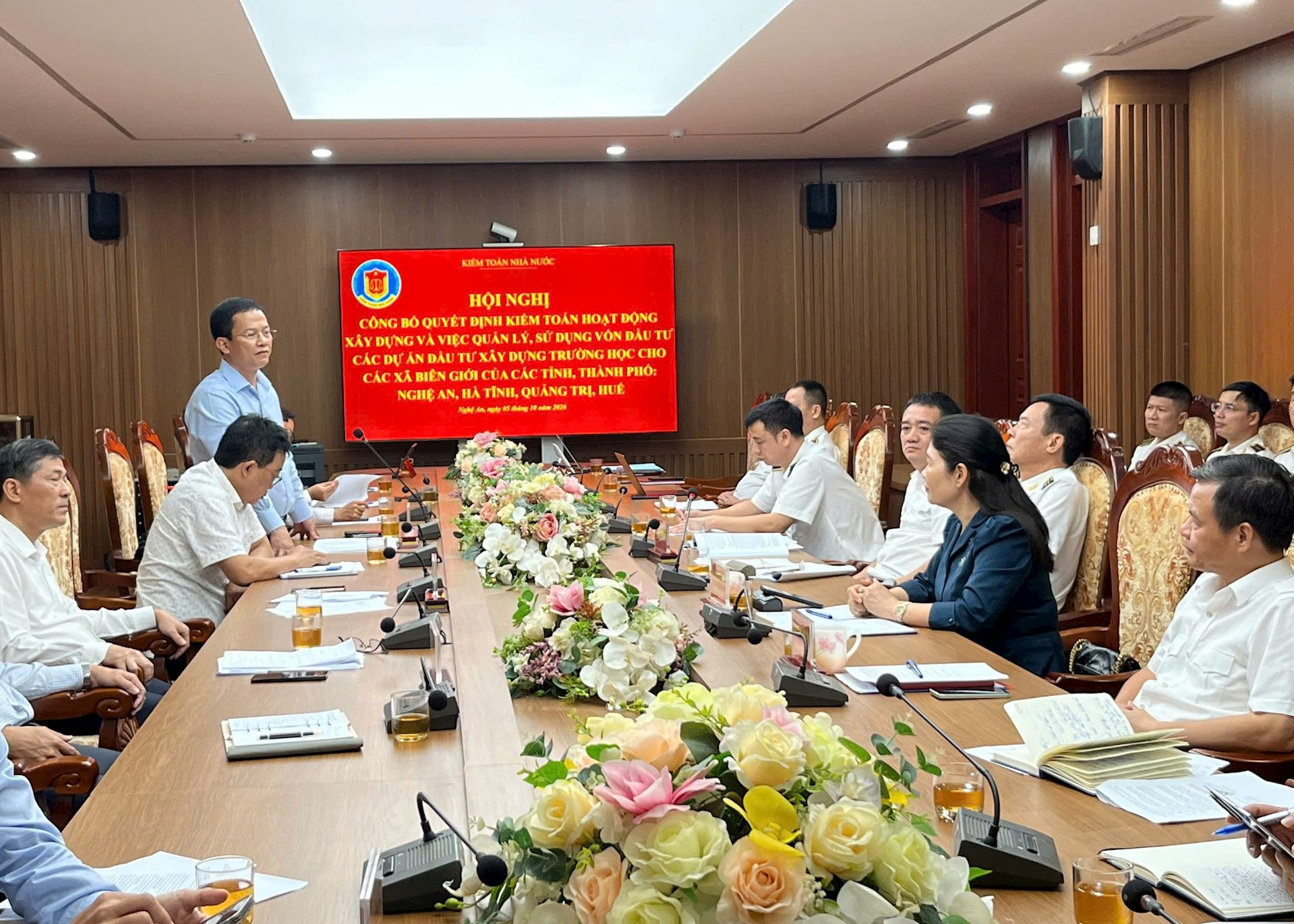
Overview of the conference. Photo: MAI TU
Emphasizing the significance and objectives of the program, Deputy State Auditor General Ha Thi My Dung stated that, in addition to auditing and recording investment values, the broader objective of the audit is to assess whether the implementation of the program to build inter-level boarding general schools in border communes is achieving the objectives set by the Politburo and meeting the expectations of local authorities.
At the same time, through the audit process, SAV will clarify difficulties and obstacles encountered during implementation and assess the operation and utilization of the projects after they are put into use. Based on these findings, SAV will make proposals and recommendations for adjustments to the Politburo, the National Assembly, the Government and the Prime Minister.
Acknowledging local authorities' concerns about the difficulties involved in implementing the program within a short and urgent timeframe, as well as objective factors such as terrain, weather conditions and the availability of construction materials, Deputy State Auditor General Ha Thi My Dung requested that the Audit Team, in addition to focusing on auditing the investment projects, closely coordinate with local authorities and pay attention to assessing the program's socio-economic impacts.
The Audit Team should also clarify the state management responsibilities of ministries and sectors, identify difficulties and obstacles as well as areas requiring adjustment, and formulate recommendations and proposals for ministries, sectors, central agencies and authorities at all levels regarding the program. This will provide lessons and experience for implementation in the second phase.
At the same time, members of the Audit Team were required to strictly and fully comply with regulations applicable to auditors while carrying out their audit duties at the audited entities.
The Deputy State Auditor General also asked local authorities to share information, coordinate closely and provide the Audit Team with all necessary documents and records throughout the audit process, in accordance with legal regulations and the coordination procedures already agreed upon.