Auditing high-value public investment projects and contract packages before contract signing is emerging as an advanced governance approach, shifting the focus from remedying consequences to preventing risks at an early stage. The experience of the Hellenic Court of Audit and the proactive steps taken by the State Audit Office of Vietnam (SAV) demonstrate that pre-contract audits not only protect state funds and prevent corruption and losses, but also help ensure project progress.
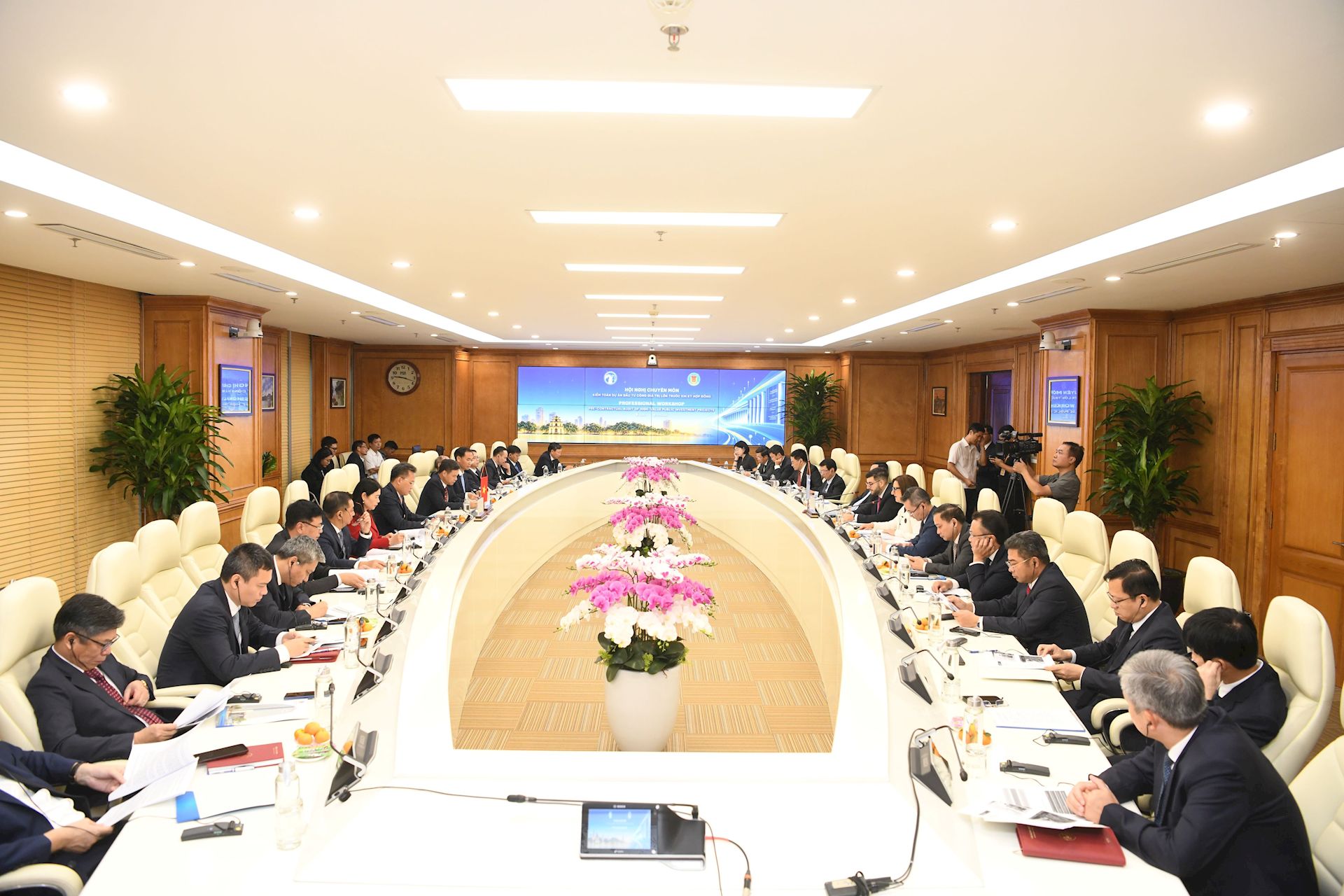
State Auditor General Nguyen Huu Nghia and Ms. Sotiria Ntouni, President of the Hellenic Court of Audit, co-chaired a technical seminar on auditing high-value public investment projects before contract signing on the morning of October 26. Photo: TL
Mandatory Thresholds and Strict Sanctions: Auditing Practices in Greece
At a technical seminar with the Hellenic Court of Audit on auditing high-value public investment projects before contract signing, held on the sidelines of the international conference “Supreme Audit Institutions in a New Context: Vision, Institutions and Innovation,” Mr. Emmanouil Kalaintzis, a Judge of the Hellenic Court of Audit, emphasized the importance of controlling public investment funds from the procurement stage. According to him, the Court does not rely solely on audits conducted after public expenditure has occurred. Instead, it audits high-value contracts before they are signed to prevent risks and control financial irregularities.
In Greece, where more than 60% of the country's development activities are carried out through public investment, pre-contract auditing was incorporated into legislation at an early stage and is implemented under strict procedures. Ms. Sotiria Ntouni, President of the Hellenic Court of Audit, emphasized that under legislation in force since 1993, the Court has been required to supervise public investment projects to assess their level of transparency and determine whether there are any signs of corruption.
Elaborating on the technical regulations and mandatory value thresholds, Mr. Emmanouil Kalaintzis explained that, since 2001, the Hellenic Court of Audit has audited high-value contracts before their implementation to ensure compliance with applicable laws and European Union (EU) regulations. Specifically, Greece requires contracts valued at more than EUR 300,000, excluding value-added tax (VAT), to undergo an audit. Contracts worth more than EUR 1.7 million are subject to additional, more stringent audit requirements, with judges from the Court also involved in the process.
Notably, Greece's pre-contract audit mechanism is backed by strict legal sanctions. Contracts falling within the mandatory audit thresholds must be audited before the bidding process; otherwise, they are invalid. Projects that have not undergone the required pre-contract audit cannot proceed. Following the legality review, if the adjudicating panel determines that a contract does not meet the requirements, the public procuring entity is prohibited from signing it.
Ensuring Comprehensive Reviews and Optimizing Audit Timelines
One concern raised regarding the implementation of pre-contract audits is whether the process could cause delays and slow the progress of investment projects. Addressing this issue, Ms. Sotiria Ntouni, President of the Hellenic Court of Audit, explained that two prerequisites are essential: first, an appropriate legal framework must be in place; second, adequate budgetary resources must be allocated to the relevant works or projects. Contractors must also provide concrete evidence of their qualifications, including experience and financial capacity over the preceding three to five years, to the Court of Audit. Direct contracting is permitted only in exceptional cases. For large-scale projects, the procuring authority may request the Court to conduct reviews at different stages, such as assessing compliance during the tender invitation process or reviewing technical evaluations.
Mr. Emmanouil Kalaintzis added that the audit process is designed not to cause delays but to ensure the effectiveness of public investment. The statutory processing period is 30 days from the date of dossier submission. In practice, however, the Hellenic Court of Audit completes these audits in an average of just 24 days, ahead of the prescribed deadline.
“Greece's experience provides valuable lessons for the State Audit Office of Vietnam as it seeks to improve its institutional framework and strengthen its capacity to audit high-value public investment projects before contract signing in the new period.”
State Auditor General Nguyen Huu Nghia
Mr. Emmanouil Kalaintzis reiterated that the audit process is designed not to cause delays but to ensure the effectiveness of public investment. The statutory processing period is 30 days from the date of dossier submission. In practice, however, the Hellenic Court of Audit completes these audits in an average of just 24 days, ahead of the prescribed deadline.
In Vietnam, the need to conduct audits before contract signing without delaying project implementation has similarly been emphasized. The SAV has been assigned responsibility for auditing large-scale projects implemented under turnkey contracts. Specifically, National Assembly Resolution No. 189/2025/QH15 stipulates that the investors of the Ninh Thuan 1 and Ninh Thuan 2 nuclear power projects must submit draft turnkey contracts to the SAV for auditing as a basis for contract signing. The SAV is responsible for submitting its audit results within a maximum of 30 days from the date of receipt of the request, ensuring that project progress is not affected.
Identifying Key Solutions and Lessons Learned
According to Mr. Tran Van Hao, Auditor General of SAV Specialized Audit Department V, shortcomings in surveys, design, total investment estimation, contractor capacity assessment, and risk allocation during the preparation stage can lead to cost overruns, delays, and reduced efficiency in the use of state funds. To achieve the goal of controlling risks from the outset, the SAV is focusing on preventive auditing and early risk assessment across eight key areas. These include: assessing project feasibility during the investment preparation stage; establishing realistic total investment estimates; improving the quality of surveys and designs; managing risks before contract signing; selecting qualified contractors; clearly allocating risks in contractual terms; appraising large-scale and high-technology projects; and strengthening accountability and preventive controls.
Greece's experience also shows that data sharing and market research are key to improving the quality of project appraisal. Highlighting this lesson, Mr. Emmanouil Kalaintzis explained that contractors and contracting authorities must conduct market research to establish cost estimates and determine the prices of goods and services before undertaking any formal step in the bidding process. The Hellenic Court of Audit also maintains a shared database to support research, prepare cost estimates, and assess whether proposed estimates are reasonable.
Assessing the common ground between the two institutions and their future cooperation priorities, State Auditor General Nguyen Huu Nghia noted that the objectives of pre-contract auditing at the two institutions share many similarities. While the Hellenic Court of Audit focuses on preventing legal risks and avoiding disputes after contracts are signed, the SAV audits major contracts before signing to ensure compliance with laws governing bidding, procurement, and public investment, while also assessing feasibility and the efficiency of public resource utilization.
Clearly, pre-contract auditing does more than prevent legal and economic loopholes at the earliest stage; it also strengthens the accountability of management agencies. When supported by robust procedures and completed within the prescribed timeframes, this “screening mechanism” can both safeguard public resources and keep national infrastructure projects on schedule.