The value of auditing lies not only in detecting and addressing violations, but, more importantly, in identifying risks, closing gaps, and creating changes in the governance of public resources. The new coordination mechanism between the State Audit Office of Vietnam (SAV) and four provinces — Thai Nguyen, Bac Ninh, Tuyen Quang, and Cao Bang — is expected to provide an additional mechanism for audit results to be more deeply integrated into local governance, from risk identification, leadership and direction to implementation and oversight.
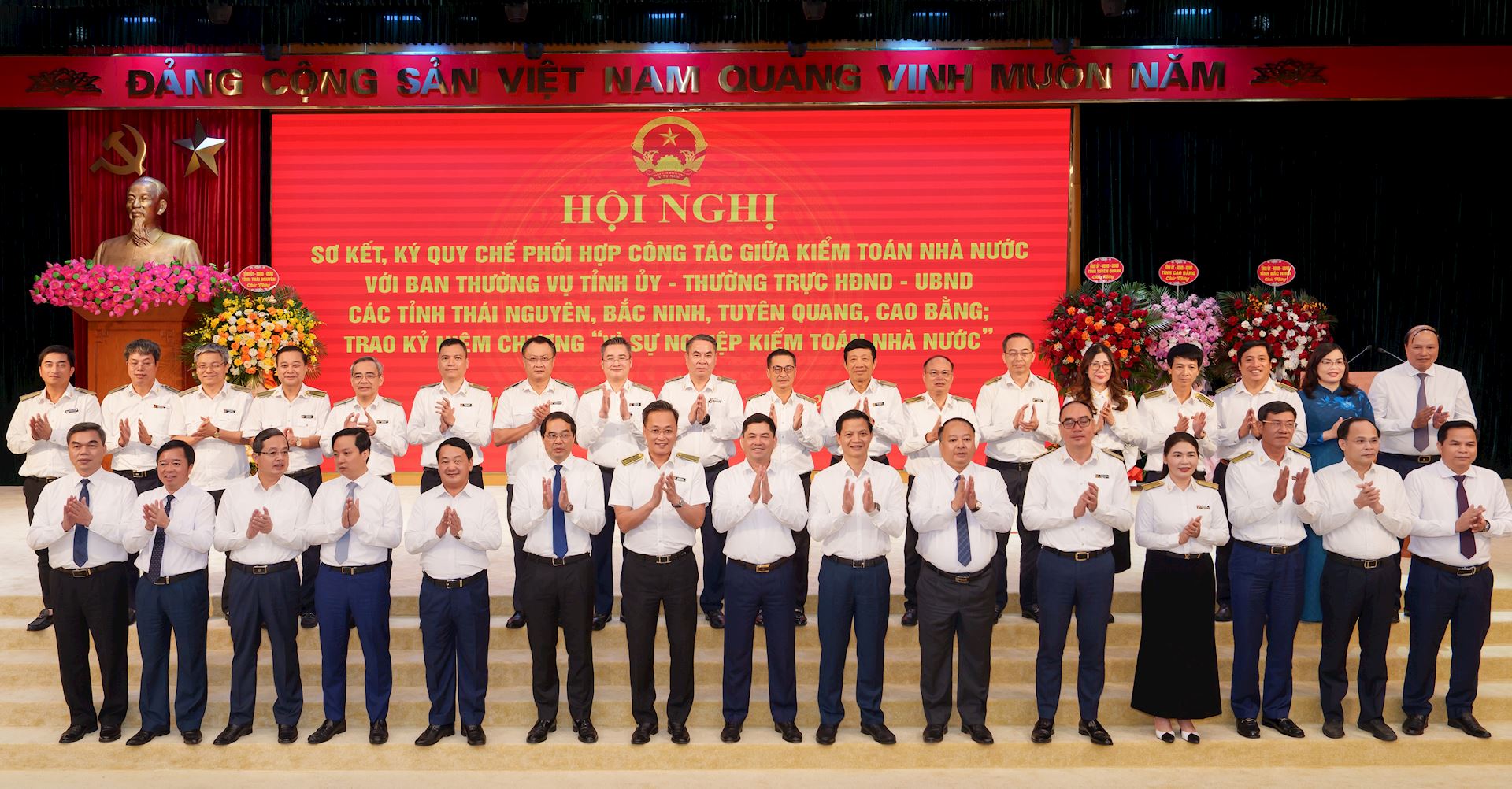
Leaders of the SAV and the four provinces of Thai Nguyen, Bac Ninh, Tuyen Quang, and Cao Bang at the Conference reviewing the implementation of the Coordination Regulations and signing the Coordination Regulations for the new period. Photo: TIẾN TÚ
Leveraging Audit Results in Leadership, Direction, and Oversight
At the Conference reviewing the implementation of the Coordination Regulations and signing the Coordination Regulations for the new period between the SAV and the Standing Committees of the Provincial Party Committees, the Standing Committees of the People's Councils (PCs), and the People's Committees (PCs) of the four provinces of Thai Nguyen, Bac Ninh, Tuyen Quang, and Cao Bang, Auditor General Nguyen Huu Nghia emphasized a consistent requirement: audit activities must contribute to strengthening discipline, order, effectiveness, and efficiency in the management and use of public finances and public assets; while also enhancing transparency and accountability and supporting local socio-economic development.
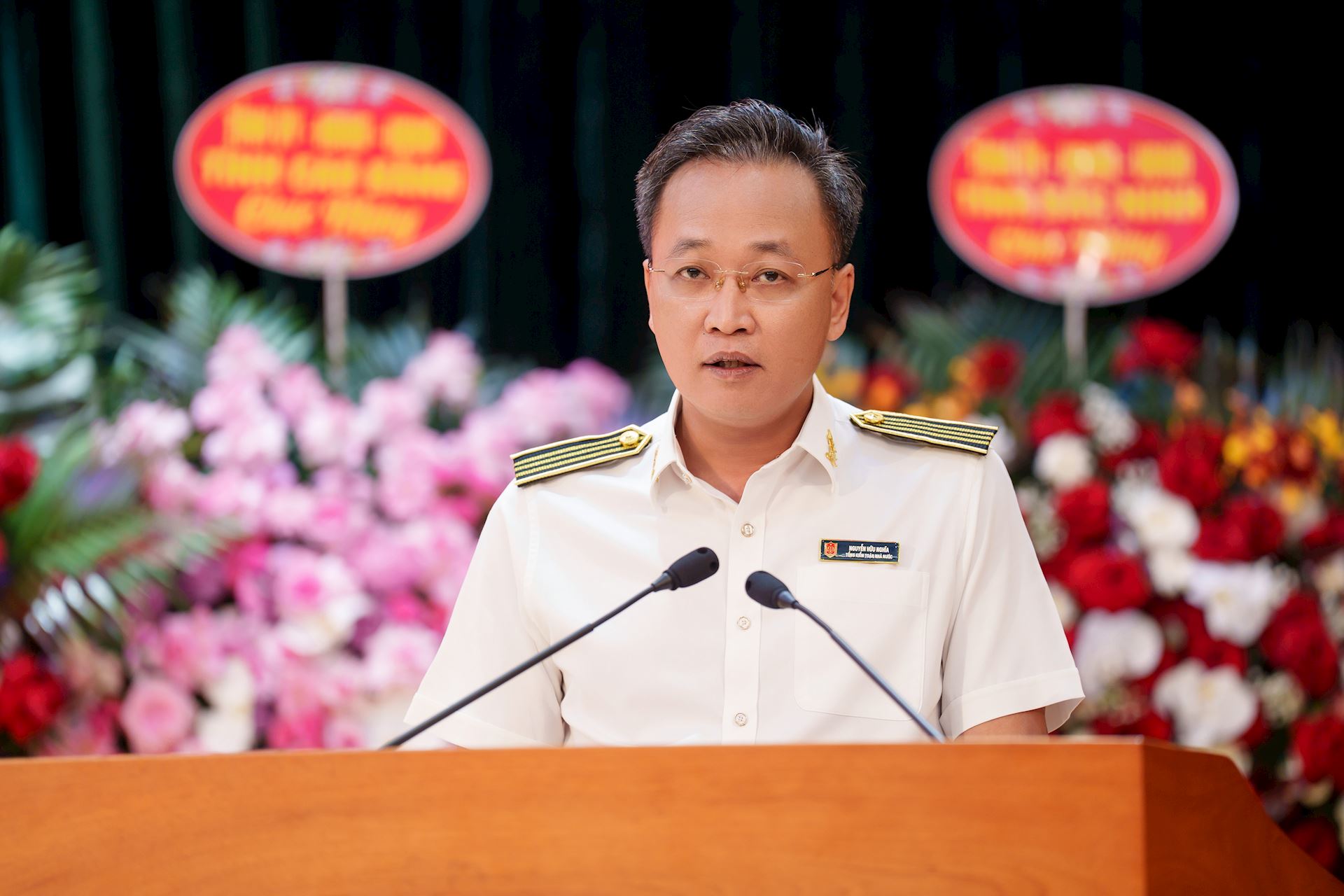
The SAV will establish a regular monitoring and evaluation system based on information and data provided by local authorities, enabling timely identification and rectification of shortcomings, prevention of risks, and improvement of the efficiency of public resource management and utilization.
Auditor General Nguyen Huu Nghia
This approach places auditing in a broader position beyond the scope of a financial inspection activity. Auditing should not merely examine what has already happened to determine right and wrong, but should also help answer the question: How can public resources be better managed after each audit?
An audit conclusion can only truly deliver value when it does not stop at an issued document but is translated into management action. Findings must be communicated, recommendations must receive direction, responsibilities must be identified, corrective actions must be monitored, and the specific issues identified through audits must be transformed into valuable lessons for overall governance.
It is from this perspective that the inclusion of the Standing Committee of the Provincial Party Committee in the new Coordination Regulations, alongside the Standing Committees of the People's Councils and People's Committees of the provinces, represents a qualitative step forward in bringing audit results into local governance. The new feature lies not simply in the participation of an additional stakeholder, but in providing audit results with another channel through which they can be more deeply integrated into the processes of leadership, direction, and oversight of public resource management and utilization.
The Standing Committee of the Provincial Party Committee does not replace the functions of the People's Council, People's Committee, or SAV. However, the participation of the Party Committee provides an additional layer of leadership, orientation, and impetus, enabling audited issues to be considered from a broader perspective: from specific shortcomings to issues concerning implementation, management responsibilities, and the need for policy improvement where necessary.
From Detecting Violations to Risk Management
In practice, if auditing is viewed merely as a “post-audit” activity, its value primarily lies in determining what has already happened. However, when audit results are used as a source of management data, auditing can do much more: identify where risks lie, why they arise, which stages of a process generate risks, and what needs to be changed to prevent such risks from recurring.
Deputy Secretary of the Provincial Party Committee and Chairman of the People's Committee of Tuyen Quang Province Phan Huy Ngoc noted that auditing not only helps local authorities correct errors and identify violations, but, more importantly, helps local leaders prevent violations that may occur in the future.
From this practical perspective, the proposal by the Chairman of the People's Committee of Tuyen Quang Province to strengthen audits of important projects before or during implementation is not simply a request to “audit earlier.” Behind it lies a broader requirement for audit activities: shifting part of the focus from identifying consequences to identifying and warning of risks.
If a project is audited only after completion, many incorrect decisions may have already become irreversible. If a management process is reviewed only after losses have occurred, the cost of remediation will always be greater than the cost of prevention. Therefore, if risks can be identified from the stages of investment preparation, selection and allocation of resources, project implementation, and project control, the value of auditing will be elevated to another level.
This is also the direction emphasized by Auditor General Nguyen Huu Nghia when addressing the requirements for risk warning and prevention. Audit activities should be conducted at all three stages: before public resources are committed to a project, to examine issues related to investment policies and investment preparation; during implementation, to promptly identify and rectify shortcomings; and after completion, to assess whether the investment objectives have been achieved and whether resources have been used effectively.
Thus, auditing should not only answer the question, “Where did things go wrong?” but increasingly also answer: “Where do the risks lie?” and “What should be done to prevent violations from occurring?”
An audit finding may only have value at one specific entity. But a lesson drawn from audit results can create value for the entire system.
Chairman of the People's Committee of Cao Bang Province Le Hai Hoa also raised this issue based on practical experience, emphasizing that the value of auditing lies not only in identifying errors but also in its ability to prevent recurring violations, improve management processes, and enhance the management of projects and public assets, while identifying issues that require coordination among multiple agencies or reveal policy bottlenecks.
In particular, Cao Bang’s proposal to consolidate common errors and issues identified following audits so that other localities can use them as references points to a notable direction: turning the results of individual audits into shared knowledge for the entire system.
The SAV cannot audit all localities, sectors, and fields at the same time. However, recurring errors can be consolidated, categorized, and used as warnings. In this way, a locality that has not yet been audited can still benchmark itself, conduct its own review, and make adjustments.
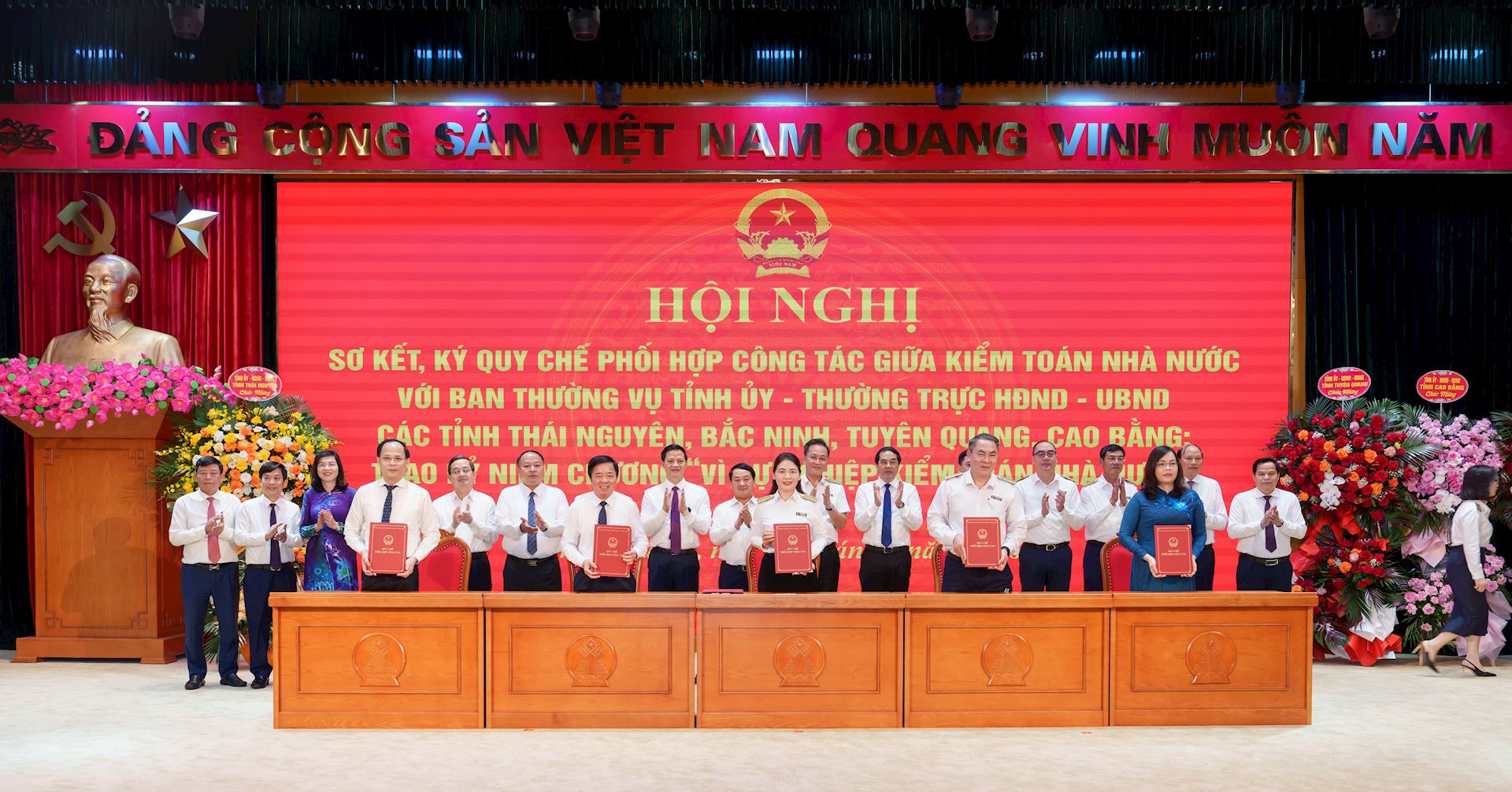
Representatives of SAV leadership sign the Coordination Regulations on cooperation between the SAV and the Standing Committees of the Provincial Party Committees, the Standing Committees of the People's Councils, and the People's Committees of Thai Nguyen, Bac Ninh, Cao Bang, and Tuyen Quang provinces. Photo: TIẾN TÚ
This is how auditing creates value beyond the scope of an individual audit. The earlier information is shared, the earlier auditing can act; the earlier risks are identified, the more effectively audit resources can be focused on key areas; and the more systematically recurring errors are documented, the more audit results can become a form of “management memory,” helping the entire system proactively prevent and address risks.
From Audit Recommendations to Changes in Governance
No matter how accurate an audit conclusion may be, it is not the end point. The end point must be change.
Correcting an erroneous amount, recovering funds, handling an asset, or rectifying a process is necessary. But if the same error continues to recur and the same type of recommendation continues to be issued, a broader question must be asked: We have addressed the consequences, but have we addressed the causes?
Therefore, the implementation of audit recommendations should be viewed at two levels. The first is to remedy what has already occurred. The second, and more important in the long term, is to address the underlying causes of the errors. At the first level, decisive implementation, recovery, and corrective action are required. At the second level, changes are needed in processes, responsibilities, internal controls, coordination mechanisms, and, where necessary, policies and laws.
Vice Chairman of the People's Committee of Bac Ninh Province Ngo Tan Phuong stated that audit conclusions and recommendations are an important source of information for assessing leadership, direction, management, and administration, while also helping the locality rectify the management of finances, budgets, and public assets. From a broader perspective, this is precisely the role that audit results should serve: not merely helping “correct mistakes,” but helping managers make better decisions.
Bac Ninh provincial leaders also proposed strengthening information exchange from the stage of developing audit plans to minimize overlaps with inspections and examinations; increasing thematic audits; and studying appropriate mechanisms for recommendations that remain difficult to implement.
These proposals show that coordination should not begin only when an audit team arrives to work and end when the audit report is issued. Coordination creates the greatest value when it takes place before risks become violations, while issues are emerging, and after the audit to ensure that recommendations are effectively put into practice.
This is also the deeper significance of the new Coordination Regulations between the SAV and the Standing Committees of the Provincial Party Committees, the Standing Committees of the People's Councils, and the People's Committees of the four provinces. The Regulations will only be truly meaningful when they create a governance cycle: the SAV provides information; the Party Committees provide leadership and direction; the People's Councils exercise oversight; the People's Committees organize implementation; the SAV conducts inspection and evaluation; and systemic issues are fed back to improve governance and institutions.
Accordingly, the effectiveness of the new Coordination Regulations should not be measured by the number of meetings held or documents exchanged, but by concrete changes in public resource management: a process that has been rectified, a control mechanism that has been improved, a risk that has been identified and prevented, or an audit recommendation that has been translated into a more effective management solution.
Ultimately, the fundamental objective of auditing is not to produce more audit conclusions, but to ensure that public resources are managed more rigorously, used more effectively, and genuinely transformed into development capacity.