Urban railway and high-speed railway projects require auditing activities to cover the entire investment cycle, with particular emphasis on controlling costs, schedules, quality and project efficiency. The experience of the Audit Board of Indonesia (BPK) provides a valuable basis for the State Audit Office of Vietnam (SAV) to improve audit quality and meet the requirements of railway infrastructure investment and development in the coming years.
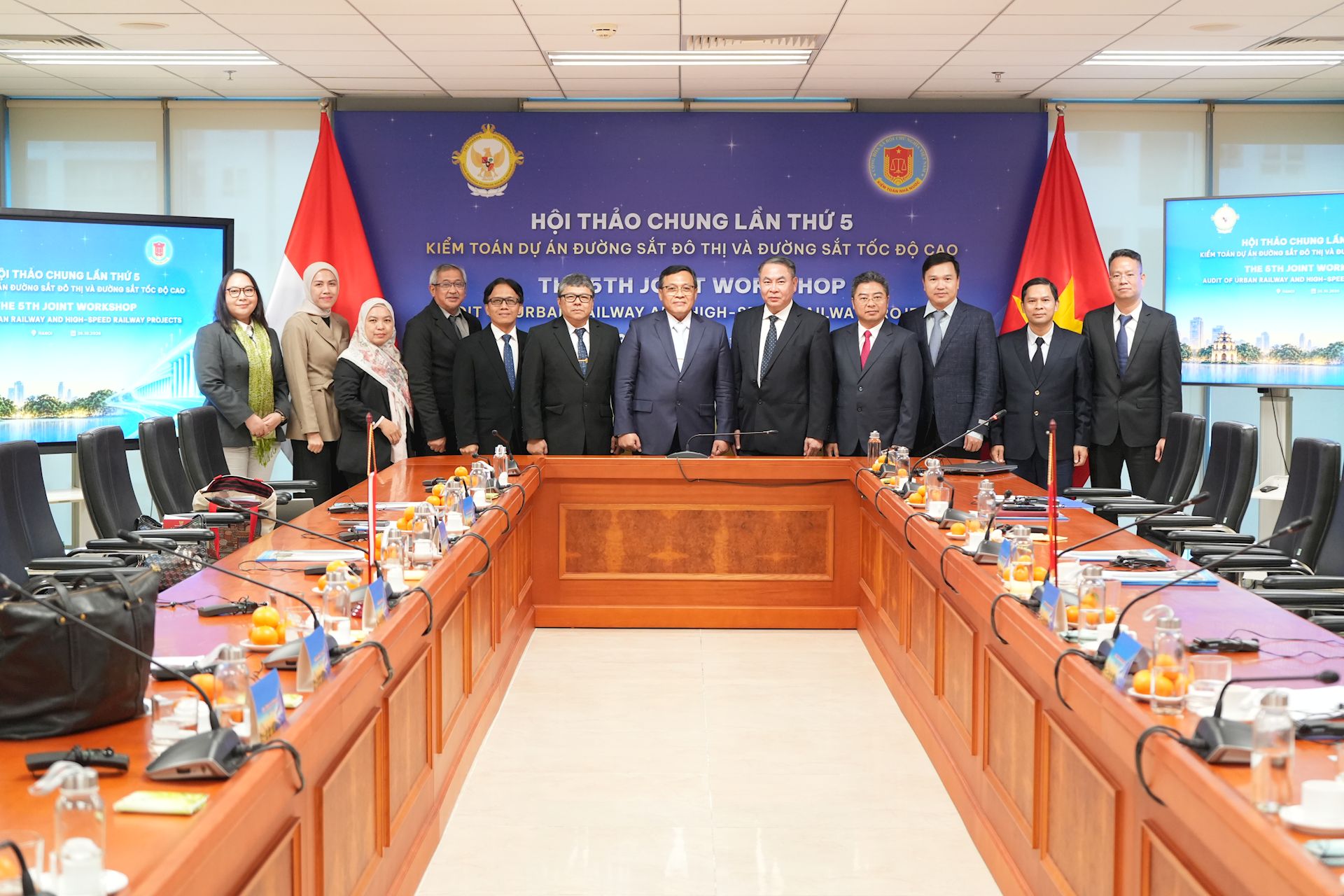
Delegates attending the seminar. Photo: N. LOC
An Essential National Transport System
Indonesia's railway transport system is highly diversified, encompassing intercity passenger trains, freight trains, light rail transit (LRT), urban railways, high-speed trains and commuter rail services. It is an essential mode of transportation in the country. Speaking at the 5th Joint Seminar themed “Auditing Urban Railway and High-Speed Railway Projects”, held on the sidelines of the International Seminar “Supreme Audit Institutions in the New Context: Vision, Institutions and Innovation”, Mr. Sarjono, Director of Audit Directorate I of BPK, stated that railway transport has been serving a large number of passengers, meeting daily commuting needs, facilitating regional connectivity and transporting goods.
Across Indonesia, the railway network currently in operation extends to 6,889 km, with 674 stations. In 2025, more than one million passenger train services were operated, carrying 551 million passenger journeys annually (mainly on commuter and intercity services, with approximately 349 million passenger journeys annually in the Jakarta area alone) and transporting around 70 million tonnes of freight.
In Vietnam, Mr. Lai Xuan Nghi, Deputy Auditor General of SAV's Specialized Audit Department IV, noted that the country has also adopted policies to study and invest in urban railway and high-speed railway projects. Vietnam is currently focusing on planning and mobilizing substantial investment in two key components: urban railway systems in the two major metropolitan areas of Hanoi and Ho Chi Minh City, and large-scale national high-speed railway projects that are expected to transform the country's railway infrastructure. By 2030, with a vision to 2050, Vietnam aims to develop a total of 30 urban railway lines with a combined length of more than 2,200 km, including 18 planned lines in Hanoi and 12 in Ho Chi Minh City, alongside the planned North–South national high-speed railway.
Given the scale and importance of the railway transport system, Mr. Akhmad Anang Hernady, Director of the Legal Affairs Directorate of BPK, stated that in Indonesia, railway infrastructure and assets are owned by the Ministry of Transportation and recorded in the Ministry's asset register. According to the audited 2025 financial statements, their reported value amounted to IDR 102,690 billion (approximately USD 5.7 billion).
In the context of railway transport infrastructure development, which requires substantial resources, long implementation periods and complex management, auditing activities must cover the entire investment cycle, from project preparation and appraisal, cost and schedule management, contractor selection and contract administration to quality and safety control and the assessment of investment efficiency.
Mr. Tran Minh Khuong, Deputy Auditor General of the State Audit Office of Vietnam
Vietnam and Indonesia are both stepping up public investment and implementing large-scale infrastructure projects. Sharing practical experience and lessons learned from auditing activities will help strengthen mutual understanding and support BPK and SAV in enhancing their professional capacity.
Mr. Sarjono, Director of Audit Directorate I, Audit Board of Indonesia
Strengthening Audits of Railway Infrastructure Projects
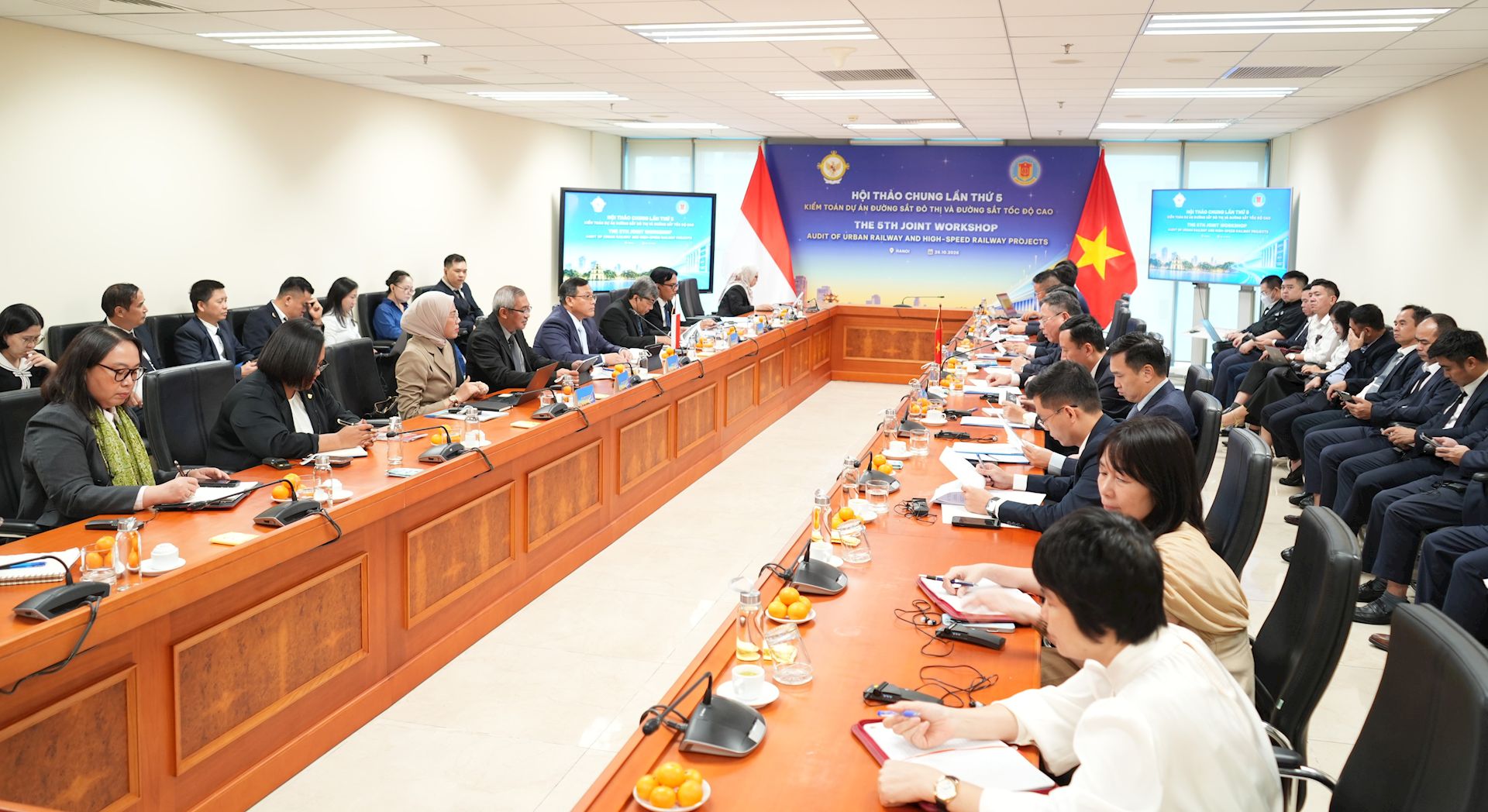
Overview of the seminar. Photo: N. LOC
In accordance with its statutory mandate, BPK conducts audits of railway infrastructure under two categories: financial audits, which assess revenues, expenditures and assets related to railway infrastructure as presented in financial statements; and compliance audits, which assess the management of railway infrastructure and assets. Financial audits are conducted during the first six months of the year, while compliance audits are carried out during the second half.
Citing a compliance audit of the Light Rail Transit (LRT) Project in South Sumatra, a representative of BPK noted that this was a key audit conducted in 2019. The project was part of the national priority programme serving the 2018 Asian Games, with a budget exceeding IDR 10,000 billion (approximately USD 560 million). It comprised 23 km of elevated railway and 13 stations. The audit focused on procurement procedures, internal controls, construction progress, bid prices, implementation results and project completion.
From the Vietnamese side, Mr. Lai Xuan Nghi stated that, to date, SAV has audited three urban railway projects: the Cat Linh–Ha Dong Urban Railway Project, Metro Line No. 1 (Ben Thanh–Suoi Tien) and the Nhon–Hanoi Railway Station Line. The audits focused on assessing compliance with Vietnamese laws and regulations in the formulation, appraisal and approval of investment policy; preparation, appraisal and approval of feasibility study reports; contractor selection; project implementation; and the assessment of economy, effectiveness and efficiency throughout the investment process.
The audit results have helped identify shortcomings in mechanisms and policies, prompting recommendations to competent authorities for review and revision. They have also highlighted limitations in management and administration, while proposing improvements to management mechanisms and coordination among the Government, ministries, sectors and project owners during project preparation and implementation, Mr. Lai Xuan Nghi emphasized.
In the coming years, Vietnam will allocate substantial resources to developing urban railway systems and high-speed railway projects. However, the current legal framework, technical standards, norms and technologies applicable to urban and high-speed railways remain incomplete and insufficiently harmonized. In addition, meeting the requirements of these tasks will require improvements in auditors' professional capacity, qualifications and experience. Therefore, studying, referring to and learning from international experience in state management, project management and auditing of urban railway and high-speed railway projects is essential, the representative of SAV emphasized.
Sharing experience with SAV, Mr. Akhmad Anang Hernady outlined six lessons learned from auditing railway projects. Accordingly, BPK places particular emphasis on ensuring that payments under contracts are made only for work quantities that have been physically inspected and verified; consistently applying expenditure control measures across all units; prioritizing high-risk audit findings relating to railway infrastructure maintenance and checking whether corrective actions have been taken.
BPK also focuses on calculating total additional costs based on verified infrastructure usage, as well as the invoicing and payment of relevant fees; reconciling asset registers with actual assets through periodic physical inventories, promptly recording asset additions and disposals, and transferring construction-in-progress costs to completed assets for finished works and components; and concentrating internal controls on processes that involve the highest levels of risk.