Closely following the new requirements for the management and administration of socio-economic development, the State Audit Office of Vietnam (SAV) has implemented its 2026 work program with a proactive, decisive, flexible, and innovative approach, from planning and organizing audits to monitoring and urging the implementation of audit recommendations. These shifts in thinking and operational approaches have created a clear imprint, with a stronger focus on the effectiveness of resource utilization, early risk prevention, and contributing to policy improvement.
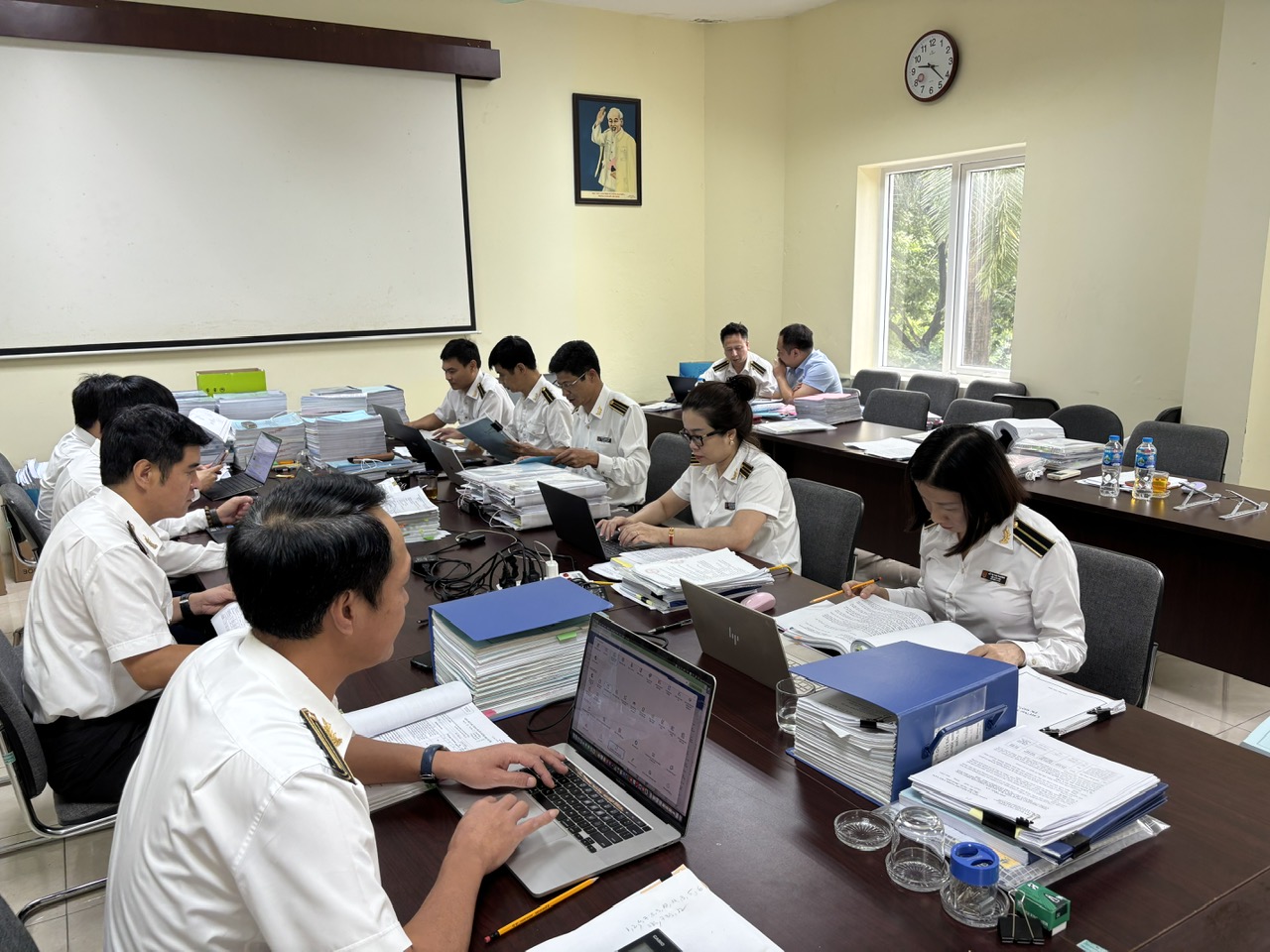
2026 has witnessed positive changes and many notable results in the SAV’s audit activities. Photo: Đ. KHOA
Proactive Innovation, Systematic and Decisive Direction and Administration
The year 2026 has taken place against the backdrop of significant changes in the organization of the state apparatus and in management and administrative approaches. It is also the first year of implementing the 2025 State Budget Law and the first year in which the two-tier local government model has been fully operational. At the same time, the goal of promoting rapid and sustainable development and striving to achieve “double-digit” economic growth has placed increasingly higher demands on the management and use of public finances and public assets, as well as the effectiveness of resource allocation.
This context has required audit activities not only to ensure accuracy and compliance in the management of budgets and public assets, but also to place increasing emphasis on assessing the efficiency and effectiveness of resource utilization.
A prominent feature of the SAV’s work in 2026 has been its proactive and decisive approach from the very beginning of direction and administration. With the consistent principle of “Independence, objectivity, expertise, integrity, responsibility, safety, and reputation,” the leadership, direction, governance, and administration methods of the Party Committee and SAV leadership have undergone significant innovation, becoming more creative, flexible, systematic, thorough, and decisive, following the approach of “say it and do it, act immediately, act correctly, act decisively, see it through to the end, and ensure effectiveness”; managing by objectives, emphasizing the quality and effectiveness of work; promoting decentralization and delegation of authority in parallel with strengthening accountability, transparency, and power control.
Alongside professional direction, the SAV has stepped up administrative reform, streamlined procedures, and reduced intermediary steps, while also revising, supplementing, and promulgating a relatively comprehensive system of legal documents, mechanisms, policies, and sectoral guidance. This provides a foundation for the SAV to innovate its content and operational methods, restructure core professional processes toward alignment with international practices and standards, meet the requirements of digital transformation, and renew its governance approach in accordance with the “6 clear” principle.
The restructuring of the organizational apparatus has also been carried out in conjunction with requirements for improving operational efficiency. Following the second round of restructuring, the SAV further reduced one department-level unit and 30 division-level units. The new organizational model, which has been in operation since August 15, 2026, has functioned normally and smoothly, contributing to fundamentally addressing overlapping and fragmented functions and responsibilities. At the same time, the redeployment of personnel and training and professional development have received greater attention to meet the requirements of tasks in the new period.
Focusing on Resource Efficiency, Early Prevention of Risks and Violations
The changes and decisiveness in leadership and direction have been clearly demonstrated through the SAV’s notable, impressive, and breakthrough results.
Deputy Auditor General Tran Minh Khuong said that the 2026 Audit Plan comprises 132 audit tasks, organized into 180 audit teams. As of August 30, the SAV had launched 133 audit teams, of which 105 had completed their audits and 74 audit reports had been officially issued.
Based on the 74 audit reports issued, the SAV recommended financial handling of VND 79.651 trillion and USD 4,684,646; recommended the repeal, amendment, or supplementation of certain inappropriate provisions in 138 documents; recommended consideration of the responsibilities of relevant collectives and individuals; and transferred 11 case files showing signs of legal violations to the Investigation Police Agency.
Notably, this is the first year the SAV has conducted audits of the budget finalization reports of 100% of ministries, central-level agencies, and provinces and centrally governed cities. Accelerating the audit of local budget finalization reports has ensured the provision of reliable and timely information and data for the People's Councils of provinces and centrally governed cities to approve their 2025 local budget finalization.
Assessing this result, Deputy Chairman of the National Assembly’s Committee on Economic and Financial Affairs Nguyen Huu Toan emphasized that the SAV has closely followed the roadmap set out in the SAV Development Strategy through 2030. In particular, completing the audit of local budget finalization reports in June was considered highly appropriate, especially in the context of shortening the budget finalization period in accordance with the 2025 State Budget Law. This helps ensure the effectiveness and efficiency of audits and enables local People's Councils to approve budget finalization on the basis of audit reports on budget finalization.
The organization of audit activities has also been renewed toward increasing the scale of individual audits, integrating tasks and audit contents, or simultaneously combining financial, compliance, and performance audits within a single audit. This approach reduces the frequency and number of audits conducted at agencies and entities while creating better conditions for a comprehensive assessment of the management and use of public resources.
At the same time, the SAV has placed greater emphasis on audits associated with major socio-economic development issues, national target programs, nationally important investment projects, and key local projects. Many projects have been audited from the investment policy stage, with the aim of reducing the fear of making mistakes, strengthening prevention and handling of violations, and addressing shortcomings, weaknesses, and violations at an early stage and from the outset.
Through audits, the SAV has promptly identified violations and recommended corrective and stringent measures against violations, shortcomings, limitations, and weaknesses at audited entities, with particular emphasis on decisively remedying consequences and recovering funds, assets, and public finances that have been used contrary to regulations or for improper purposes, or wasted, thereby preventing losses and damage to the state budget.
At the same time, the SAV has increasingly focused on identifying and recommending solutions to obstacles and inadequacies in mechanisms, policies, and laws that hinder economic and local development, thereby facilitating the operations of agencies and entities and improving the effectiveness of the management and use of public finances and public assets.
Another notable shift has been in the implementation of audit conclusions and recommendations. As of August 30, the total amount of financial and other recommendations implemented reached VND 29,942.1 billion out of VND 41,039.27 billion, equivalent to 72.96%; recommendations denominated in USD reached 84.4%; 27 out of 53 audit reports containing recommendations to consider the responsibilities of collectives and individuals had been implemented, reaching 50.9%; and 42 out of 201 documents had been repealed, amended, supplemented, or newly issued. All these rates increased compared with the same period of the previous year. In July 2026 alone, the SAV simultaneously organized 79 inspections on the implementation of audit conclusions and recommendations, with the aim of creating a breakthrough in the implementation of audit conclusions and recommendations.
It can be seen that the SAV’s imprint in 2026 lies not only in the figures on financial handling or the number of audits conducted. More importantly, it lies in the shift in thinking and approaches to carrying out its tasks: taking a more proactive approach to planning, acting more decisively in implementation, placing greater emphasis on the effectiveness of resource utilization, strengthening prevention, and recommending institutional improvements. These results provide a foundation for the SAV to further enhance its role in overseeing public resources, serving the requirements of national governance, and supporting the goal of rapid and sustainable development in the new period.