As Hanoi accelerates investment in and the development of its infrastructure system, the key requirements extend beyond ensuring project progress and disbursement rates. More importantly, they involve controlling risks, improving investment effectiveness, and ensuring that completed projects deliver their intended value. In an interview with the State Audit Review, Tran Huu Bao, Deputy Director of the Hanoi Department of Construction, emphasized that auditing activities should be based on five groups of criteria to comprehensively assess investment effectiveness, thereby identifying and warning of risks and helping prevent violations at an early stage.
Hanoi is entering a period of accelerated investment and infrastructure development to drive urban growth. From your experience, could you share some of the city's outstanding achievements in infrastructure development in recent years?
Resolution No. 02-NQ/TW of the Politburo on building and developing Hanoi in the new era clearly identifies three strategic breakthroughs for the capital: institutions, infrastructure, and human resources. Infrastructure is regarded as the “backbone of development, playing a leading role in shaping urban space.” This concretizes the Party's strategic vision in line with Hanoi's distinctive characteristics and position as the country's political, economic, and cultural center.
The Hanoi Capital Master Plan for the 2021–2030 period, with a vision to 2050, and the Hanoi Master Plan with a 100-year vision provide an overall development framework, aiming for Hanoi to basically become a green, smart, and modern city by 2035.
To realize these objectives, Hanoi is accelerating the implementation of 84 strategic infrastructure projects, with a total investment scale of VND 330,458 billion. Numerous key transport projects are being fast-tracked, with many construction works striving for completion, gradually improving connectivity and creating greater room for the capital's development. These projects are expected to expand development space, connect growth centers, and lay the foundation for Hanoi to mobilize and utilize resources more effectively while realizing its vision of modern, green, smart, and sustainable urban development.
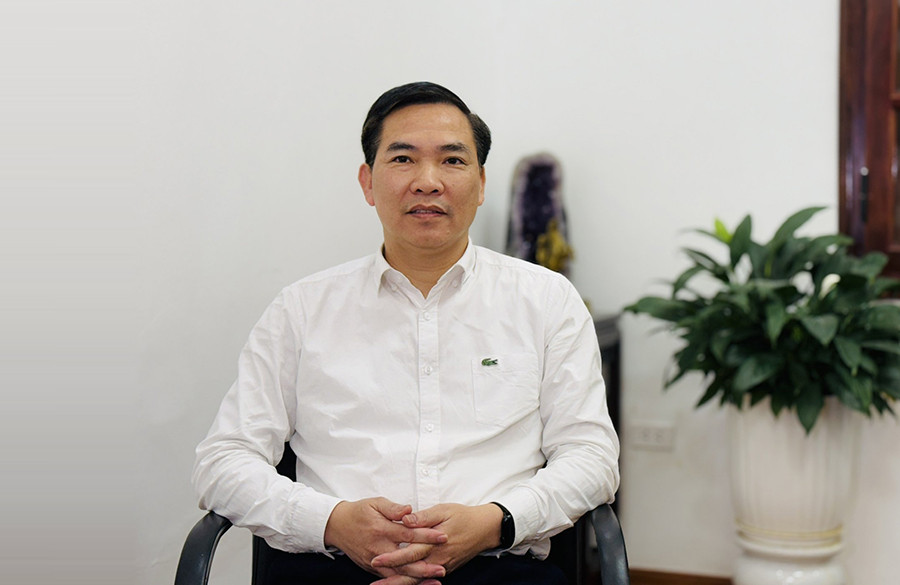
Tran Huu Bao, Deputy Director of the Hanoi Department of Construction
As of August 31, 2026, cumulative disbursement under the city's 2026 public investment plan had reached VND 92,590 billion, equivalent to 77.17% of the plan assigned by the Prime Minister and 56.01% of the plan assigned by the city, excluding the 5% savings amount. Increasing attention is being paid to investment effectiveness and project outcomes.
Based on your management experience, what difficulties and obstacles in the city's infrastructure investment and development need to be addressed as a priority?
Practical management experience indicates that infrastructure investment and development in Hanoi still face several shortcomings. In some cases, project preparation and implementation have not fully met requirements. Site clearance remains a major factor affecting and delaying the progress of many projects. Coordination between projects and different types of infrastructure is not always ensured. Furthermore, the implementation capacity of certain project owners, project management boards, and contractors remains uneven.
In particular, resources and mechanisms for mobilizing infrastructure investment remain limited. State budget funding continues to play the leading role, while efforts to attract social investment, especially through public-private partnerships (PPPs) for large-scale infrastructure projects, have not kept pace with demand. In addition, administrative procedures and coordination among agencies and organizations can take considerable time in some cases, affecting the ability to attract private investment in infrastructure.
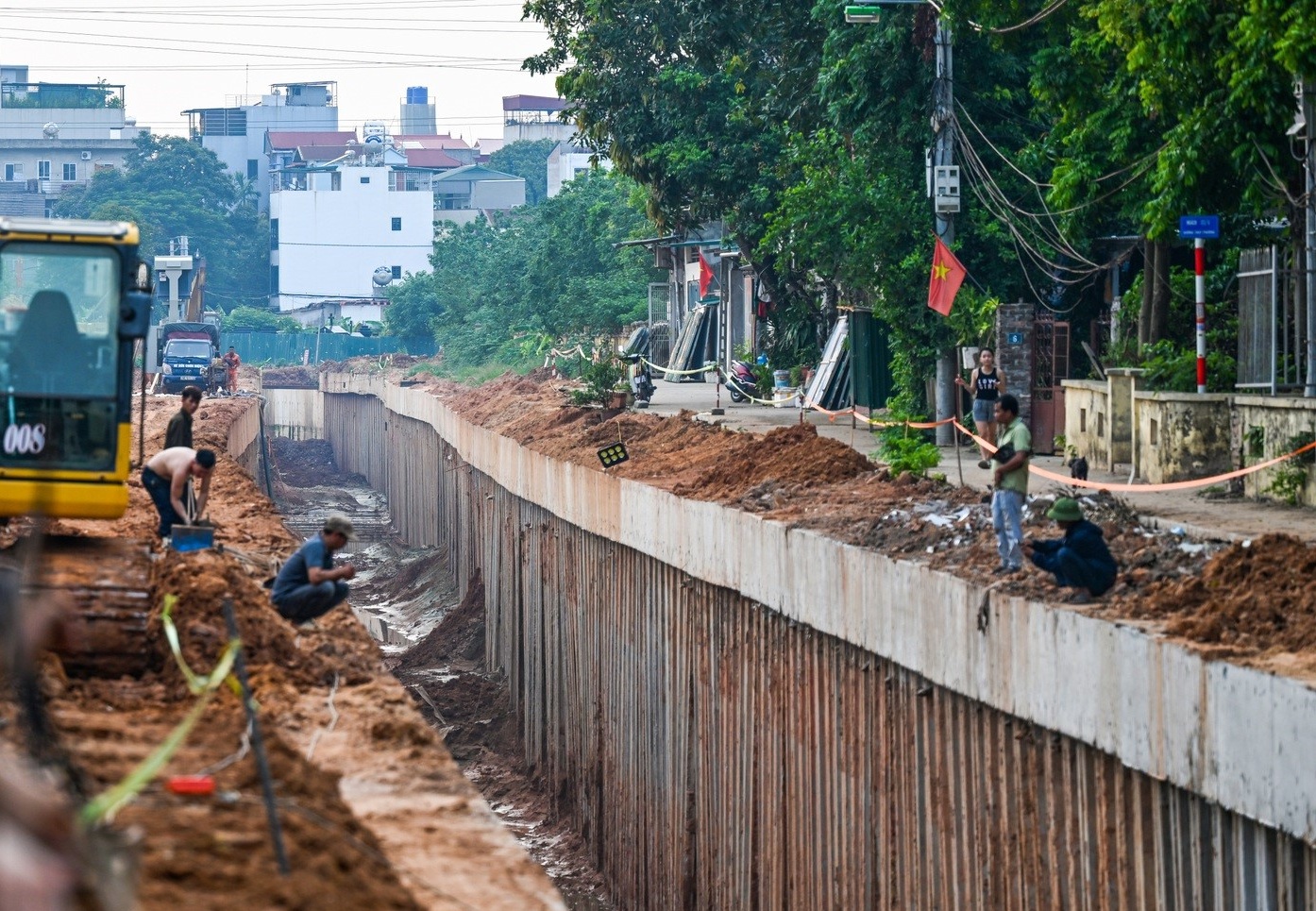
Auditing helps prevent violations and contributes to building a modern capital city. Photo: N. Loc
Given the complexity of major urban infrastructure projects, how should project management be approached to improve investment quality and effectiveness?
Major urban infrastructure projects in Hanoi, particularly transport projects in established urban areas, are highly complex. Such projects involve far more than constructing a road. They also relate to planning, land use, the relocation of technical infrastructure, traffic management, resettlement, and integration with the wider transport network. If public investment management focuses solely on whether procedural requirements have been met, that is not enough. Three fundamental questions must be answered: First, is the investment necessary? Second, how can it be implemented to achieve the greatest effectiveness at a reasonable cost? Third, once completed, will the project genuinely deliver its intended socioeconomic benefits?
As the city increasingly emphasizes the socioeconomic effectiveness of investment projects, the Hanoi Department of Construction considers auditing an essential oversight mechanism for the management of construction investment and infrastructure development. Regarding shortcomings identified by the State Audit Office of Vietnam (SAV), the city's leadership is committed to taking the findings seriously, reviewing the issues, identifying their underlying causes and the responsibilities of individual agencies and organizations, and implementing specific corrective measures.
At the Department of Construction, the leadership consistently emphasizes proactive prevention, beginning with planning, investment preparation, and design; maintaining strict controls throughout implementation; and assessing effectiveness after completion. This approach also helps shift anti-wastefulness efforts from “detection and handling” toward “prevention and risk control,” particularly through the involvement and support of auditing bodies from the project implementation stage.
In your opinion, what criteria should the SAV prioritize when auditing infrastructure projects to comprehensively assess investment effectiveness, particularly as management shifts from monitoring progress and disbursement to evaluating outcomes?
A project that achieves rapid disbursement but has suboptimal design, high total investment costs, poor operational performance, or inadequate connections with surrounding infrastructure cannot be considered successful. In my opinion, to meet the requirements of shifting from progress- and disbursement-based management to outcome-based management, the SAV should strengthen its assessment of infrastructure projects against five groups of criteria.
First, investment effectiveness, measured by comparing the total resources invested with the economic and social value generated. For transport projects, for example, assessments should measure reductions in traffic congestion, travel time savings, improved connectivity, increased traffic capacity, and impacts on urban development and the environment.
Second, post-investment operational effectiveness. Assessment should not stop when a project is formally accepted and handed over. An evaluation should be conducted after a period of operation to determine whether the project has achieved its original objectives. This is a particularly important direction for improving the quality of public investment.
The greatest value of auditing lies not only in the amounts identified and recovered, but also in recommendations that help prevent future losses and waste, warn of potential violations and risks, and improve management mechanisms.
Deputy Director of the Hanoi Department of Construction
Third, infrastructure projects must be assessed as part of the overall network rather than as isolated facilities. In Hanoi, transport projects should be considered in relation to public transport, urban railways, parking facilities, ring roads, radial roads, transit-oriented development (TOD), drainage systems, and underground technical infrastructure.
Fourth, the efficient use of resources. Auditing should not focus solely on whether regulations have been complied with, but also on whether resources have been used optimally. For the same investment objective, several options may be available in terms of project scale, technology, investment models, and implementation arrangements. Auditors should examine which option delivers greater effectiveness at a more reasonable cost.
Fifth, for current urban infrastructure projects, greater attention should be paid to accessibility and connectivity, social costs, environmental impacts and climate change, community integration, and social welfare.
Thank you very much for your time and insights!