The international conference “Supreme Audit Institutions in a New Context: Vision, Institutions and Innovation” was not merely a forum for sharing experiences among Supreme Audit Institutions (SAIs), but also highlighted a strategic imperative: innovation in public auditing must begin with strong institutional foundations, be safeguarded by independence, and aim to deliver tangible improvements in the management and use of public resources. The value of auditing lies not only in detecting violations, but also in promoting accountability, addressing management shortcomings, and improving the efficiency of public resource utilization.
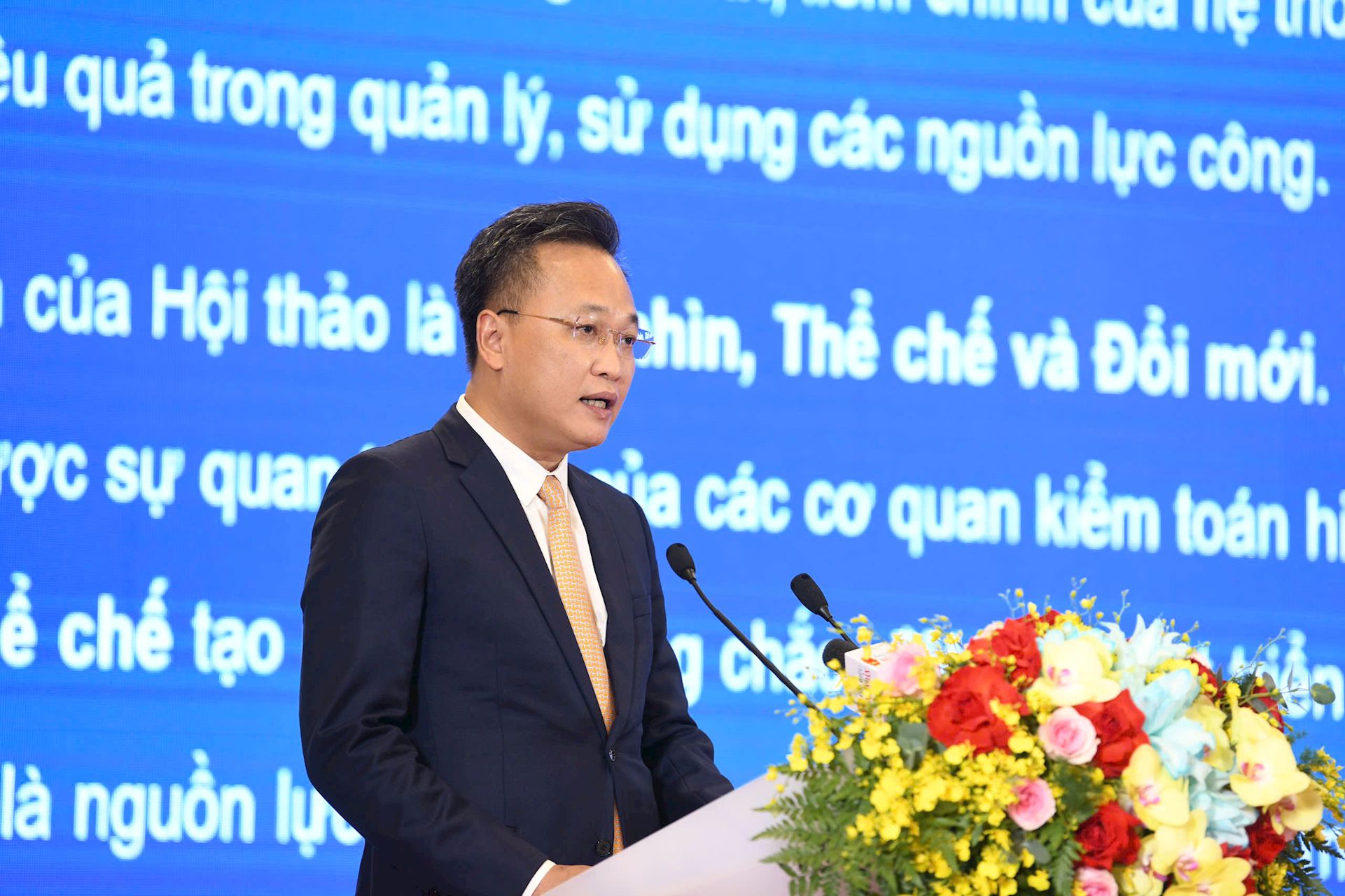
The Auditor General of Vietnam delivers remarks at the international conference.
Strengthening Institutions to Enhance Audit Effectiveness
Changes in the economic and financial environment, together with emerging development requirements, are placing increasingly significant demands on national governance. Public resources must be allocated strategically, used efficiently, and subject to rigorous oversight; policy decisions must be implemented transparently and accompanied by accountability; and management risks must be identified and addressed promptly. In this context, public auditing can no longer be limited to determining compliance or detecting violations. It must also help assess the quality of management, identify the causes of shortcomings, and clarify the responsibilities of relevant stakeholders.
This was also a central theme of the international conference organized by the State Audit Office of Vietnam (SAV) in Hanoi on October 27, 2026. The experiences shared at the conference demonstrated that innovation in public auditing first requires a clear, coherent institutional framework suited to the demands of modern governance.
SAIs adopt different approaches to improving legislation, organizing their operations, and enhancing audit quality. Malaysia shared its experience in amending the Audit Act in 2024, with the aim of expanding the scope of audits and improving the implementation of audit recommendations. Greece emphasized accountability, transparency, process efficiency, and human resource development. Laos highlighted the need to safeguard organizational, financial, personnel, and operational independence while strengthening quality management. Cambodia shared its strategic development orientations for the next phase.
Differences among these models demonstrate that no single institutional framework is suitable for every country. International experience can only deliver value when it is studied, selectively adopted, and adapted to each country's legal conditions, organizational structure, and governance requirements. Despite their different approaches, the common principle is that legislation must clearly establish the position, functions, duties, and powers of audit institutions while providing a basis for objective auditing, serious consideration of audit findings, and implementation of recommendations in accordance with the law.
For the SAV, the conference took place as the institution was studying the development of its Development Strategy through 2035, with a vision to 2045, and proposing amendments and supplements to the Law on State Audit. This presents an opportunity to review the legal framework and further clarify the SAV's role within the national governance structure, in response to the evolving requirements for managing public finances and public assets.
Institutional improvements should address two closely related requirements: ensuring that the SAV has sufficient conditions to fully discharge its legally assigned functions, duties, and powers, while strengthening the accountability of audited entities and the effectiveness of coordination among relevant agencies. An appropriate legal framework not only safeguards the objectivity of auditing but also establishes clear mechanisms for reviewing, addressing, and correcting the issues identified.
Therefore, the effectiveness of an audit institution's legal framework should be measured not only by the powers conferred upon it, but also by its ability to translate those provisions into practice. When audit findings are acknowledged, reviewed, and translated into concrete management actions, the institutional framework can genuinely strengthen financial discipline and improve the use of public resources.

Delegates discuss issues at the international conference.
Independence: A Core Condition for Trust and Accountability
While the institutional framework establishes an audit institution's position and authority, independence is the fundamental condition that enables it to perform its duties objectively, free from interests that conflict with legal requirements and professional standards. Independence is not merely an organizational principle; it is also essential to ensuring the credibility of audit findings and strengthening public trust in the management and use of public resources.
In a congratulatory message to the conference, Mohamed el-Faisal Youssef, President of the International Organization of Supreme Audit Institutions (INTOSAI), emphasized the importance of legal status, clearly defined mandates, and mechanisms for monitoring the implementation of audit recommendations. K. Sanjay Murthy, Chair of the Asian Organization of Supreme Audit Institutions (ASOSAI) and Comptroller and Auditor General of India, also emphasized that independence is the foundation, while public trust is a key objective. These messages demonstrate that independence must be considered in relation to legal authority, professional capacity, accountability, and the effective discharge of responsibilities.
An audit institution can provide objective assessments only when it has an adequate legal basis for carrying out its mandate, access to information within its authority, and the ability to safeguard its professional conclusions against inappropriate interference. Independence must therefore be protected through specific provisions governing organization, operations, personnel, and resources, rather than merely being affirmed as a general principle.
Independence and Effectiveness: Measures of the Standing of Supreme Audit Institutions
The standing of an SAI within a country's governance system is determined not only by the powers and responsibilities established by law, but also by its ability to exercise those responsibilities independently and effectively. This requires a legal framework that clearly defines its mandate and authority, guarantees access to all necessary information and data, and establishes effective mechanisms for monitoring the implementation of audit recommendations.
Mohamed el-Faisal Youssef, President of INTOSAI
However, independence does not mean being detached from the governance system or exempt from accountability. Auditing must comply with the law, professional standards, and established procedures. Audit institutions must be accountable for the quality and accuracy of their conclusions and recommendations. Combining independence with accountability is fundamental to ensuring objectivity, credibility, and institutional effectiveness.
In Vietnam, the independence of the SAV has a constitutional foundation. The challenge in further institutional development is to translate that foundation into effective safeguards that meet the evolving requirements of public financial and asset management. This requires both ensuring the conditions necessary to perform audit duties and maintaining rigorous professional procedures, including due consideration of explanations and substantiated responses.
Independence can build public trust only when accompanied by professional quality and transparency. Audit conclusions must be clearly substantiated, persuasive, and based on evidence and professional standards. Recommendations must be well-founded, feasible, and directed toward addressing management shortcomings. These are also the conditions that enable audit findings to be taken seriously and translated into tangible improvements.
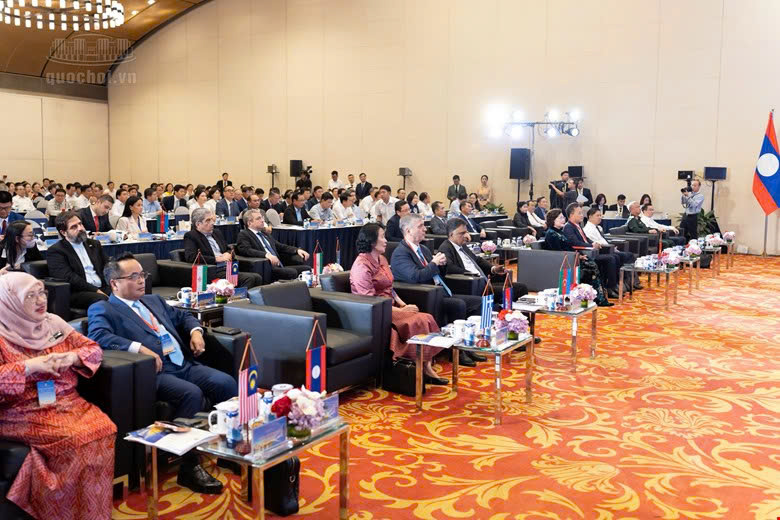
Delegates attending the conference. Photo: quochoi.vn
Towards Effectiveness and Public Value
The future of public auditing will be determined not only by its ability to adapt to changes in the governance environment, but also by how clearly it defines its mission and the value it is expected to deliver. As development requirements become increasingly multidimensional, auditing must continue to safeguard compliance while strengthening its capacity to assess economy, effectiveness, and efficiency in the management and use of public finances and public assets.
Issues such as climate change, environmental protection, the green transition, sustainable development, and the quality of public service delivery are creating new demands for auditing. Assessments of resource utilization can no longer stop at determining whether funds were spent in accordance with regulations. They must also establish how resources have been translated into results, the extent to which policy objectives have been achieved, and the risks that may affect the public interest.
This requires SAIs to continuously improve their methodologies, strengthen professional capabilities, and proactively explore emerging areas within their assigned mandates. Performance auditing should receive greater attention to enable more in-depth assessments of the effectiveness of public policies and programs. Environmental auditing should help clarify how resources are managed and used, as well as the responsibilities associated with achieving sustainable development objectives. All new approaches must be grounded in a legal basis, reliable evidence, and professional standards to safeguard the objectivity of audit conclusions.
For the SAV, the Development Strategy through 2035, with a vision to 2045, should be aligned with the need to strengthen its capacity to fulfill its public auditing mission. This entails closely linking institutional improvements, safeguards for independence, workforce development, and more effective implementation of audit recommendations. The objective is not merely to build a professional, modern, effective, and efficient audit institution, but also to enhance its contribution to the quality of public financial governance and the use of national resources.
In this process, human resource development is particularly important. Auditors need a solid foundation in law, finance, and economics; the ability to analyze policies, assess risks, and identify systemic issues; and an unwavering commitment to integrity, independence, and professional responsibility. Professional competence is demonstrated not only by the ability to detect errors, but also by the capacity to analyze underlying causes, clarify accountability, and formulate well-founded, feasible recommendations aimed at correcting management deficiencies.
More importantly, audit innovation must be guided by a consistent benchmark: its practical value to national governance. The number of audits conducted or the monetary value of recommended financial adjustments cannot replace the need to assess the impact of auditing on improving management, refining mechanisms and policies, preventing violations, and enhancing the efficiency of public resource utilization. This represents a shift from controlling violations to improving governance, from identifying problems to promoting corrective action, and from professional outputs to public value.
The international conference “Supreme Audit Institutions in a New Context: Vision, Institutions and Innovation,” held in Hanoi, demonstrated that innovation in public auditing is a long-term process requiring consistent objectives and coordinated implementation. Institutions establish the legal basis and authority; independence safeguards objective assessments; and professional capacity, together with mechanisms for implementing recommendations, determines the extent to which audit findings are translated into management improvements.
For the SAV, taking independence as the foundation, audit quality as the priority, efficient public resource utilization as the objective, and practical impact as the benchmark provides important direction for future development. Through this approach, public auditing can not only reinforce financial discipline but also strengthen accountability, promote transparent governance, and support the country's sustainable development goals.
Strengthening Institutions, Safeguarding Independence, and Innovating Audit Practices
The discussions at the conference highlight five key priorities for innovating public auditing in the new context.
First, continuously improve the institutional, policy, and professional standards framework for auditing, while strengthening and safeguarding the independence, professionalism, transparency, integrity, and credibility of SAIs. Independence and credibility must rest on a solid legal foundation and be linked to the quality and tangible effectiveness of audit activities.
Second, innovate audit methodologies by strengthening risk-based oversight, monitoring, and assessment supported by sufficient and reliable audit evidence; expanding remote auditing and data-driven auditing; and applying artificial intelligence (AI). Auditing should clarify the nature of economic, financial, and investment transactions and activities involving public resources; strengthen performance and compliance auditing; assess economy, effectiveness, and efficiency in public resource management and utilization; and identify and recommend appropriate action against fraud, legal violations, corruption, waste, and misconduct.
Third, strengthen the role of SAIs in oversight, advisory work, and making recommendations to the National Assembly and the Government regarding macroeconomic policymaking, policy management, and the administration of socioeconomic development programs and strategies. Audit information and reports should serve as reliable and useful sources of information, support public oversight, assist the National Assembly and the Government in monitoring public resource management and utilization, and inform consideration and decisions on important national issues and draft legislation.
Fourth, ensure the rigorous implementation of audit recommendations by improving mechanisms for public disclosure and transparency of audit results, enforcement, and appropriate action against failures to implement recommendations. Coordination should also be strengthened between the SAV and the National Assembly, the Government, inspection authorities, investigative and judicial bodies, and other relevant agencies in exercising oversight of public power and preventing and combating corruption, waste, and misconduct.
Fifth, accelerate digital transformation, strengthen the application of information technology, AI, and big data analytics, and develop a workforce with adequate professional, operational, legal, digital, and information technology skills. AI can help improve audit productivity and efficiency, reduce errors, and shorten the time required to search for and analyze information and assess risks. However, it cannot replace auditors' professional judgment, which must be grounded in sufficient evidence and a sound legal basis.
Auditor General of Vietnam Nguyen Huu Nghia