The Government has issued Resolution No. 295/NQ-CP approving the Ministry of Finance's proposal on a general mechanism for addressing inspection conclusions and audit recommendations that are no longer feasible to implement. The Resolution provides a basis for handling cases involving bankrupt or dissolved agencies and entities, as well as individuals who have died or lost civil act capacity, and cases of force majeure, thereby helping resolve long-standing “debts” of inspection conclusions and audit recommendations.
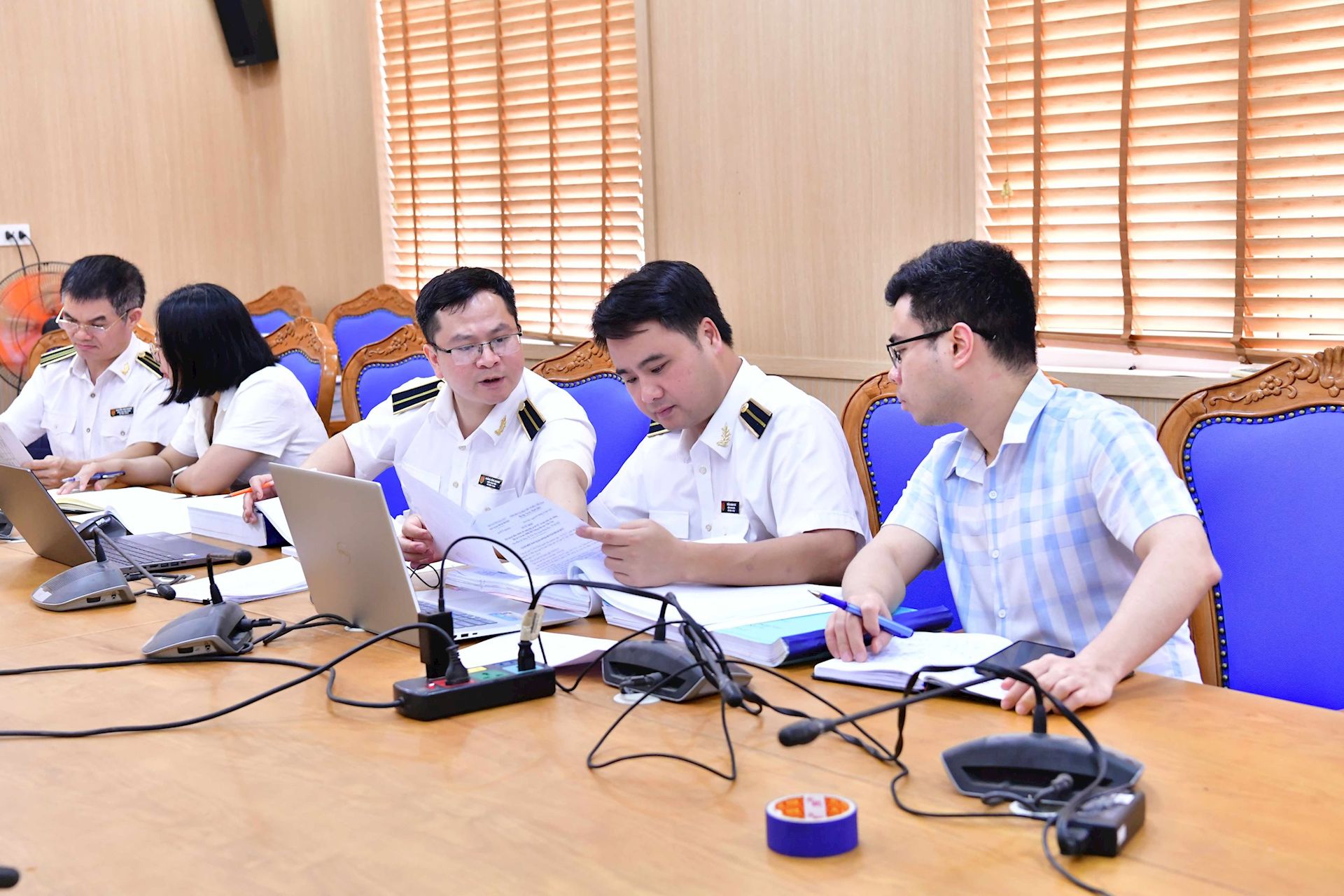
Addressing outstanding inspection conclusions and audit recommendations provides an opportunity to review and improve the legal framework and enhance the feasibility of implementation. Photo: TL
Four Groups of Causes Behind VND 15.2 Trillion in Outstanding Amounts
According to a consolidated report from ministries, central agencies and localities, the total amount covered by long-standing outstanding inspection conclusions and audit recommendations stood at approximately VND 15.2 trillion as of the reporting date. This amount is classified into four main groups of causes.
The first group consists of tax collection recommendations and other state budget revenue collection recommendations that are no longer feasible to implement, totaling approximately VND 759.2 billion. These cases involve agencies or entities that have gone bankrupt or been dissolved, or individuals who have died or lost civil act capacity.
The second group comprises conclusions and recommendations concerning the recovery of improperly incurred expenditures, deductions from payments, and recovery of advances or prepayments that are no longer feasible to implement, totaling approximately VND 126 billion. The reasons include agencies or entities that have gone bankrupt or been dissolved after completing bankruptcy procedures, or individuals who have died or lost civil act capacity without assets, including inherited assets, available to fulfill the obligations.
The third group consists of conclusions and recommendations that have not yet been implemented, totaling approximately VND 9.97 trillion, due to regulatory and policy obstacles, the absence of guiding documents, procedural difficulties, or a lack of legal grounds for reimbursement, as well as entities or individuals facing financial difficulties and unable to allocate resources for repayment.
The fourth group comprises other conclusions and recommendations totaling approximately VND 4.4 trillion. These amounts arise from the restructuring and merger of two-tier local governments, requiring a review to identify the responsible entities or reconcile figures, as well as recommendations that remain under implementation.
Thus, the structure of outstanding amounts shows that a significant proportion of audit conclusions and recommendations remain unimplemented due to obstacles arising from mechanisms and policies. These difficulties highlight the urgent need for an appropriate mechanism to address such cases.
Practical Obstacles and the Need for a Mechanism
The Ministry of Finance said that at a meeting held on September 8, 2026, chaired by the Ministry of Finance at the direction of Deputy Prime Minister Nguyen Van Thang, the State Audit Office of Vietnam (SAV) basically agreed on the need for a mechanism to address these cases.
In practice, approximately 10% of audit recommendations cannot be implemented due to force majeure. While the Law on Tax Administration provides a mechanism for tax debt write-offs, the State Audit Law does not yet contain provisions for handling audit recommendations in cases of force majeure, bankruptcy, dissolution or death. For improperly incurred expenditures, advances and prepayments that cannot be recovered under SAV recommendations, the responsible parties need to be clearly identified so that an appropriate mechanism can be established.
The Government Inspectorate also agreed on the need to establish such a mechanism, as the Law on Inspection currently contains no provisions for cases in which implementation is no longer feasible. In practice, it is necessary to clearly distinguish between cases where implementation is no longer possible and cases where parties deliberately fail to comply in order to determine responsibility. Due to organizational mergers, consolidation and restructuring, many inspection conclusions no longer have designated personnel responsible for monitoring and handling them. The Government Inspectorate is reviewing approximately 6,000 outstanding specialized inspection conclusions and is preparing a draft Government Resolution on the amendment and supplementation of inspection conclusions.
The Ministry of Justice requested that specific regulatory obstacles be identified, including the particular provisions requiring amendment, so that they can be incorporated into the recommendations.
Fundamental Solutions to Resolve the Issues
The Ministry of Finance, the Government Inspectorate and SAV agreed that, in addition to objective causes, there are also subjective causes, including delays by responsible parties and organizational restructuring. To address the issue fundamentally, relevant specialized laws, such as the Law on Inspection and the State Audit Law, need to be reviewed and amended.
For tax arrears and other revenues falling under the authority of tax agencies, the Government submitted the Law on Tax Administration to the National Assembly, which took effect on July 1, 2026. Clause 1, Article 21 of the Law provides for the write-off of tax debts arising from tax collection conclusions and recommendations that are no longer feasible to implement.
For other inspection conclusions concerning state budget payments, reductions in expenditures and recovery of improperly incurred expenditures, advances and prepayments, the Government has directed the Government Inspectorate, pending amendments to the Law on Inspection, to develop and submit a Government Resolution amending and supplementing inspection conclusions to address difficulties and obstacles in their implementation. The draft Resolution is currently being circulated to the Ministry of Justice for appraisal. Regarding SAV recommendations on these matters, SAV has agreed with the Ministry of Finance to study and incorporate an appropriate mechanism when amending the State Audit Law.
SAV is currently reviewing and summarizing the implementation of the 2015 State Audit Law, as amended and supplemented in 2019, and preparing amendments to the Law. One of the 17 major areas of orientation for the amendment is to clearly classify audit conclusions and recommendations: first, recommendations concerning errors committed by audited entities would be legally binding; while recommendations that are advisory in nature would be subject to consideration and decision by competent authorities and the heads of audited entities as to whether they should be implemented.
For conclusions and recommendations that remain unimplemented due to the restructuring of two-tier local governments, regulatory and procedural obstacles, a lack of legal grounds or the absence of guiding documents, SAV and the Government Inspectorate will, within the scope of their respective functions and duties, continue to urge and coordinate with ministries, central agencies and local authorities to implement them in accordance with regulations.
Addressing outstanding inspection conclusions and audit recommendations is not merely about resolving “old debts” that have accumulated over many years; it also provides an opportunity to review and improve the legal framework and enhance the feasibility of implementation. A clear and comprehensive mechanism defining authority, responsibilities and appropriate handling procedures will help distinguish between objective obstacles and delayed or deliberate non-compliance. This is also a fundamental solution to ensure that inspection conclusions and audit recommendations are implemented promptly and in accordance with regulations.
Based on the consolidated opinions and handling options outlined above, the Government assigned the Ministry of Finance to finalize the content and incorporate all solutions for addressing long-standing outstanding conclusions and recommendations into the 2025 State Budget Settlement Report for submission to the National Assembly Standing Committee and the National Assembly for consideration and decision.