CPA VIETNAM AUDITING COMPANY LIMITED
Qualified services, global understanding and vision

State Auditor General Proposes Adding Provisions on Authority to Connect to, Access, and Use Measurement Data

19/10/2026 - 11:17      40 view
In comments on the draft amended Law on Metrology, State Auditor General Nguyen Huu Nghia proposed adding provisions allowing the State Audit Office of Vietnam (SAV) and competent state agencies to connect to, access, share, and use measurement data free of charge to perform their functions and duties in accordance with the law.
Nội dung chính[ẩn][hiện]


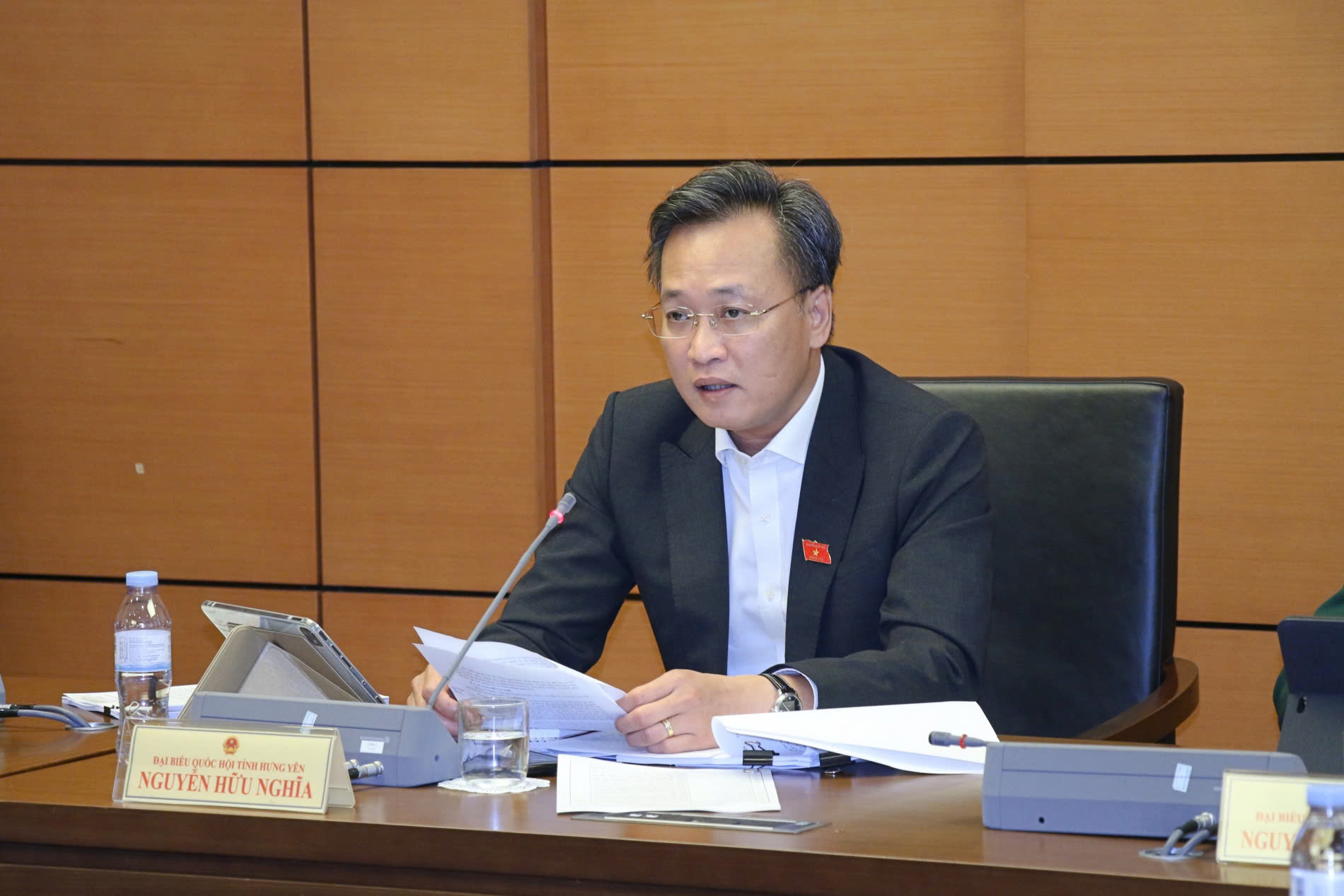
State Auditor General Nguyen Huu Nghia speaks at the group discussion session. Photo: N. TRUONG

On the morning of October 17, following presentations of the submissions and appraisal reports on the draft amended Law on Postal Services and the draft amended Law on Metrology, National Assembly deputies discussed the two draft laws in groups. State Auditor General Nguyen Huu Nghia, Head of the National Assembly Delegation of Hung Yen Province, chaired the discussion of Group 6, comprising the National Assembly delegations of Hung Yen and Tay Ninh provinces.

Ensuring Equal and Transparent Access to Measurement Standards

During the group discussion, State Auditor General Nguyen Huu Nghia provided comments on several specific provisions of the draft amended Law on Metrology.

Regarding investment in and the socialization of the national measurement standards system, the State Auditor General noted that the draft law encourages organizations and enterprises to invest in establishing and maintaining national measurement standards.

According to the State Auditor General, measurement standards play a crucial role in social life, production, business, and investment activities. Such standards must be developed, tested, validated, and certified or recognized by competent state authorities before becoming common benchmarks for practical applications in daily life, production, and business operations.

Therefore, the State Auditor General proposed adding a principle requiring measurement standards funded by organizations and enterprises to be regulated and recognized by competent state authorities, with their use governed by public and transparent mechanisms that ensure equal and continuous access to services. He also proposed that state funding provided for the establishment and development of measurement standards be separately accounted for and monitored, and that the state budget not be used to cover costs that would result in duplication in the calculation of measurement service fees.

Regarding the provisions on measurement assurance programs, the State Auditor General recommended revising the draft to stipulate that support must be based on programs and tasks approved by competent authorities and remain within the allocated state budget estimates. Such support should target eligible beneficiaries, ensure transparency and accountability, and be subject to measurable output indicators. The draft law should also clearly state that the absence of a measurement assurance program does not automatically constitute grounds for classifying an organization or enterprise as high-risk.

Regarding Clause 11, Article 1 of the draft law, which introduces provisions on digital platforms and the exploitation of digital data, the State Auditor General pointed out that the draft currently only authorizes competent state management agencies to use measurement data for management, analysis, warnings, inspections, examinations, and violation handling.

However, the SAV is an agency established by the National Assembly and is responsible for auditing and evaluating the management and use of public assets and public finances based on economic and technical standards and norms, including measurement standards.

Accordingly, the State Auditor General proposed adding a provision to Article 34c stipulating that the SAV and competent state agencies may connect to, access, share, and use measurement data free of charge to perform their legally mandated functions and duties. Such activities must ensure safety and confidentiality, remain within the authorized scope, and maintain complete audit trails of all access to and use of measurement data.

Flexible Regulations to Facilitate E-Commerce Activities

Commenting on the draft amended Law on Postal Services, the State Auditor General focused on Article 21 concerning customs procedures for imported and exported postal items. He noted that this is a particularly important issue as e-commerce and cross-border digital platform-based trade become increasingly widespread.
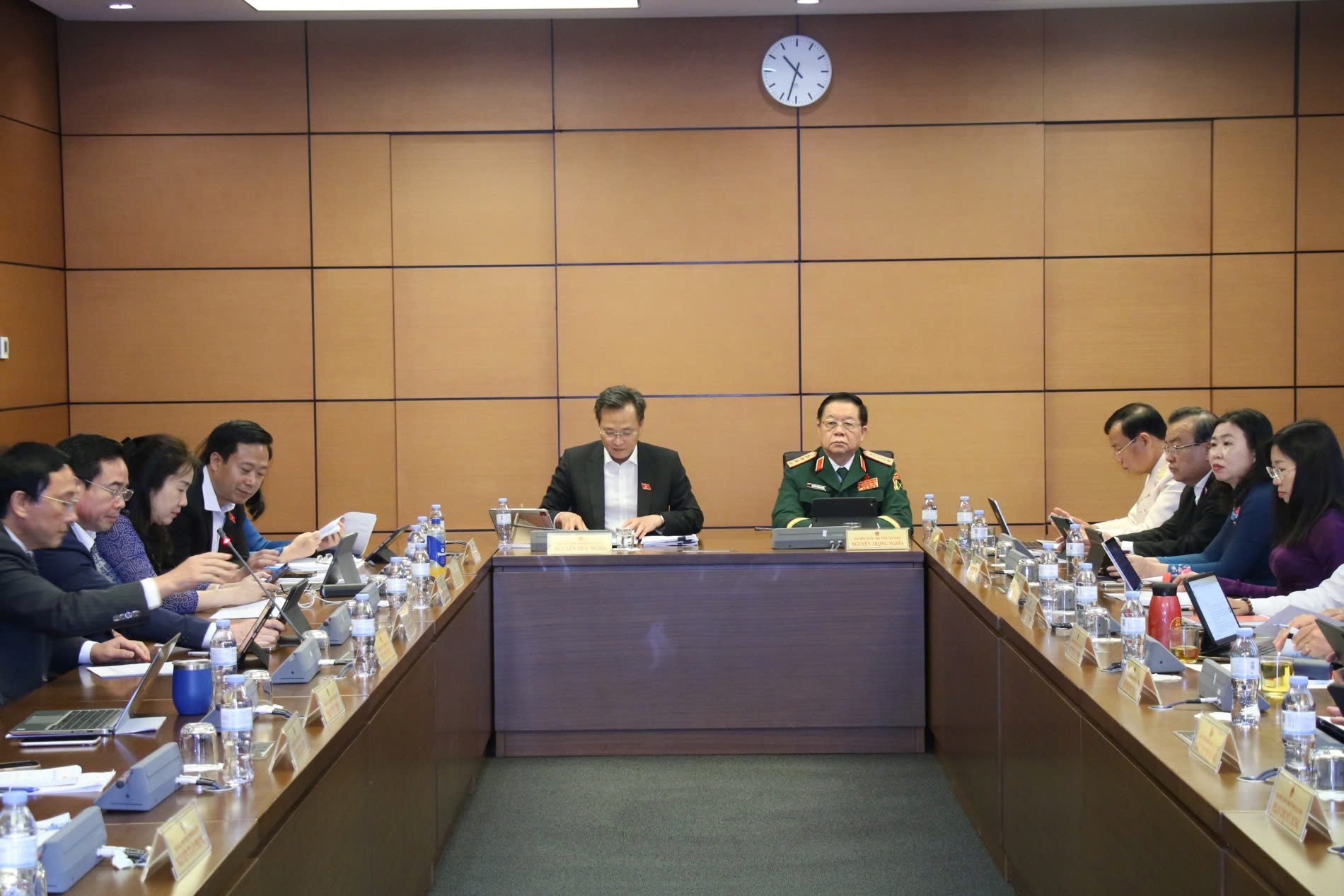
Overview of the group discussion session. Photo: N. TRUONG

“Article 21 of the draft law should provide for a highly flexible regulatory approach that facilitates cross-border commercial transactions, particularly small-scale transactions conducted through postal services,” the State Auditor General proposed.

Under Clause 2, Article 21, postal service providers would carry out customs procedures and other import-export formalities for postal items on behalf of service users, in accordance with customs regulations. The State Auditor General considered this provision difficult to implement in practice, as the Law on Customs primarily governs the import and export of goods and services under conventional arrangements.

Therefore, to promote and facilitate the rapid and efficient development of cross-border trade and digital commerce, the State Auditor General proposed adding a provision to Article 21 authorizing the Government to issue detailed regulations and guidance on customs procedures for imported and exported postal items, thereby ensuring greater flexibility.

16/11/2026 8
Despite spending 99.6% of its allocated budget for the 2025–2026 financial year, South Africa's Department of Sport, Arts and Culture (DSAC) has yet to address longstanding weaknesses in governance and financial controls. The Auditor-General of South Africa (AGSA) has warned that numerous gaps in the internal control system are increasing the risk of fraud, undermining budget efficiency and accountability.
View details
16/11/2026 6
On the afternoon of November 13, as part of his official visit and working trip to the Republic of Belarus, State Auditor General of Vietnam Nguyen Huu Nghia and his delegation held a bilateral meeting with Deputy Prime Minister of Belarus Aleksandr Terekhov, Head of the Belarusian delegation to the Vietnam–Belarus Intergovernmental Commission on Trade, Economic, Scientific and Technical Cooperation.
View details
13/11/2026 16
On November 12, in Minsk, the capital of Belarus, as part of an official working visit to the Republic of Belarus, a high-level delegation from the State Audit Office of Vietnam (SAV), led by Auditor General Nguyen Huu Nghia, held a bilateral meeting with the State Control Committee of the Republic of Belarus, headed by its Chairman, Vasily Gerasimov.
View details
13/11/2026 22
The rapid adoption of artificial intelligence (AI) across organizations is outpacing existing governance and control capabilities. The accelerated development of generative AI, AI agents, and the unauthorized use of AI tools (“shadow AI”) poses significant challenges related to transparency, data security, and accountability. In response to these emerging risks, internal audit functions must innovate their methodologies, enhance professional competencies, and strengthen oversight to ensure that AI applications are managed safely and effectively.
View details
12/11/2026 21
Disbursed investment capital from the state budget in the first 10 months of 2026 was estimated at VND 783.9 trillion, equivalent to 69% of the annual plan and up 19.8% year-on-year. Total registered foreign investment reached USD 54.85 billion, an increase of 74%, while disbursed foreign direct investment (FDI) amounted to USD 24.08 billion, up 13.1%. Increasing capital inflows are providing additional momentum for the economy. However, the key issue is not merely how much capital can be mobilized and disbursed, but more importantly, how much value, productive capacity, and competitiveness each unit of investment capital can generate.
View details
12/11/2026 20
The restructuring and streamlining of the political system's organizational apparatus, together with the implementation of the two-tier local government model, have resulted in adjustments to the functions, responsibilities, audited entities, and designated focal points of various agencies and organizations. Consequently, although many audits have been completed and recommendations issued, some recommendations may not yet have been fully implemented. It is therefore essential to ensure their timely and comprehensive handover and receipt to maintain continuity in monitoring, follow up on all outstanding recommendations, and prevent any omissions. The implementation of audit recommendations is a decisive factor in determining the effectiveness and efficiency of audit activities and serves as a basis for the State Audit Office of Vietnam (SAV) to demonstrate its performance and accountability to the National Assembly and the public.
View details
11/11/2026 30
The State Audit Office of Vietnam (SAV) is expected to strengthen data-driven auditing, remote auditing, thematic auditing and performance auditing in the coming years, with a particular focus on auditing public resources, development programs, nationally important projects and macroeconomic policies of the Party and the State, thereby serving the common interests of the country and its people.
View details
11/11/2026 21
Data should not only be regarded as a source of information for individual audits but also as a digital asset of the State Audit Office of Vietnam (SAV), requiring centralized management, consistent utilization and long-term reuse to support auditing activities, management, administration and strategic planning.
View details
10/11/2026 17
The Standing Committee of the Party Committee of the State Audit Office of Vietnam (SAV) has recently issued Official Letter No. 1614-CV/DU on communication activities commemorating the 80th anniversary of the First National Cultural Conference (November 24, 1946 – November 24, 2026), Vietnam Culture Day (November 24), and the Great National Unity Festival (November 18).
View details
10/11/2026 18
The State Audit Office of Vietnam (SAV) has recently published the results of a thematic audit on the management and use of public investment capital in Khanh Hoa Province during the 2021–2025 period. The audit revealed that 53 projects had to be suspended after their investment policies were approved; one project had achieved a disbursement rate of only 18.76% as of the audit date; and another project, scheduled for completion and handover in 2026, had only begun its investment preparation procedures by July 2026, when the audit was conducted.
View details
09/11/2026 38
On the morning of October 8, the Vietnam Association of Accountants and Auditors (VAA), in coordination with the Lao Cai Provincial Department of Finance, held the opening ceremony of a professional training conference on financial management for commune-level officials, civil servants, and public employees across the province at the Department of Finance's headquarters.
View details
09/11/2026 29
In its latest enforcement action, the State Securities Commission of Vietnam (SSC) has named several enterprises for violations involving periodic disclosure obligations, inaccurate information disclosure, securities issuance regulations, corporate governance reporting, and accounting personnel information.
View details
Head Office
Representative Office
Northern Branch
Ho Chi Minh City Branch
Key thời gian làm việc
Copyright © 2026 CPA VIETNAM AUDIT. All rights reserved. Website designed by Tat Thanh
Access statistics
Total visits: 487958 Currently visiting: 325
Website Policy