The State Audit Office has recommended financial and other adjustments totaling nearly 114 trillion VND after the first nine months of 2026, significantly higher than the results for the entire year of 2025.
Continue to improve the organizational structure and innovate management methods.
According to information presented at the online quarterly review meeting of the State Audit Office for the third quarter of 2026, held on the morning of October 12th, during the third quarter and the first nine months of 2026, the subordinate units closely followed the work program and directives of the sector's leadership, implementing tasks synchronously across all fields. The results of task implementation continue to reflect efforts to innovate thinking, improve the effectiveness and efficiency of audit activities, and contribute to strengthening discipline in the management and use of public finances, public assets, and the state budget.
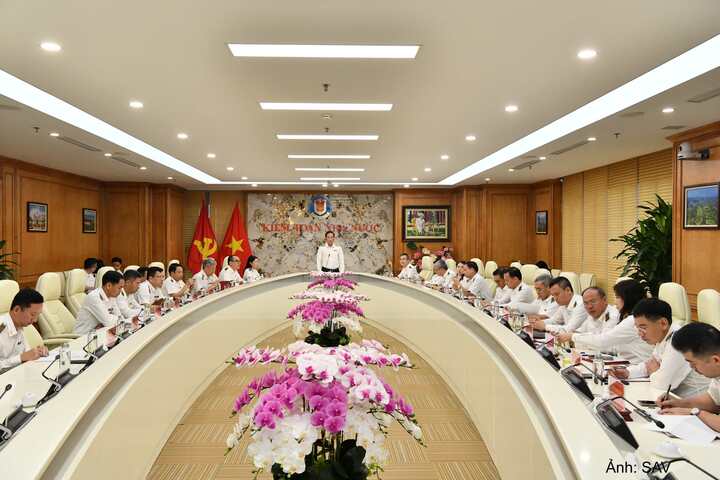
The State Audit Office held its quarterly online meeting for the third quarter of 2026.
According to the report presented by the State Auditor General at the 6th session of the National Assembly Standing Committee, in the first nine months of 2026 alone, the State Audit Office recommended financial and other adjustments totaling nearly 114 trillion VND and 170 million USD. This result is significantly higher than the total for the entire year of 2025, which was over 41 trillion VND and 109 million USD.
Along with the results of the proposed actions, the monitoring and follow-up of the implementation of audit conclusions and recommendations have also shown positive progress. The implementation rate of financial and other recommendations reached 79.09% for assets denominated in Vietnamese Dong, compared to 58% in the same period of 2025; for assets denominated in USD, the implementation rate reached 86.33%.
These achievements were recorded during the State Audit Office's continued efforts to improve its organizational structure, innovate its governance methods, and enhance the quality of its task performance. In the third quarter of 2026, the State Audit Office completed the second phase of organizational restructuring and streamlining in accordance with Resolution No. 308a/NQ-UBTVQH dated July 27, 2026, on the number of specialized State Audit Office units; and simultaneously renamed the Department of Audit Regulations and Quality Control to the Department of State Audit Policy, directly under the State Audit Office.
Following the restructuring, the State Audit Office further reduced one departmental-level unit, corresponding to a reduction of one specialized State Audit Office and 30 divisional-level units. The functions and tasks of the units were adjusted to streamline the organizational structure, reduce intermediate levels, clearly define personnel, tasks, responsibilities, authority, outputs, and accountability for audit results within their respective sectors, fields, and geographical areas.
Notably, the restructuring process was completed within 15 days, with requirements for urgency, decisiveness, transparency, systematic approach, and synchronization. According to the State Audit Office, the reorganization of the apparatus still ensures consensus, solidarity, and unity, maintaining continuity, smooth operation, and stability in the entire sector's activities. The new organizational model officially takes effect from August 15, 2026. Audit tasks and regular work will continue to be maintained, ensuring there are no gaps in leadership, direction, or management, or interruptions in task implementation.
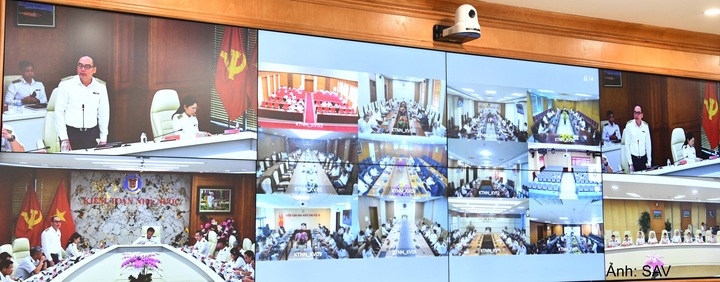
The conference was held in a hybrid format, combining in-person and online participation.
Besides organizational restructuring, the State Audit Office continues to revise, supplement, and issue legal documents and professional guidelines to meet the requirements of reforming governance methods, audit organization, and digital transformation . Activities related to technology application, training, scientific research, finance, logistics, information dissemination, and international cooperation are maintained and implemented according to the work program.
Assessing the achievements, the State Auditor General Nguyen Huu Nghia commended and acknowledged the efforts of the units, audit teams, and all civil servants, officials, and employees throughout the sector. He also emphasized that the fourth quarter of 2026 is of particular importance, as the workload remains substantial and many tasks must be completed within a short timeframe.
Expedite the audit process and tighten public service discipline.
In response to the demands of the remaining months of the year, the State Auditor General Nguyen Huu Nghia requested that specialized and regional State Audit Offices focus on completing the 2026 audit plan, ensuring both progress and quality. Accordingly, units need to accelerate the implementation of planned audits, promptly issue audit reports, ensuring completion before October 31, 2026, and issuance of audit reports before December 31, 2026. All tasks must be carried out according to plan and absolutely not carried over to 2027, except for supplementary audits.
One of the tasks particularly emphasized by the State Audit Office is auditing construction projects for multi-level schools, especially boarding schools, in the assigned areas. "This is a key task for 2026, with significant importance in evaluating the effectiveness of public investment management and utilization, and the quality of implementation of the Party and State's policies and guidelines," the State Auditor General stressed.
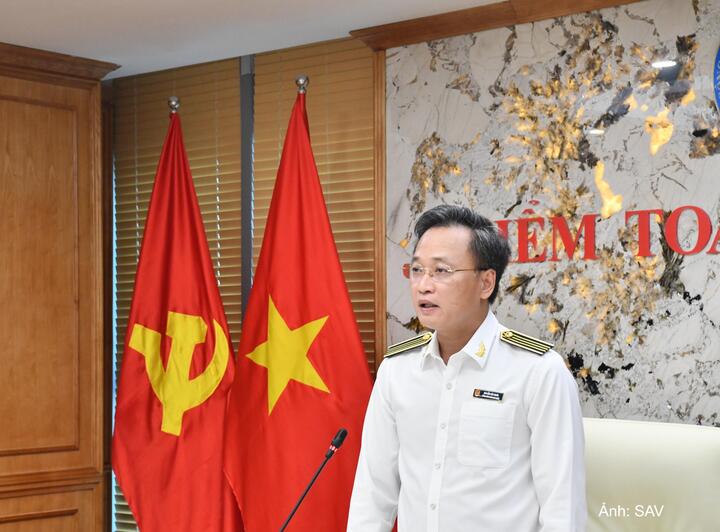
State Auditor General Nguyen Huu Nghia delivered a speech at the conference.
Along with completing planned audits, specialized State Audit Offices need to play a leading role in providing professional guidance, sharing experiences, and replicating effective models and practices throughout the sector. This is also a requirement to enhance the State Audit Office's role in advising and consulting on policies through thematic audit reports.
The State Audit Office of Vietnam requested continued strong progress in implementing audit conclusions and recommendations; and increased public disclosure of audit results while maintaining confidentiality. Units should proactively prepare for the implementation of the 2027 audit plan starting from the fourth quarter of 2026. "Preparation is crucial and plays a decisive role in the audit results, therefore it needs to be done early," the State Auditor General emphasized.
For advisory units, the requirement is to continue fully implementing planned tasks and assigned ad hoc tasks, ensuring progress and quality. The General Affairs Department is responsible for advising on the implementation, monitoring, and urging the progress of the 2026 audit plan; and promptly warning about audits that are at risk or have fallen behind schedule.
This unit is also focusing on finalizing and submitting the audit report on the state budget settlement and the public debt report for 2025 to the Ministry of Finance ; finalizing the audit report on the state budget settlement for 2025, the State Audit Office's opinion on the state budget estimates and the central budget allocation plan for 2027 to be submitted to the Auditor General for reporting to the National Assembly at the second session of the 16th National Assembly.
The Legal Department continues to monitor and urge the units in charge of drafting the 2026 document development program to ensure quality and progress; and to finalize the documents assigned to it. The State Audit Policy Department focuses on finalizing documents, urging and supervising the implementation of science and technology tasks, organizing workshops, and evaluating completed projects.
The Department of International Cooperation is preparing bilateral and multilateral activities, including the international workshop "Supreme Audit Institutions in the New Context: Vision, Institutions and Innovation". The State Audit Inspectorate continues to implement the third phase of the 2026 audit quality control and inspection plan and finalize programs and plans for preventing and combating corruption, waste, and negative practices.